Vietnam’s Sugar Industry Under Pressure from Oversupply and Rising Sweetener Imports
Vietnam’s sugar market remains oversupplied. In the first 10 months of 2026, imports of high-fructose corn syrup reached 205,885 tonnes, 111% of the year-earlier level, with beverage makers the main importers. Smuggled sugar and low-priced sugar of unclear origin are also squeezing domestic cane sugar sales, prompting industry calls for tighter market oversight.

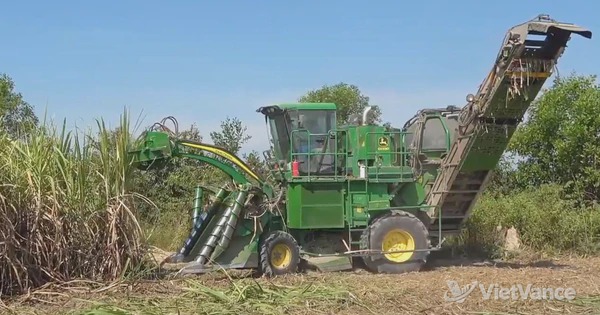
Vietnam’s cane sugar market remains oversupplied, and industrial customers’ shift to high-fructose corn syrup (HFCS) is adding to sales pressure on domestic cane sugar. Data from the Customs Department under the Ministry of Finance show that Vietnam imported 29,432 tonnes of HFCS in October 2026. Imports in the first 10 months totaled 205,885 tonnes, equivalent to 111% of the year-earlier level. The main importers are beverage makers, a group that was previously a major customer for refined sugar from domestic mills.
Low-priced sugar is also squeezing the market. In October 2026, enforcement agencies uncovered multiple cases involving non-compliant granulated sugar. Sugar of Thai origin remains in circulation at wholesale markets, while some repackaged granulated sugar lacks labels and information on its origin and shelf life. A representative of the Vietnam Sugarcane and Sugar Association said sugar transactions at local shops are mostly conducted in cash without invoices, making it harder to trace products and administer taxes.
Association chairman Nguyễn Văn Lộc said that although international sugar prices tended to recover in the third and fourth quarters of 2026, Vietnamese sugar prices remained significantly below those in some neighboring countries. Vietnam’s output remained high in the 2025–2026 crushing season, but sales of domestically produced cane sugar continued to face obstacles, and the surplus is expected to persist. He said he had submitted recommendations seeking clarification of which sugar-sweetened beverages would be subject to excise tax and proposing a 20% tax rate on beverages made with HFCS. The measure remains a proposal, and its impact would depend on the scope of the tax, companies’ responses and their choice of ingredients, among other factors.
Cao Anh Đương, the association’s vice chairman and director of the Vietnam Sugarcane Research Institute, said Vietnam’s average sugar yield in the 2024–2025 crushing season was 6.69 tonnes per hectare, above Thailand’s 5.20 tonnes, Indonesia’s 4.76 tonnes and the Philippines’ 4.62 tonnes. Yet domestic sugar prices were only 66% of prices in the Philippines, 70% of those in Indonesia and 94% of those in China. Several companies called for tighter controls on sugar smuggling across the border and stronger domestic market oversight, and suggested considering an extension of anti-dumping and countervailing measures on imported sugar.
Source: VietVance