Vietnam Clarifies Write-Off Rules for Business License Fee Arrears
Vietnam’s tax authorities have issued guidance on National Assembly Resolution 63. Eligible taxpayers need not apply to have business license fee arrears written off. Those seeking a write-off of late-payment charges must pay outstanding tax and applicable fines and submit a valid application by June 30, 2028.

Vietnam’s Tax Department issued Official Dispatch No. 36 on November 23, 2026, providing guidance on implementing the National Assembly’s Resolution 63 on handling tax arrears. The resolution took effect on November 21, 2026, and runs through June 30, 2028. It applies to taxpayers identified as of October 23, 2026, as having ceased operations without closing their tax codes, or as no longer operating at their registered addresses. Their respective tax registration statuses are 03 and 06.
Eligible business license fee arrears will be written off based on tax administration data, with no application required from taxpayers. The results will be published on the tax authority’s website and sent to taxpayers’ electronic transaction accounts. The policy applies only to arrears and late-payment charges that have not been paid into the state budget, including debts incurred before January 1, 2017, and late-payment penalties incurred before July 1, 2013.

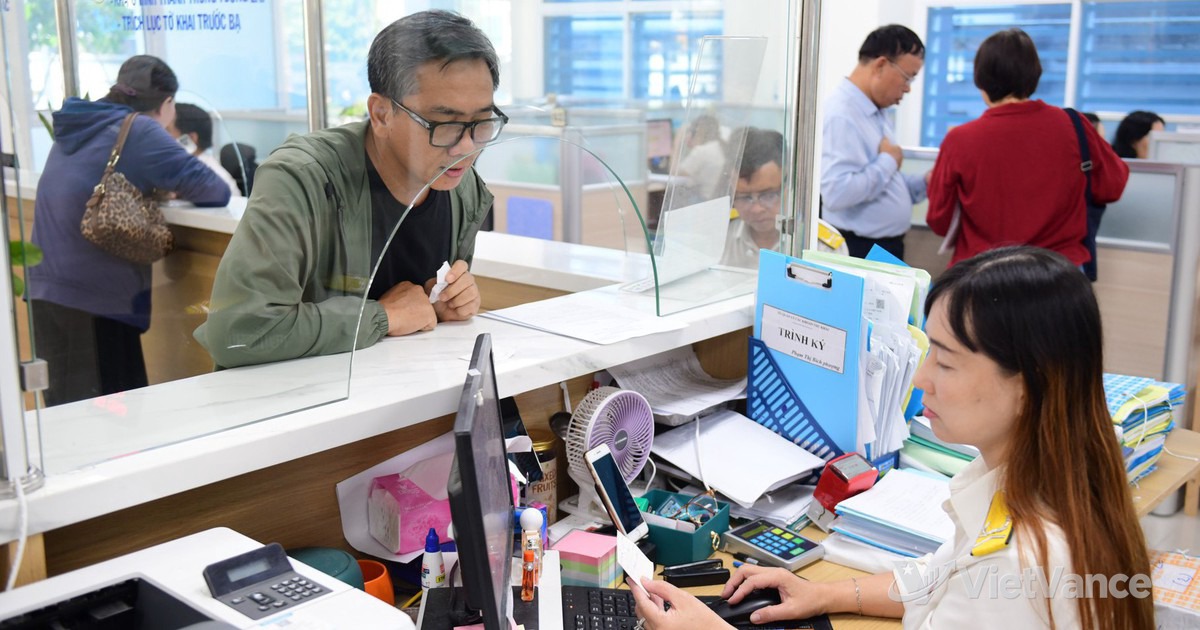
A cash transaction at a bank.(VietVance)
Taxpayers seeking a write-off of late-payment charges must pay all outstanding principal tax and administrative fines, if any, and ensure that a valid application to restore or close their tax code is accepted no later than June 30, 2028. The write-off will be handled alongside the related tax code procedure. Applications already accepted but not yet resolved will continue to be processed under Resolution 63. Taxpayers who make the required payments and submit a valid application by the deadline may still be considered for a write-off even if the tax authority has not completed the process.
Late-payment charges cannot be written off in cases involving tax fraud, tax evasion, or unlawful use of invoices or documents. Branches or representative offices with either of the above statuses are also ineligible if their parent enterprise or organization remains active or has temporarily suspended operations for a fixed period. Those that carried out production or business activities, or incurred related tax obligations, while in status 03 or 06 are likewise excluded. Taxpayers who only sold or liquidated remaining assets and goods to end their operations, and declared and paid all resulting taxes, may be considered if they meet the other conditions.
Cases under tax inspection, investigation, prosecution or trial will be assessed only after the competent authority issues a conclusion, decision or document, and then only if they meet the conditions. According to Finance Ministry data, as of October 23, 2026, about 2.5 million taxpayers had ceased operations without closing their tax codes or were no longer operating at their registered addresses. The number whose debts are ultimately written off will depend on the circumstances of each case. Since the beginning of the year, tax authorities have processed more than 777,000 tax codes.
Source: VietVance