Vietnam’s textile and garment exports reach $39.836 billion in first 10 months of 2026
Vietnam’s textile and garment exports reached $39.836 billion in the first 10 months of 2026, up 3.9% year on year. The industry is targeting $48 billion to $49 billion in exports for the full year. Companies are seeking orders by expanding into new markets, developing raw material and accessory industries, and upgrading technology while meeting tighter requirements on material sourcing and production conditions.

According to the import-export balance report, Vietnam’s textile and garment exports totaled $39.836 billion in the first 10 months of 2026, up 3.9% year on year. Exports in October reached $4.082 billion, up 0.9% from September and 9.8% from a year earlier. With some companies’ orders booked through the end of the year, the industry is aiming for full-year exports of $48 billion to $49 billion.
Order books vary among companies. Phong Phu Corporation exports about 40 to 60 containers of towels and textile and garment products to the United States each month. Southern Textile and Garment Corporation has orders booked through 2026, and some customers have begun discussing orders for the first quarter of 2027. Based on its performance in the first 10 months of 2026, the company expects full-year profit to exceed 120% of its target.
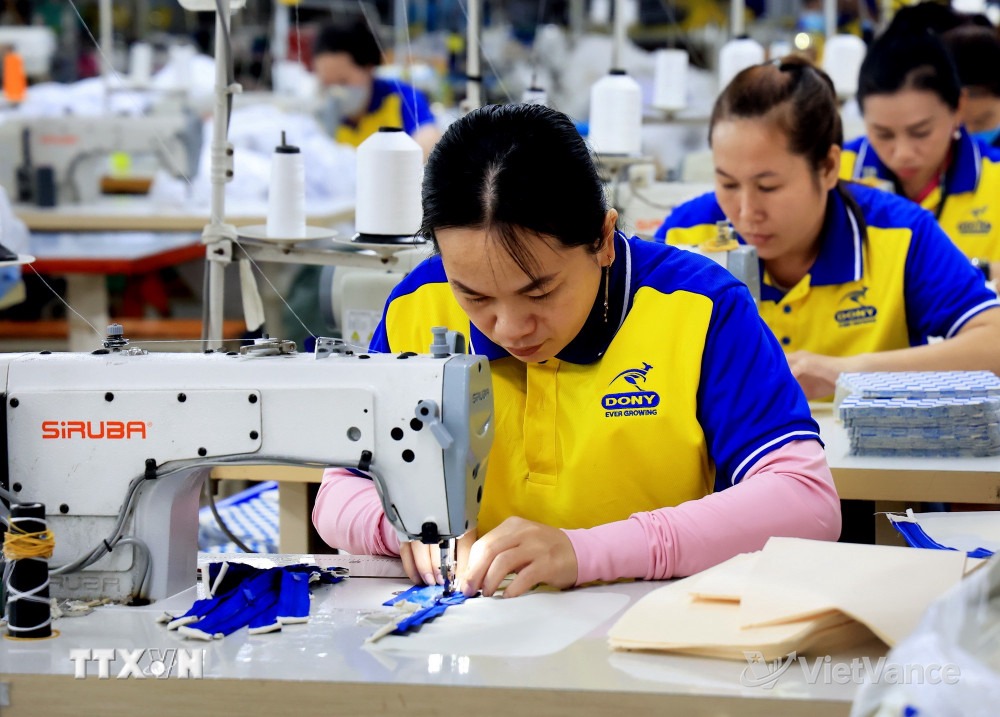
Production of textile and garment products for export.(VietVance)
Vietnamese textile and garment products are sold in many overseas markets. The United States remains a key market, while the European Union, South Korea, Japan, China and ASEAN are also established markets. The industry is diversifying export markets and partners and strengthening coordination across spinning, weaving, dyeing and finishing, and garment manufacturing to meet customers’ requirements for quality, design and small orders.
The domestic value-added share of textile and garment products cited in the source is about 52%. As customers demand more information about the origin of materials, production conditions and resource use, the industry plans to develop supporting industries for raw materials and accessories while advancing technology upgrades, workforce training and the green transition. A supporting industries development plan for 2026–2035 calls for raising the textile and garment industry’s localization rate to 60% by 2030 to help companies meet rules of origin.
Source: VietVance