Vietnam issues year-end directive to boost consumption and stabilize prices
Vietnam’s government issued Prime Ministerial Directive No. 40 on November 21, setting out measures to boost consumption in late 2026 and during the 2027 Lunar New Year. It calls for appropriate tax and fee policies, adequate supplies of essential goods and action against unreasonable price increases. Consumer prices rose 4.57% year on year in the first 10 months of 2026.

On November 21, Vietnam’s government issued Prime Ministerial Directive No. 40, setting out measures to boost consumption and develop the domestic market in the final months of 2026 and during the 2027 Lunar New Year. The directive calls on ministries and local authorities to promptly address difficulties facing production and business operations. The Ministry of Finance should manage tax and fee policies appropriately to reduce living costs and increase households’ spending capacity.
The directive says rising prices for imported raw materials and fuel, along with higher credit, production and business costs, could keep Vietnam’s domestic goods market under inflationary pressure from late 2026 into early 2027, affecting purchasing power and market growth. In the first 10 months of 2026, the consumer price index rose 4.57% year on year; prices for housing, electricity, water and building materials rose 6.7%, fuel prices rose 13%, and transport prices rose nearly 7%.
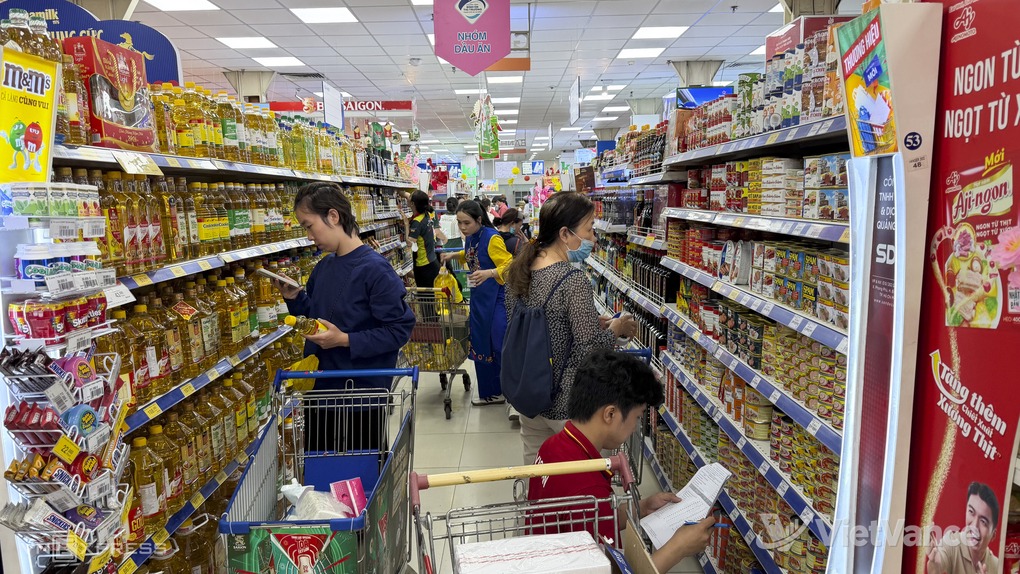
Shoppers at a supermarket in Ho Chi Minh City on February 7.(VietVance)
To stabilize the year-end market, the government called for a review of factors driving up prices of essential goods and for prices of state-priced goods and services to be adjusted on an appropriate schedule, with year-end increases limited where possible. It also called for balanced supply and demand for essential goods at year-end and during the Lunar New Year, and strict action against hoarding and unreasonable price increases that exploit market fluctuations. The government also encouraged credit institutions to develop a wider range of consumer credit products.
The Ministry of Industry and Trade must monitor international oil prices, ensure stable fuel and electricity supplies for businesses and consumers, and explore ways to expand goods sales through newer business models such as outlet stores and commodity derivatives markets. The government also called for efforts to build Vietnamese goods brands and encourage consumption of high-quality Vietnamese products.
The government has previously reduced value-added tax, extended deadlines for tax and land rent payments, and cut the special consumption tax on mineral gasoline and E5 and E10 gasoline to zero. Electricity prices were also reduced by 2%, while medical service prices did not rise in 2026. The government estimates that these tax relief policies will reduce fiscal revenue by about 256.7 trillion Vietnamese dong in 2026.
Source: VietVance