ASEAN’s 49th Summit Adopts and Notes 117 Documents
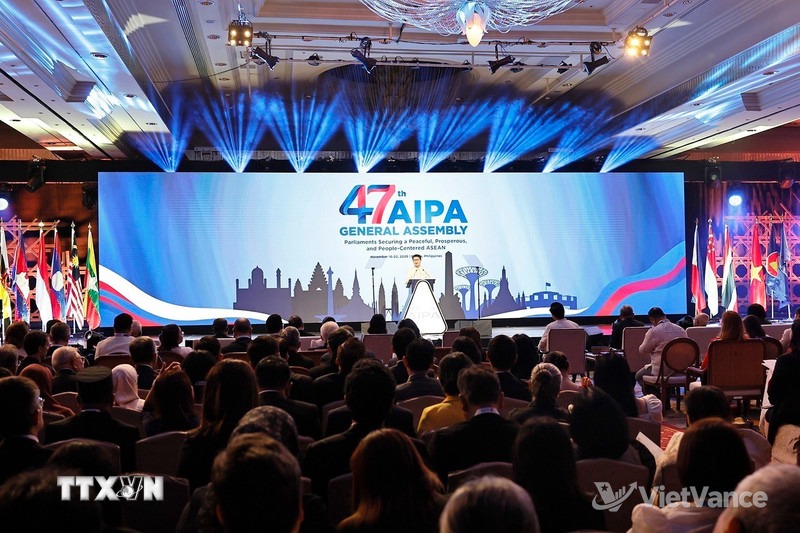
ASEAN Secretary-General Kao Kim Hourn said the 49th ASEAN Summit and related meetings, held in Manila from November 15 to 17, adopted and noted 117 documents. ASEAN will focus on turning commitments into action while advancing digital economy cooperation, South China Sea code of conduct talks, and discussions on Myanmar.

ASEAN Secretary-General Kao Kim Hourn presented the outcomes of the 49th ASEAN Summit and related meetings in Jakarta, Indonesia, on November 18, 2026. The meetings, held in Manila, Philippines, from November 15 to 17, adopted and noted a total of 117 documents: 85 at the summit and 32 at related meetings. He said the immediate priority is to turn commitments and agreements into concrete actions whose results can be assessed and that benefit the public.
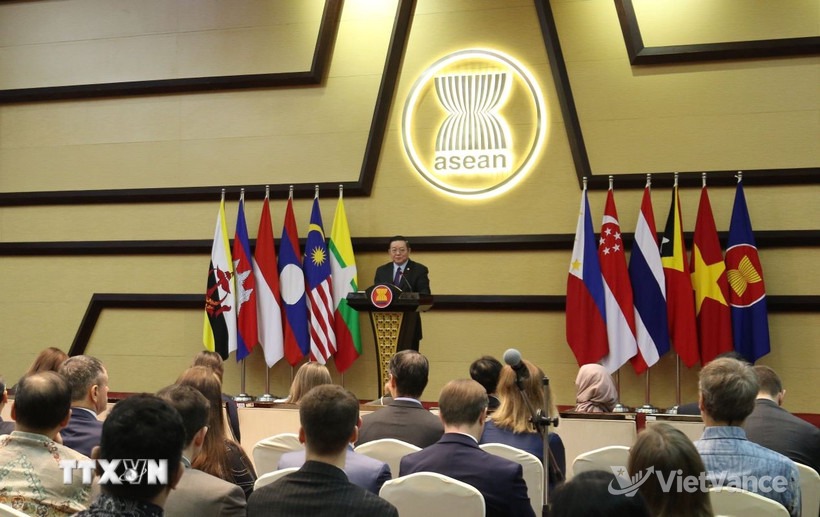
ASEAN Secretary-General Kao Kim Hourn presents the outcomes of the 49th ASEAN Summit and related meetings.(VietVance)
2026 is the first year of implementation of the ASEAN Community Vision 2045. Amid global economic instability and growing security challenges, leaders emphasized ASEAN unity, its central role, and coordination among the community’s three pillars. They also discussed digital transformation, applications of artificial intelligence, energy security, and supply chain resilience. Economic cooperation topics included advancing the ratification and implementation of the ASEAN Digital Economy Framework Agreement, developing the ASEAN Power Grid, and protecting undersea infrastructure that supports digital connectivity. ASEAN will also pursue upgrades to free trade agreements and expects to conclude free trade agreement negotiations with Canada in 2027.
On the South China Sea, Kao Kim Hourn said ASEAN leaders reaffirmed the importance of peace and stability, freedom of navigation and overflight, and peaceful settlement of disputes in accordance with international law, including the 1982 United Nations Convention on the Law of the Sea. He said ASEAN and China had completed more than 80% of the work on a South China Sea code of conduct. Both sides hope to conclude negotiations in 2027, when Singapore chairs ASEAN; the remaining issues still require the parties to narrow their differences.
On Myanmar, ASEAN continues to use the Five-Point Consensus as the basis for addressing the crisis, prioritizing a reduction in violence, humanitarian assistance, and comprehensive dialogue. Kao Kim Hourn said any gradual restoration of full participation by Myanmar’s political representatives in ASEAN activities would depend on concrete and sustained progress in implementing the Five-Point Consensus. Meetings with partner countries also covered food and energy security, the digital economy, and transnational crime, including online scams.
Source: VietVance