Vietnam Links Nationwide AI Transformation to Domestic Industry Development
At the AI360 forum on November 18, a Vietnamese science and technology official said nationwide AI transformation must go hand in hand with developing domestic industry capabilities. Vietnam has enacted an AI law and adopted a national strategy, while businesses are calling for better access to data and computing resources, public sector procurement, and clearer investment support measures.

Trần Anh Tú, deputy director of the Department of Digital Technology and Artificial Intelligence under Vietnam’s Ministry of Science and Technology, said at the AI360 forum on November 18 that Vietnam should develop its domestic AI industry capabilities as it advances nationwide AI transformation. Demand for AI applications can give businesses a market in which to research and refine products, while technological self-reliance can support continued deployment and innovation.
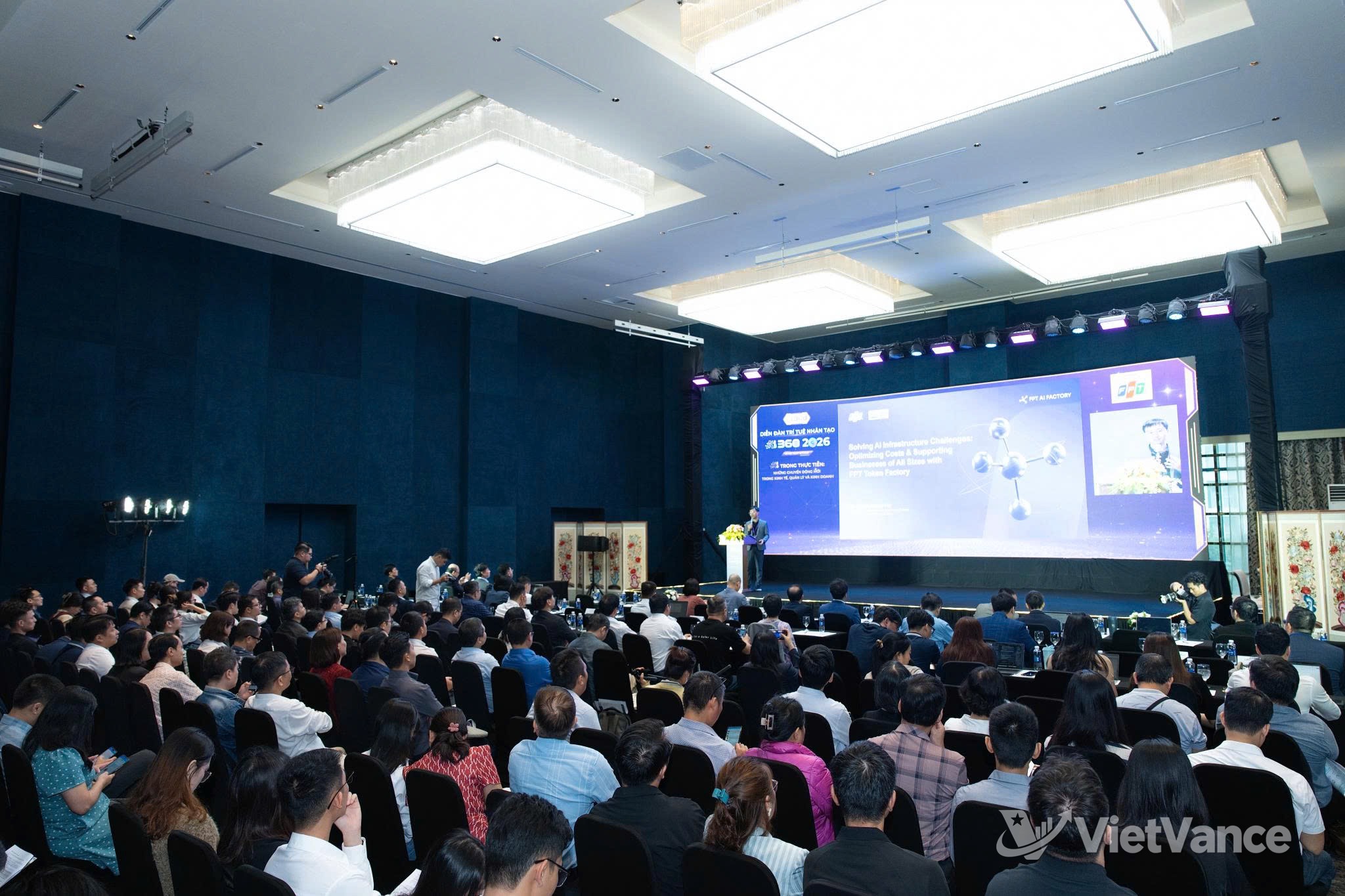
The AI360 Vietnam Artificial Intelligence Forum in 2026.(VietVance)
Vietnam’s National Assembly passed the Artificial Intelligence Law on December 10, 2025, and it took effect on March 1, 2026. The government issued a national AI strategy on August 28, 2026, aiming to place Vietnam among Southeast Asia’s top three countries for AI research and development by 2030, integrate AI into all online public services, and establish 10 Vietnamese AI brands competitive regionally and internationally. By 2045, Vietnam aims to rank among Asia’s top 10 countries in AI.
Nguyễn Văn Khoa, chairman of the Vietnam Software and IT Services Association, said Vietnamese businesses have begun AI-based transformation. On behalf of the association’s members, he called for the prompt launch of an AI development fund and support for small and medium-sized enterprises adopting domestic solutions. He also urged public sector procurement and public-private partnerships to expand the market, along with better access to shared data, Vietnamese-language data and computing resources. The association further proposed simplifying compliance and testing procedures and specifying tax incentives and interest support measures.
Trần Anh Tú said AI applications must have clearly identified users, expected outcomes and acceptance criteria. Businesses should develop products in response to market demand, work with other companies, research institutes and universities, and gradually gain command of models, algorithms and key technologies. To serve international markets, they must also prepare to meet relevant standards and requirements for data protection, intellectual property and service quality.
On governance, he said Vietnam’s Artificial Intelligence Law classifies AI systems into three risk levels: high, medium and low. Management requirements should be proportionate to the risks and the context in which systems are used. The responsibilities of providers, deployers and users must be clear. If modifying, integrating or changing a system’s purpose creates new or higher risks, the system should be reviewed and classified again.
Source: VietVance