Basel Committee Flags Interest Rate and Technology Risks for Banks
At its November 18, 2026 meeting, the Basel Committee on Banking Supervision discussed interest rate, commercial real estate refinancing and technology risks facing the global banking system, and planned consultations on revisions to liquidity risk management principles and other rules.

The Basel Committee on Banking Supervision met in Basel, Switzerland, on November 18, 2026, to discuss risks to the global banking system amid economic and geopolitical uncertainty. It focused on interest rate risk in the banking book, unrealized losses, commercial real estate refinancing risk, and growing links between banks and nonbank financial institutions.
Data center financing and artificial intelligence related lending were also on the agenda. The committee said banks need to assess credit quality, borrowers’ ability to repay and risk concentrations carefully in these fast growing areas. On the operational side, information security and reliance on third party service providers remain supervisory priorities. The expansion of digital banking, cloud services and artificial intelligence applications has also brought risks of cyberattacks, digital fraud and technology failures into focus.
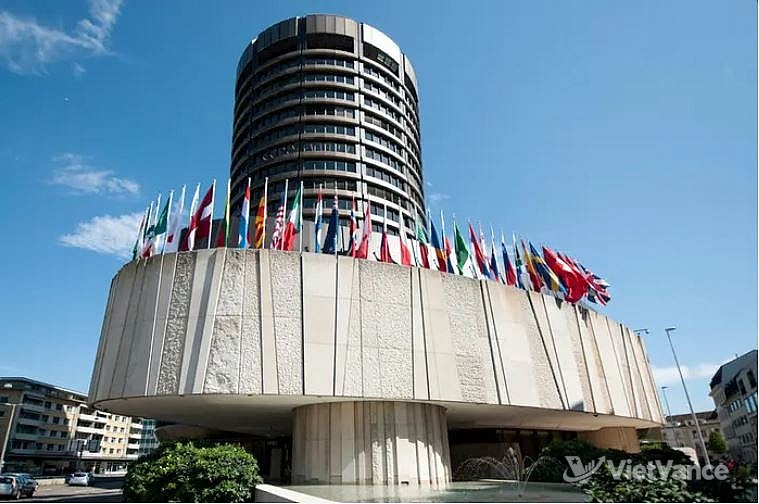
Offices of the Basel Committee on Banking Supervision in Switzerland.(VietVance)
The committee has completed its assessment of needed updates to the Principles for Sound Liquidity Risk Management and Supervision, issued in 2008, and agreed to consult on revisions in December 2026. It also plans to consult on technical adjustments to the counterparty credit risk standard and the liquidity coverage ratio in November 2026.
The committee continues to use the Regulatory Consistency Assessment Programme to assess how closely member countries’ domestic rules align with Basel III capital and liquidity standards. Its assessment found that banks generally retain relatively sound capital and liquidity positions, with no widespread, significant deterioration in asset quality. Committee chair and governor of Sweden’s central bank Erik Thedéen said supervisory arrangements need to adapt to continuing changes in the banking system. The committee’s 2027–2028 work programme and strategic priorities are expected to be submitted to the Group of Central Bank Governors and Heads of Supervision for review in early 2027.
Source: VietVance