Brent Crude Falls Nearly 20% in November as Rising Supply Weighs on Prices
Brent crude futures briefly fell below $90 a barrel on November 10 but closed above $91, down about $22 from the end of October. JPMorgan Chase says global oil production has exceeded consumption, while the prospect of a US-Iran agreement has eroded the risk premium previously priced into oil.

Brent crude futures in London briefly fell below $90 a barrel during trading on November 10, crossing that threshold for the first time in nearly three months. Although they closed above $91, prices were still down about $22 from the end of October, a decline of nearly 20%.
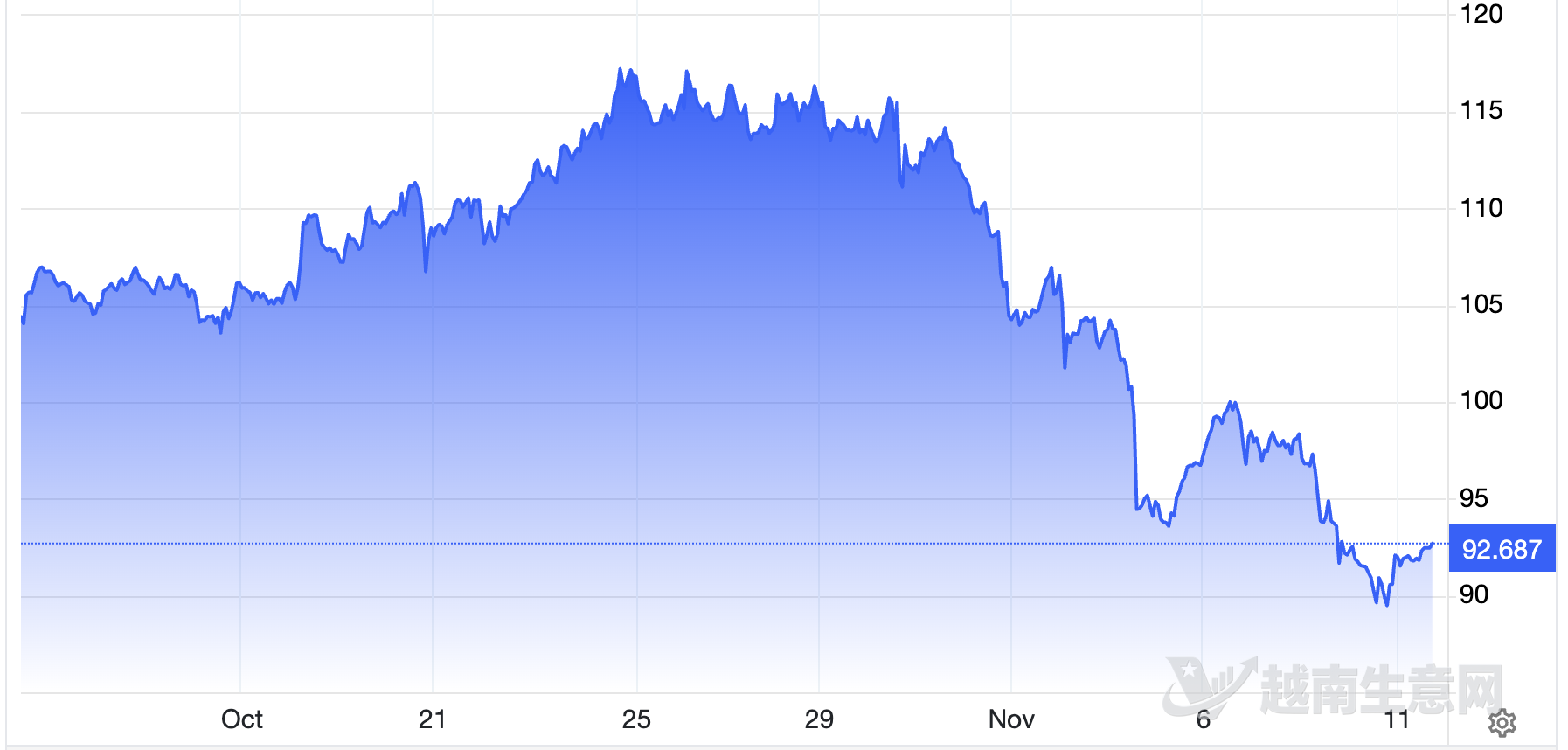
Brent crude futures prices in London over the past month, in US dollars per barrel.(VietVance)
Citing analysts, The New York Times reported that global crude oil supply is catching up with demand. Experts at JPMorgan Chase say that, since September, global oil production has exceeded consumption for the first time since the US-Iran conflict began. The bank said last week that the return of an actual supply surplus, together with reports of a possible US-Iran agreement, is rapidly eroding the risk premium previously reflected in oil prices.
The recovery in Middle Eastern crude exports, rising production elsewhere, and efforts by consumers and businesses to conserve fuel have together eased pressure on the market. Proposals made by Qatar to the United States and Iran are also seen as having delayed the risk of a new round of attacks on Iran. However, higher transport costs, depleted inventories and damaged refineries have kept fuel prices in many countries well above their levels before the Gulf conflict.
After the US midterm elections, market expectations of an easing in the US-Iran conflict strengthened further. Jorge Leon, senior vice president at consultancy Rystad Energy, said in a report last week that the market appeared to expect Trump to face pressure to end the conflict, though he warned that a brief military escalation could still occur in the coming weeks. Hamad Hussain, a senior economist at research firm Capital Economics, said considerable uncertainty remains over whether and when the two sides might reach an agreement.
Source: VietVance