Chinese Clean Energy Products Cut Costs as Trade Barriers Spark Debate
At COP31 in Turkey, China’s lower cost clean energy products drew attention for their role in helping developing countries pursue the energy transition. Trade restrictions imposed by the United States and the European Union also raised questions about equipment costs and climate goals.

At the 31st UN Climate Change Conference (COP31) in Antalya, Turkey, attention turned to China’s supply of solar panels, wind turbines, energy storage batteries and electric vehicles. The article notes that China’s manufacturing scale and supply chain development have lowered the costs of these technologies, making clean energy equipment more accessible to some developing countries.
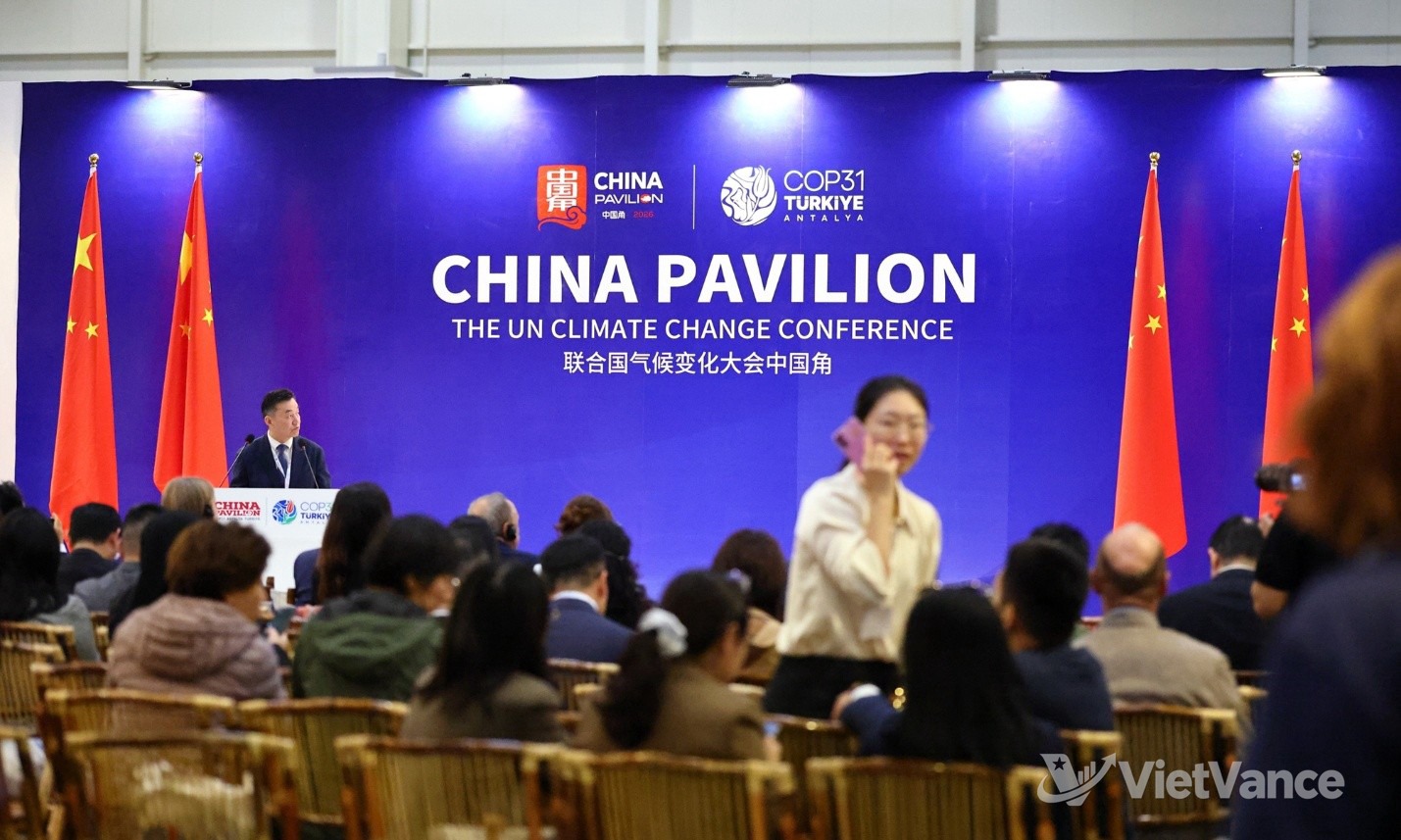
A Chinese exhibition stand at COP31 in Turkey.(VietVance)
During the conference, Chinese Vice President Han Zheng met with UN Secretary-General António Guterres to discuss climate cooperation, commitments under the Paris Agreement and South-South cooperation. China said it would continue to fulfill its nationally determined contributions and strengthen technology transfer and climate response capacity building with developing countries. Australian Minister for Climate Change and Energy Chris Bowen said China had helped lower the cost of clean energy technologies.
Meanwhile, the United States has imposed tariffs on Chinese solar products and electric vehicles. The European Union has imposed tariffs on Chinese electric vehicles, introduced restrictions on some solar components and investigated some Chinese wind power companies. Western economies say these measures protect domestic manufacturing, uphold fair competition and reduce risks from dependence on foreign supply chains. Chinese environmental advocate Ma Jun warned that trade protectionism could raise the cost of the energy transition.
Pakistan offers an example of lower priced solar products reaching developing countries. Solar panels from China have helped some local households reduce their reliance on the power grid and created opportunities for businesses using solar power. The article also notes that equipment quality, operating and maintenance capacity, energy storage and grid connections will affect whether these projects deliver lasting benefits.
Source: VietVance