Canadian Businesses Eye Service and Technology Opportunities in Vietnam
Canadian businesses are looking to Vietnam as they diversify their markets. Conference participants said cooperation could expand beyond goods trade into food processing, clean energy, information technology and logistics. Access to market information, suitable partners and business rules will be key to turning interest into projects and contracts.

Canadian businesses are focusing on markets in the Indo-Pacific, including Vietnam. At the 2026 Mississauga International Trade Conference in Toronto, participants discussed global trade prospects, market diversification, logistics, customs and business connections. The discussion highlighted the need for companies to understand local needs and find suitable partners to turn market interest into projects and contracts.
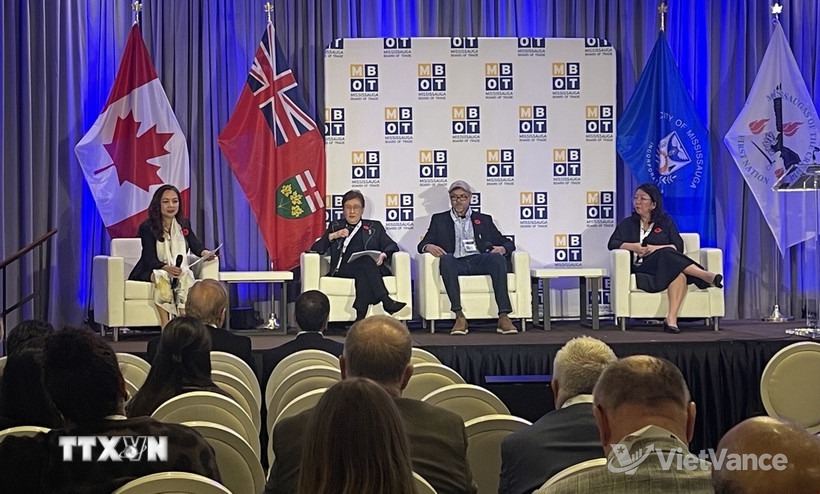
An Indo-Pacific discussion session at the 2026 Mississauga International Trade Conference.(VietVance)
Julie Nguyen, head of the Canada-ASEAN Initiative at York University, said two-way goods trade between Canada and the Indo-Pacific reached CAD 281.4 billion in 2025. The region is Canada’s second-largest trading partner and export market after the United States. She said the family, cultural and business ties that Canada’s Asian communities maintain with the region can help companies understand markets and build trust.
Peter Hawkins, co-owner of MELLOHAWK Logistics, said some Canadian businesses still judge international markets based on impressions formed years ago. Their view of Vietnam, in particular, remains largely limited to seeing it as a source of low-cost goods. He said companies could find more opportunities in services and consulting by gaining a deeper understanding of Vietnam’s business practices and needs.
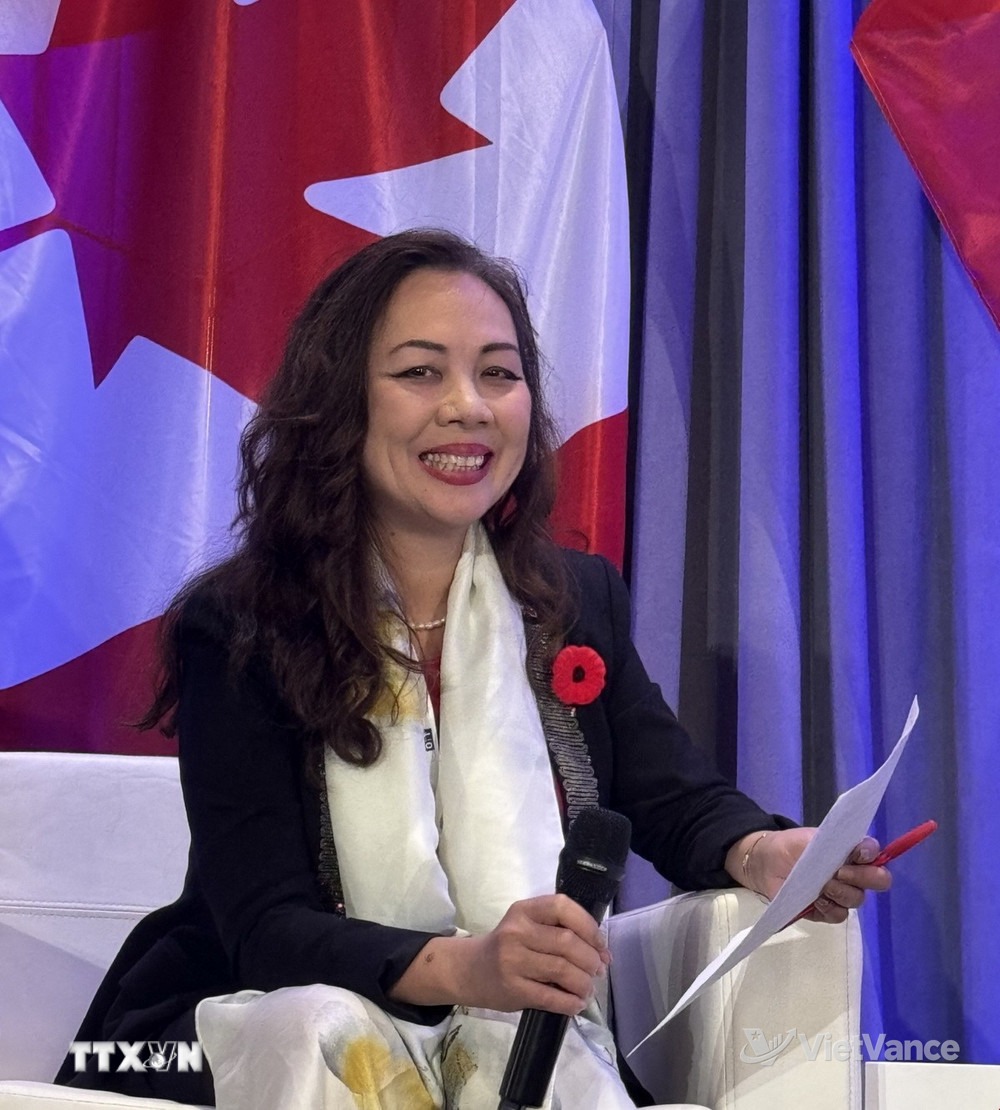
Julie Nguyen takes part in a discussion on the Indo-Pacific.(VietVance)
Julie Nguyen said Vietnam has the potential to attract Canadian businesses in agriculture, food processing, clean energy, environmental technology, information technology, infrastructure, logistics and healthcare. Cooperation could also extend to technologies and services such as food preservation, energy transition project design, software, artificial intelligence, cybersecurity and digital healthcare. She also called for simpler licensing procedures, more transparent regulations, stronger intellectual property protection and better contract enforcement.
She said Canadian businesses still face difficulties finding Vietnamese partners and obtaining information on tariffs, rules of origin and business conditions, hindering their use of the Comprehensive and Progressive Agreement for Trans-Pacific Partnership. She recommended more direct connections between businesses in the two countries and better preparation for market visits. Peter Hawkins also advised companies to research the market first, then build relationships through chambers of commerce, trade agencies and business networks.
Source: VietVance