Climate Risks Are Influencing Global FDI Location Decisions
Production disruptions, infrastructure damage and rising operating costs caused by extreme weather are becoming factors in multinational companies’ investment location decisions. A study covering 159 countries found an association between climate vulnerability and foreign direct investment inflows. Vietnam has suffered related losses and needs more resilient infrastructure.

Climate risks are influencing where multinational companies invest. Floods, droughts and extreme heat can disrupt transport, water supplies and electricity, raise project operating costs, and lengthen the time needed to recover an investment. Faced with potential losses, some investors may delay, revise or abandon projects in climate-vulnerable areas.
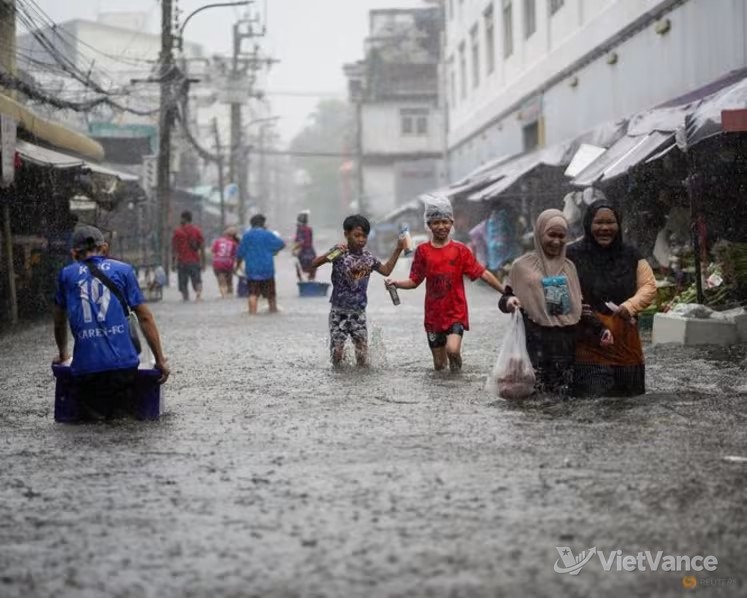
People wade through floodwater at a market in Bangkok, Thailand, during heavy rain.(VietVance)
A study covering 159 countries estimates that, with other relevant factors held constant, each one-point increase in the climate vulnerability index, measured on a 100-point scale, is associated with an approximately 12% decrease in foreign direct investment inflows to a country. The index measures exposure to climate hazards as well as the capacity to adapt and respond. The finding shows an association between the two; it should not be taken as the actual decline in every country.
Climate-related disasters have already caused losses to Vietnamese businesses and infrastructure. In 2022, storms and floods caused an estimated $475 million in damage to Vietnam’s energy and transport infrastructure; unreliable infrastructure also cost businesses about $280 million. During Thailand’s severe floods in 2011, companies including Toyota, Nissan and Honda suspended production after their factories were inundated, affecting supply chains for components and finished vehicles.
The article suggests that developing countries can improve roads, ports, power grids, water supplies and industrial park drainage to help projects continue operating during extreme weather. More detailed local climate risk data, along with insurance and risk-sharing tools, can also help investors assess individual projects. For Vietnam, infrastructure resilience is becoming a factor in attracting long-term investment.
Source: VietVance