Durban Port Project Offers ASEAN Businesses Insights Into Investing in South Africa
On November 18, an ASEAN delegation visited Pier 2 at South Africa’s Port of Durban to learn about a port project operated jointly by a Philippine company and state-owned Transnet. Its governance, modernization and regulatory experience offers insights for Vietnamese and other ASEAN businesses assessing investment in South Africa.

On November 18, 2026, a delegation from the ASEAN Committee in Pretoria visited Pier 2 at the Port of Durban in South Africa’s KwaZulu-Natal province and met with Philippine company International Container Terminal Services, Inc. (ICTSI) and South Africa’s state-owned transport group Transnet. The delegation included a Vietnamese working group and focused on port operations, logistics management and public-private partnership arrangements.
The terminal, now known as Durban Gateway Port, is South Africa’s first large-scale infrastructure public-private partnership project. The port currently handles about 46% of the country’s container throughput and is an important maritime gateway for landlocked countries in Southern Africa. The joint venture between ICTSI and Transnet has a 25-year operating term; Transnet holds a controlling stake, while ICTSI manages day-to-day operations.
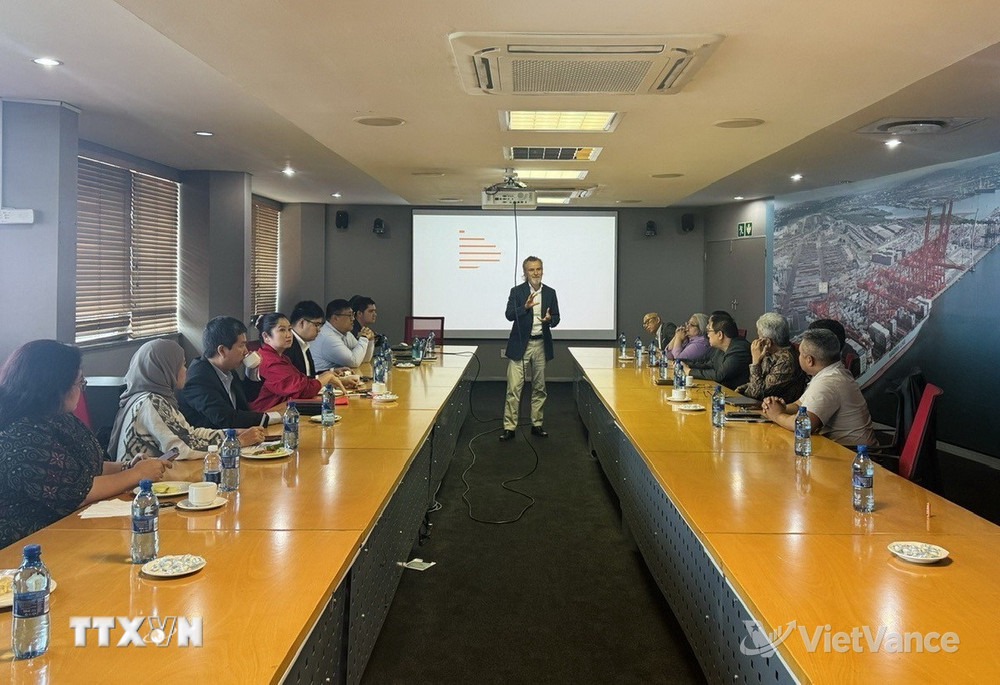
Representatives of ICTSI and Transnet briefed the ASEAN delegation on port management and supply chain operations.(VietVance)
Durban Gateway Port said its modernization program had entered its 10th month since the takeover, with the first six months devoted mainly to the handover. Its core port operating system went live on August 15, paving the way for gradual upgrades to automated gates, optical character recognition and enterprise resource planning systems. Annual throughput at the Port of Durban once stood at 2.3 million to 2.5 million TEUs but later fell to about 1.7 million TEUs because of prolonged congestion. Port management believes the relatively balanced volume of imports and exports will help it regain lost market share.
ICTSI management also said the project’s tender process took nearly four years, including 17 months of approvals and about a year of legal disputes with Maersk, and involved nine separate agreements. It said businesses investing in South Africa must also navigate the country’s Black Economic Empowerment policy, visa and foreign exchange procedures, and relations with trade unions. The ASEAN delegation said it would continue dialogue with South African counterparts on supply chain and logistics cooperation.
Source: VietVance