Gold Returns Above $4,000 as US Inflation Data Could Shape Its Next Move
Gold rose more than 5% last week and climbed back above $4,000 an ounce, but expectations of persistently high US interest rates could still weigh on prices. US consumer and producer price data due this week may help determine whether the rebound holds.

International gold prices rose more than 5% last week, recovering from a one-year low below $3,900 an ounce the previous week and climbing back above $4,000. At around 7 a.m. Vietnam time on November 9, spot gold in Asian trading was down 0.15% from the previous week's New York close at $4,067 an ounce; spot silver fell more than 0.2% to $52 an ounce.
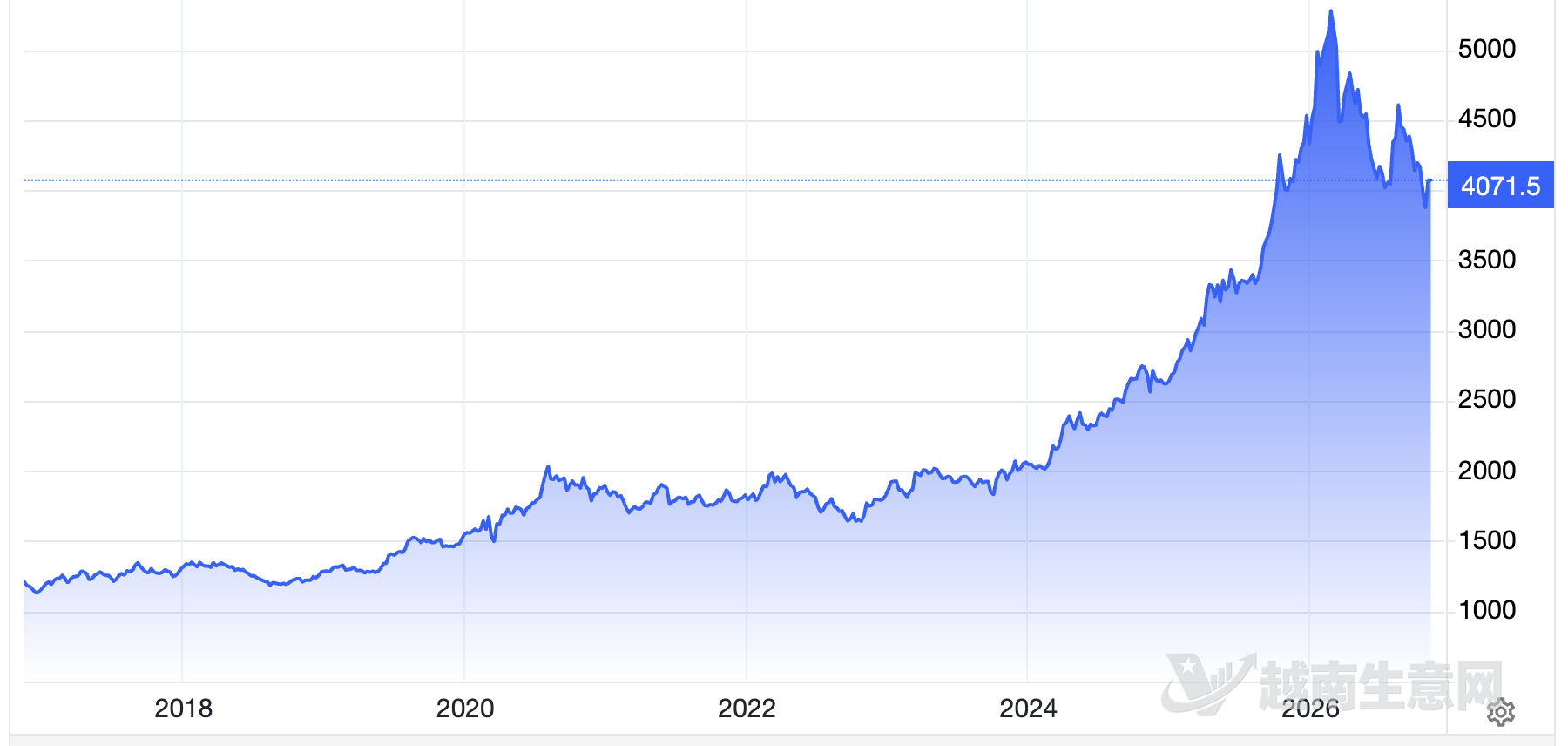
International gold prices over the past 10 years, in US dollars per ounce.(VietVance)
The rebound in gold prices last week came amid a sharp drop in oil prices, a decline in US Treasury yields and the Democratic Party's capture of both chambers of Congress in the US midterm elections. Gold then edged lower last Friday after US nonfarm payroll data beat expectations. The US Department of Labor is scheduled to release the October Consumer Price Index on November 10 and the Producer Price Index on November 13.
Phillip Streible, chief strategist at Blue Line Futures, said that if inflation remains high, expectations of a Federal Reserve rate increase in December could strengthen, potentially pushing gold below $4,000 an ounce again. He also said a subsequent slowdown in the US economy could prompt the Fed to adjust its tightening policy, creating room for gold prices to rise. These assessments remain dependent on forthcoming economic data and policy changes.
Ole Hansen, head of commodity strategy at Saxo Bank, said gold is likely to hold above $4,000 an ounce despite the risk of persistent inflation, though a sharp rise in the near term is unlikely. He said recent gains were supported by short covering and falling oil prices, while a further advance still lacks a sufficiently strong catalyst.
Simon-Peter Massabni, head of business development at XS.com, said gold could remain under pressure in the near term and may fall further if it drops below $4,000 an ounce and stays there. He identified $4,150 to $4,170 an ounce as the key resistance range that gold must clear to confirm a renewed uptrend, and said market volatility could remain high until the outlook for inflation and Fed policy becomes clearer.
Source: VietVance