Hanoi Sidewalks Dug Up Toward Year-End as Funding Cycle Affects Start Dates
Sidewalks across Hanoi have been dug up for renovations and underground utility work, disrupting pedestrians and businesses. The Cầu Giấy Ward People’s Committee says public investment projects often cannot begin until October or November because funding, design approval and tendering take time. Utility providers’ schedules can also lead to repeated excavation.

Several streets in Hanoi are undergoing sidewalk renovations and underground utility work at the same time. Some sections remain unfinished, with soil, rubble and construction materials blocking walkways and forcing pedestrians into the road. The work is disrupting daily life for residents and businesses along the streets.
A sidewalk and drainage renovation project on Thái Thịnh Street began in September 2026 and is still at the stage of removing the old surface. Trần Quang Tính, a local restaurant owner, said he pays 15 million Vietnamese dong a month in rent, but construction outside his premises, standing water and dust have significantly reduced customer numbers in recent months. Part of the sidewalk on Cầu Giấy Road, paved with stone in 2025, has recently been opened up again to install a firefighting water supply pipe.
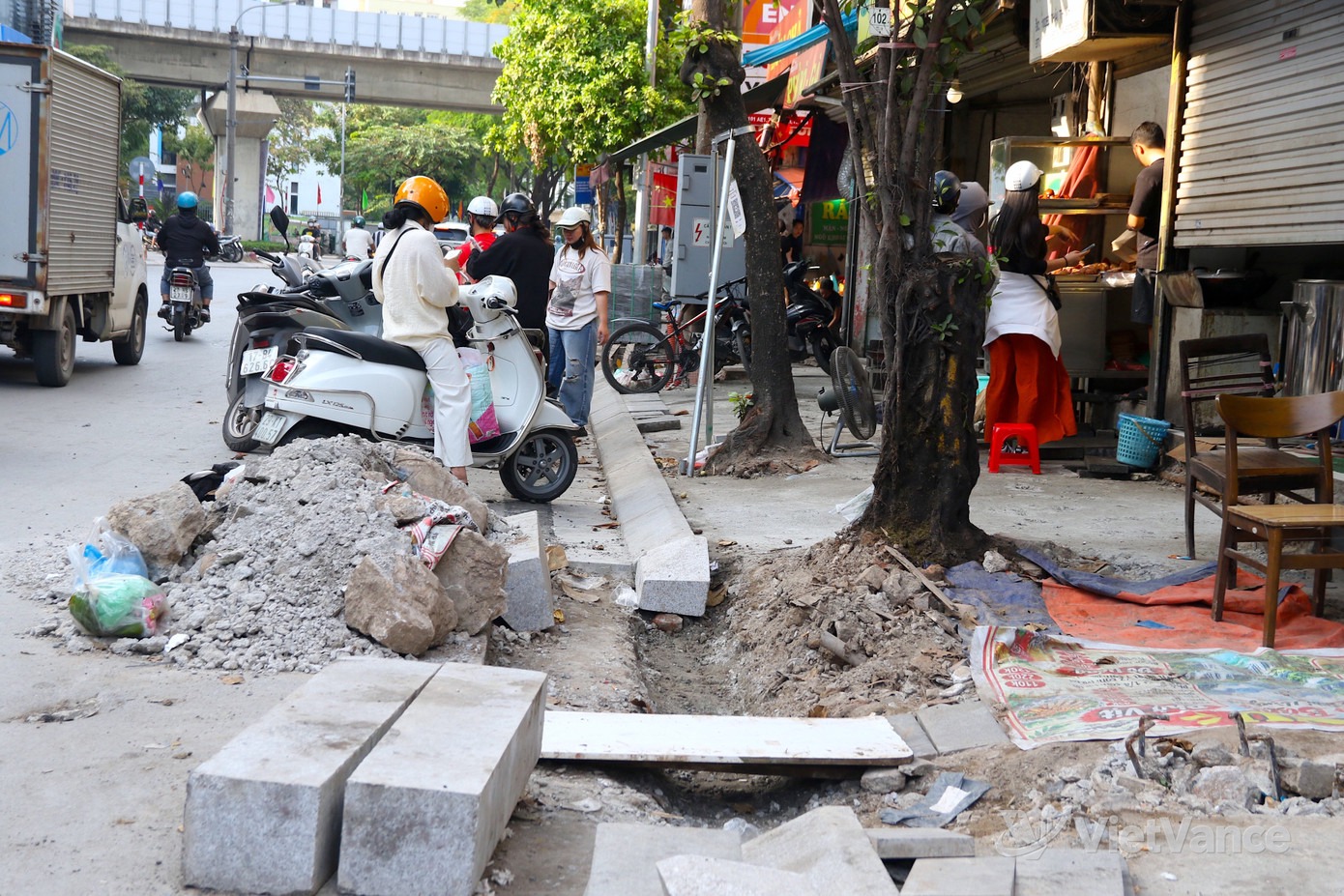
Construction materials for sidewalk and drainage renovations on Thái Thịnh Street in Hanoi are taking up space used by pedestrians.(VietVance)
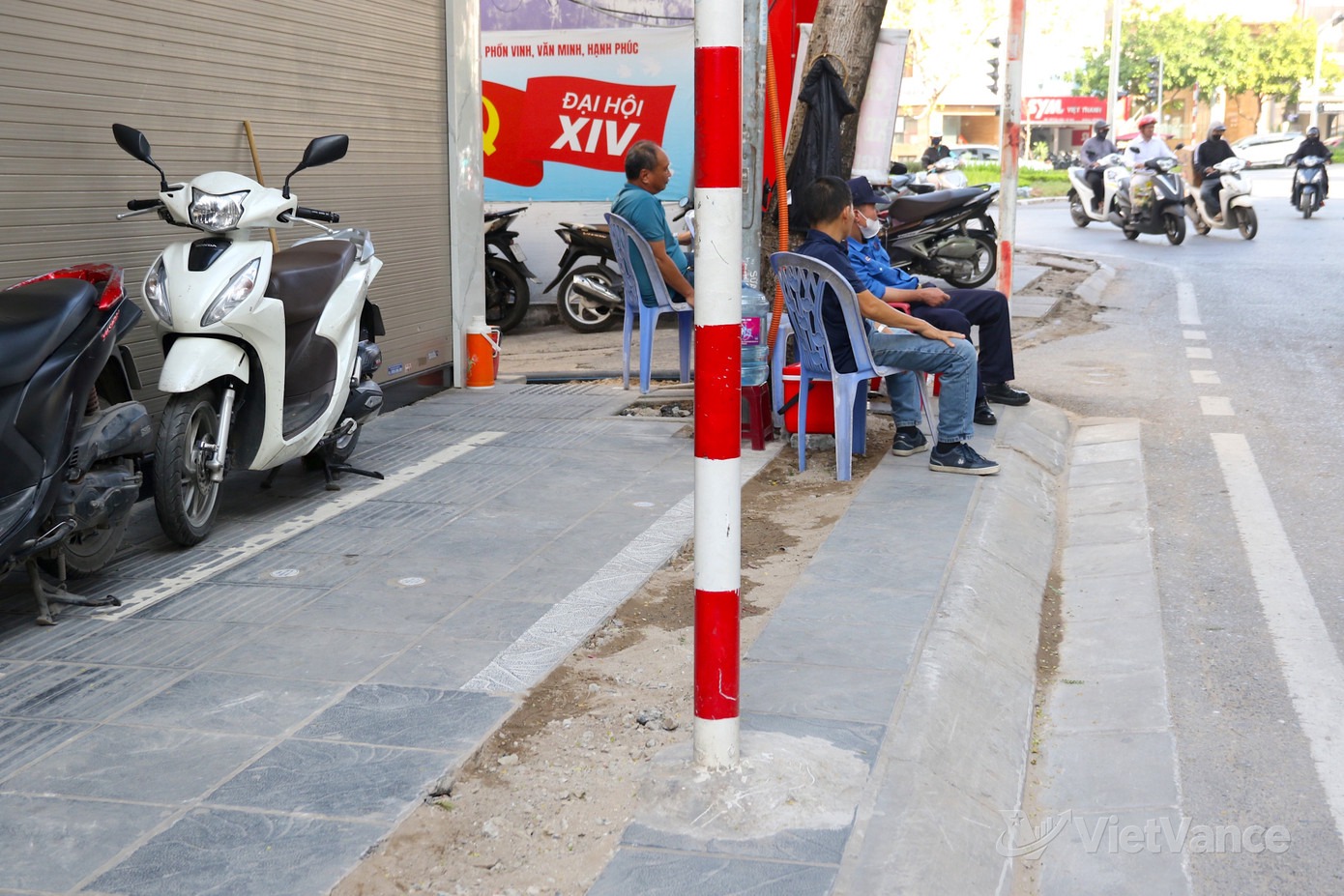
Part of the stone-paved sidewalk on Cầu Giấy Road has been opened up to install a firefighting water supply pipe.(VietVance)
The Cầu Giấy Ward People’s Committee said there is currently only one large local project involving a comprehensive sidewalk renovation and stone paving. Work at other sites involves underground infrastructure, connections to side streets, or projects carried out by other specialized agencies. The local government explained that although public investment projects are proposed early in the year, they generally must await funding approval at meetings held between June and September. Design approval and tendering then take another one to two months, so work often cannot begin until October or November.
The local government said it informs electricity, telecommunications and water suppliers of sidewalk construction plans to coordinate the work. However, these providers have their own investment plans and budget cycles, making it difficult to align underground utility work fully with local street renovations. As a result, the same stretch of sidewalk may be dug up several times. Hanoi’s Technical Infrastructure Management Center, under the city’s Department of Construction, also identified the public investment funding cycle as one reason construction is concentrated toward the end of the year.
Source: VietVance