About 100,000 Tons of Fly Ash Accumulated at Two Hanoi Waste-to-Energy Plants
Two Hanoi waste-to-energy plants have accumulated about 100,000 tons of fly ash, with one generating another 60–75 tons daily. Experts recommend monitoring its treatment and final destination and assessing environmental safety before considering its use in building materials.

About 100,000 tons of fly ash has accumulated at two waste-to-energy plants in Hanoi. At a seminar on fly ash treatment held on November 25, Nguyễn Thành Lợi said the figure had been raised during questioning at a Hanoi People’s Council session in late October. One of the plants generates about 60 to 75 tons of fly ash a day, adding to the stockpile.
A representative of one plant’s operator said storing the fly ash takes up space and could affect progress on the plant’s second phase. Expert Hoàng Xuân Cơ noted that fly ash from burning household waste differs from fly ash produced by coal-fired power plants. Operators should regularly collect and analyze samples, while Hanoi should continuously track the amount generated, treatment quality and final destination of the fly ash.
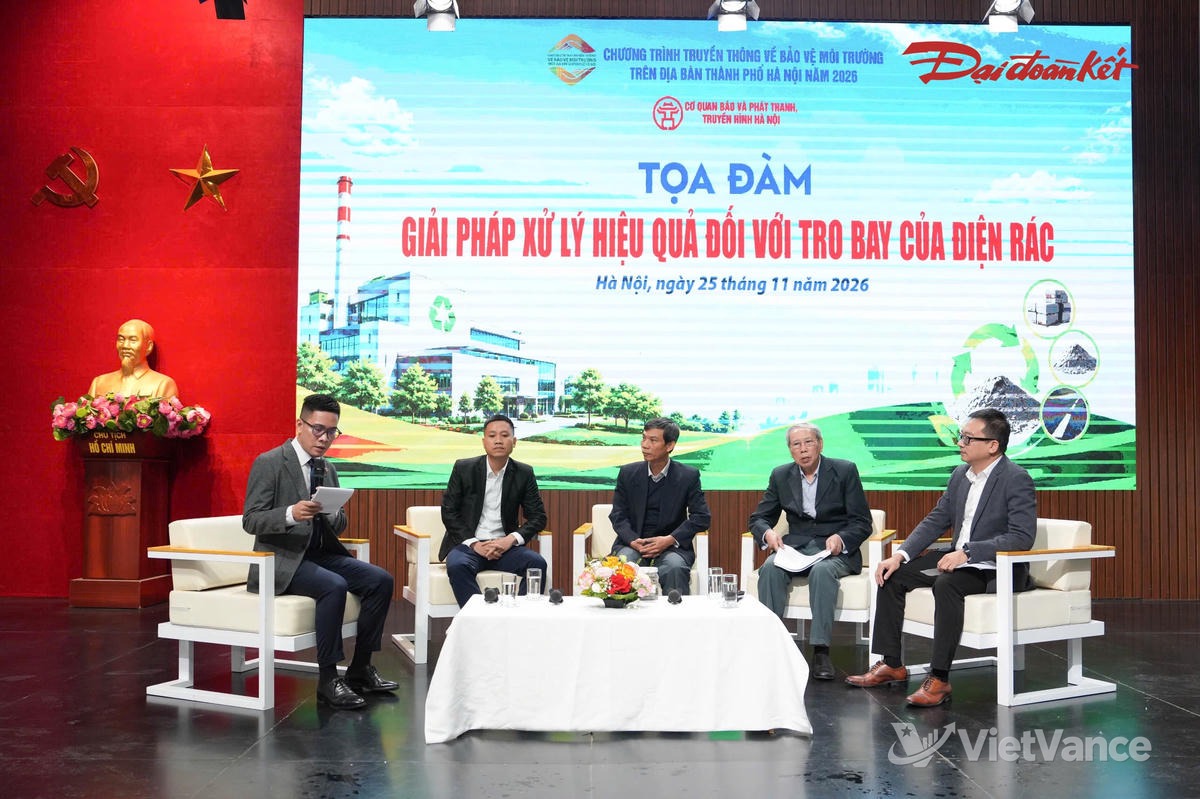
Experts attend a seminar on solutions for treating fly ash from waste-to-energy plants.(VietVance)
Tạ Văn Luân, from a building materials research institute under the Ministry of Construction, said cement, lime and other materials can be used to stabilize and solidify fly ash, limiting the spread of pollutants without completely removing hazardous components. Washing can reduce levels of salt, alkalis and some harmful substances, but may produce wastewater containing salt, heavy metals and other pollutants. High-temperature treatment can process organic compounds but requires substantial energy and investment. The choice of technology should depend on the composition of fly ash from each source and the treatment objectives.
Đỗ Tiến Dũng, a representative of the plant operator, said fly ash must be sampled and tested after stabilization, solidification and curing, then transported to a treatment site. The origin, quantity and analysis results of each batch should be recorded. He stressed that products whose environmental safety has not been demonstrated cannot be put into use. Experts at the seminar said treatment results and environmental standards should be rigorously assessed before fly ash is reused as a building material.
Source: VietVance