Vietnam live pig prices steady on November 25, may fluctuate on November 26
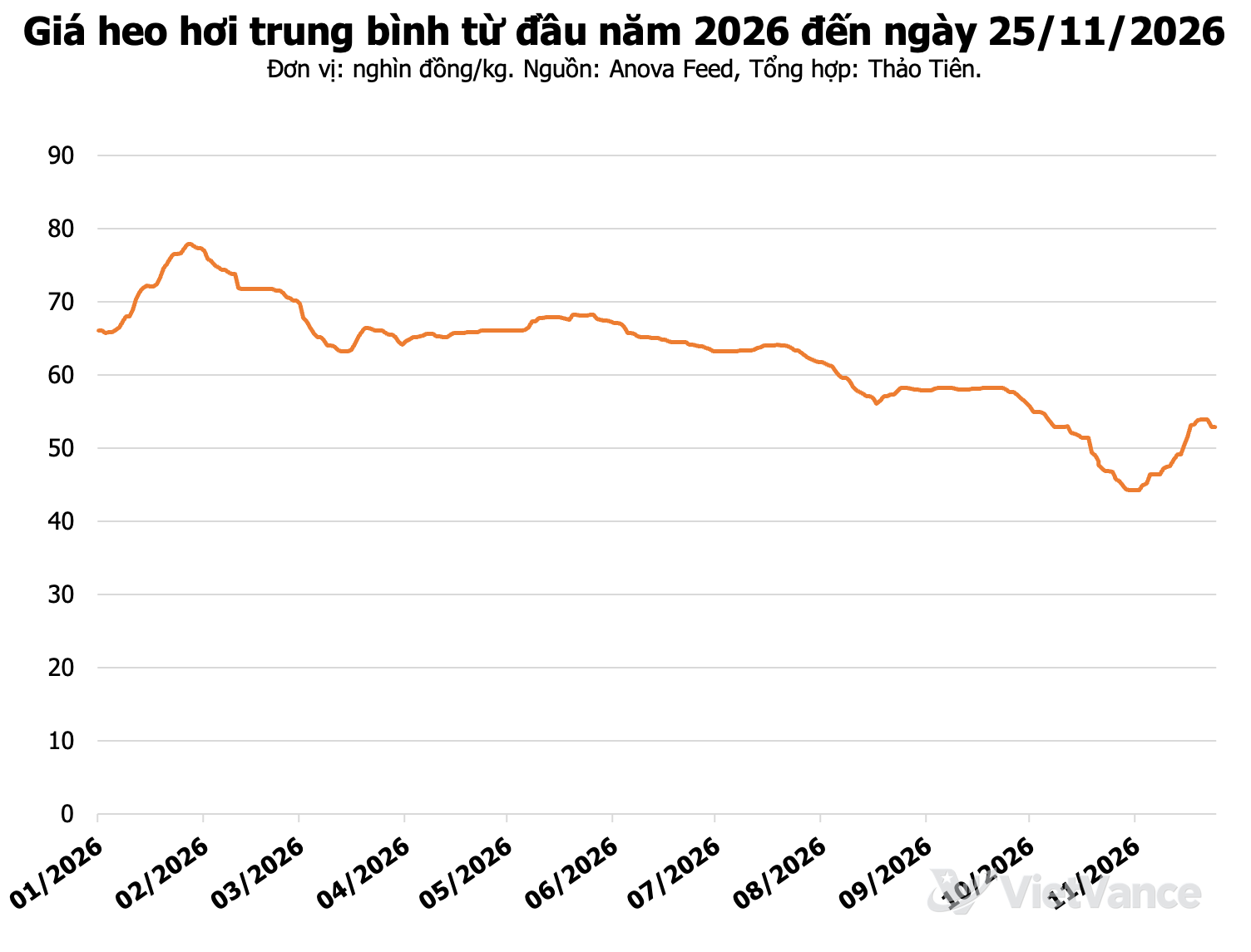
Live pig purchase prices were unchanged across Vietnam's 34 provinces and cities on the morning of November 25, ranging from VND 51,000 to VND 55,000 per kg. Experts expect possible fluctuations in some areas on November 26. Hoà Phát Group also announced on November 21 that it had imported breeding pigs from Denmark.

On the morning of November 25, live pig purchase prices were unchanged in northern Vietnam, the central region and Central Highlands, and southern Vietnam. Prices across the country's 34 provinces and cities ranged from VND 51,000 to VND 55,000 per kg. Following earlier declines in some areas, the market has temporarily stabilized. Experts say it has yet to stabilize fully and prices in some areas may fluctuate on November 26.
Purchase prices in the 15 northern localities ranged from VND 51,000 to VND 53,000 per kg. Thirteen localities recorded VND 53,000 per kg; Phú Thọ stood at VND 52,000, while Tuyên Quang had the region's lowest price at VND 51,000.
Prices in the central region and Central Highlands ranged from VND 51,000 to VND 55,000 per kg. Đắk Lắk and Lâm Đồng both recorded VND 55,000, while Quảng Trị and Huế both recorded VND 51,000. Prices were also unchanged across eight southern localities; Đồng Nai, Tây Ninh, Đồng Tháp and Ho Chi Minh City all recorded VND 55,000 per kg, while Cần Thơ stood at VND 51,000.
Illustrative image relating to Vietnam's live pig purchase prices on November 25.(VietVance)
In the livestock sector, Hoà Phát Group said on November 21 that it had imported 152 purebred great-grandparent breeding pigs of the Yorkshire, Landrace and Duroc breeds from Denmark, adding new genetic stock to its breeding herd at its farm in Lào Cai. Under the company's plan, it imports one batch of great-grandparent breeding pigs each year and allocates them among its farms in rotation.
Great-grandparent breeding pigs occupy the highest tier of Hoà Phát Group's three-tier breeding system, followed by grandparent and parent stock, which ultimately produce commercial pigs. The company said the newly imported pigs would be raised until they were 31 to 33 weeks old before breeding. To reduce the risk of disease entering the herd, it isolated personnel and cleaned and disinfected vehicles and supplies during reception and transport.
Source: VietVance