Ho Chi Minh City’s Water Supply System Advances Digital Operations
Ho Chi Minh City’s water utility has introduced online payments, smart meters and remote monitoring across its services and operations. A billing system launched in September 2026 manages data for more than 1.6 million customers. The utility plans to move all water supply services online in 2026–2027.

Saigon Water Corporation in Ho Chi Minh City is advancing digital transformation in water production, network operations and customer service. The company says all customers can now pay their water bills online. A core billing system launched in September 2026 manages data for more than 1.6 million customers and supports bill calculation, outstanding balance management and information updates. The company plans to move all water supply services online in 2026–2027 and introduce electronic contracts.
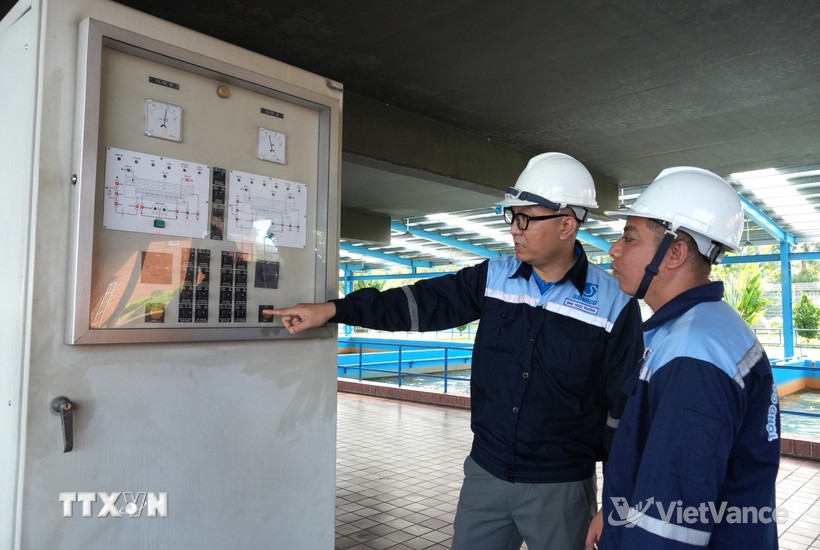
Employees at Thu Duc Water Plant check technical parameters and monitor water quality during clean water production.(VietVance)
For network operations, the company says its remote monitoring system tracks equipment status in real time, while a geographic information system manages water supply infrastructure data. Smart meters and leak detection technology help monitor water use and reduce water loss. According to the company’s 2026 figures, the water loss rate was 11.64%, below that year’s planned level of 12.8%.
Established in 2024, the Water Supply Operations Center monitors water supply operations across the city and uses data to support dispatch decisions. The company says Ho Chi Minh City’s water supply system has a total capacity of nearly 2.4 million cubic meters per day and a pipeline network nearly 11,000 kilometers long. Its Thu Duc Water Plant has upgraded its remote monitoring system and is digitizing equipment maintenance management and technical records. Plant management says its automation rate is currently about 70%.
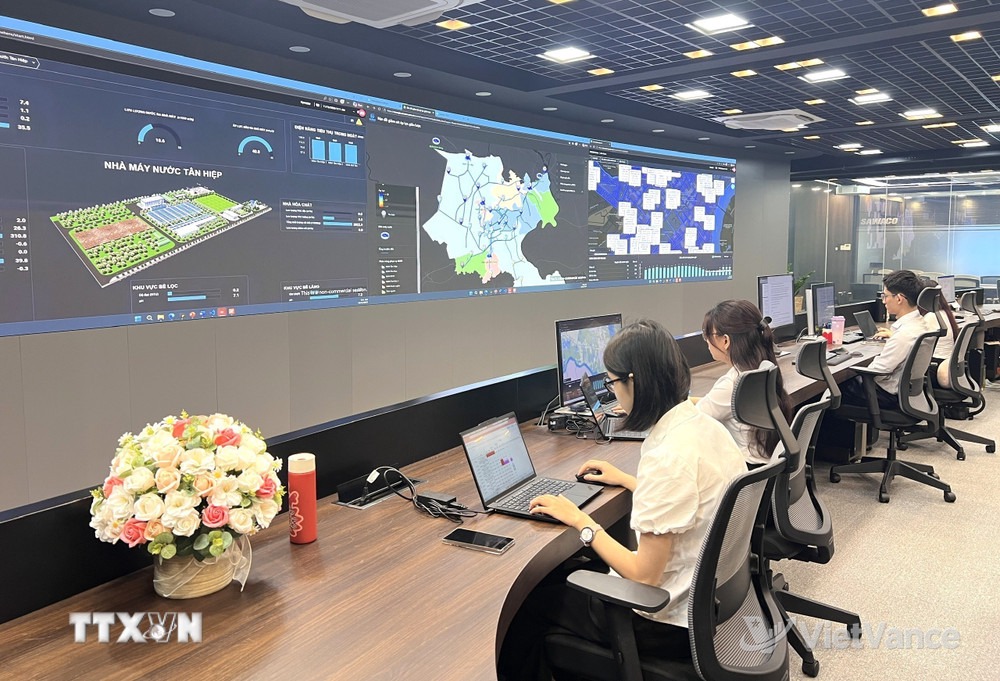
Water Supply Operations Center staff monitor water supply operations to coordinate services and respond to faults.(VietVance)
The company aims to build a shared data platform in 2025–2030 linking its management, technical, business and customer service systems. It also plans to gradually deploy district metered networks equipped with sensors, remote data transmission and automated monitoring. The Water Supply Operations Center plans to study artificial intelligence, big data, the Internet of Things and digital twin technology for water demand forecasting, operational coordination and identifying risks to water sources. These measures remain in the planning or gradual implementation stage.
Source: VietVance