Israel and Europe Discuss Deeper Security and Technology Cooperation
More than 700 delegates attended a summit on Israel–Europe relations in Jerusalem on November 23 to discuss security, technology and economic cooperation. Israeli President Isaac Herzog called for stronger ties, while a speaker addressed security challenges posed by drones and other technologies.

A summit on Israel–Europe relations was held in Jerusalem on November 23, attended by more than 700 leaders, officials and experts from Israel, Europe, the United States, Gulf countries and other nations. Participants discussed strengthening partnerships, dialogue and cooperation amid changes in the regional and international security situation.
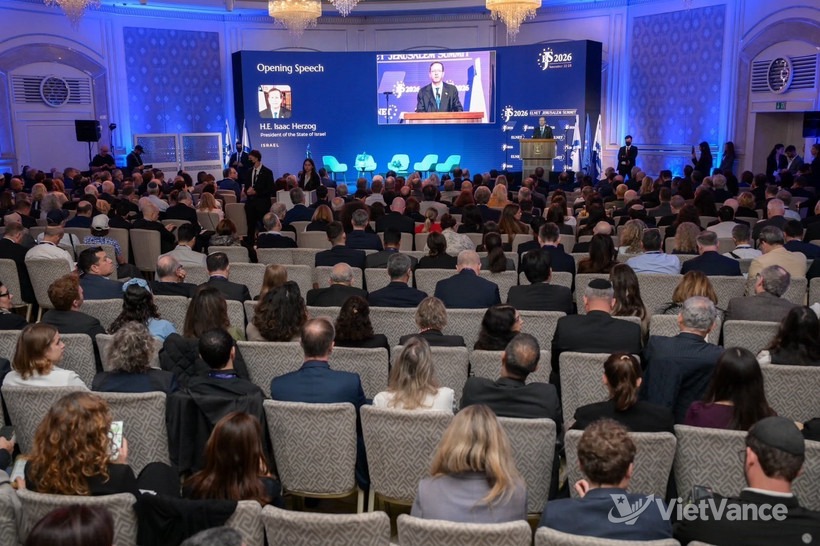
The summit on Israel–Europe relations drew more than 700 delegates.(VietVance)
Israeli President Isaac Herzog called for stronger Israel–Europe relations at the summit and warned of rising antisemitism. He also condemned recent violence by Jewish extremists against Palestinian residents and communities in the West Bank, saying law enforcement authorities were investigating, arresting and prosecuting those involved.
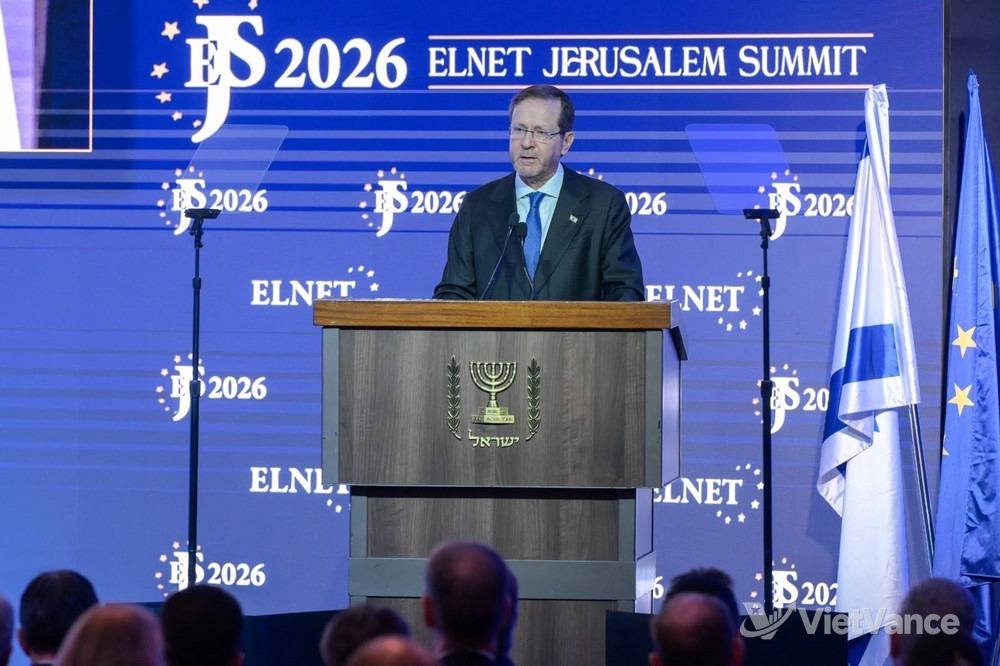
Israeli President Isaac Herzog speaks at the summit on November 23, 2026.(VietVance)
Herzog also emphasized scientific cooperation between Israel and Europe and said Israel should maintain channels of dialogue with Jordan and Egypt, giving due consideration to the interests, needs and concerns they have raised. He discussed Israel’s relations with the United Arab Emirates, Bahrain and Morocco, as well as prospects for cooperation through the India–Middle East–Europe Economic Corridor.
During a discussion on security, Martin Sampson, the International Institute for Strategic Studies’ executive director for the Middle East, said the spread of drones, precision weapons and surveillance technology had enabled smaller countries and even non-state actors to strike targets thousands of kilometers away. He advocated a multilayered defense system capable of adapting to new threats, while noting that intelligence capabilities, economic and social resilience, and defense industry capacity also affect the outcome of wars.
Source: VietVance