Ninh Binh Aims to Become a Centrally Governed City Before 2030
Ninh Binh province has approved an urban development program through 2030 that aims to make it a centrally governed city before 2030. The plan prioritizes transport infrastructure, the coastal economy and high-tech industry, and sets targets for urbanization and environmental management. Investment decisions on individual projects will depend on approved plans and available funding.

The Ninh Binh Provincial People’s Committee has approved an urban development program through 2030, aiming to become a centrally governed city before 2030 and a new economic growth hub in the Red River Delta. The plan prioritizes tourism and high-tech industry, while calling for stronger regional transport links and green and digital transitions.
The plan aims to meet the remaining criteria for the Ninh Binh urban area to qualify as a Class I urban area and establish a city by 2027, with an urbanization rate of at least 45%. By 2030, the rate is expected to rise to about 60.1%. Different parts of the province will focus on heritage tourism, general services, high-tech industry, logistics and the marine economy.
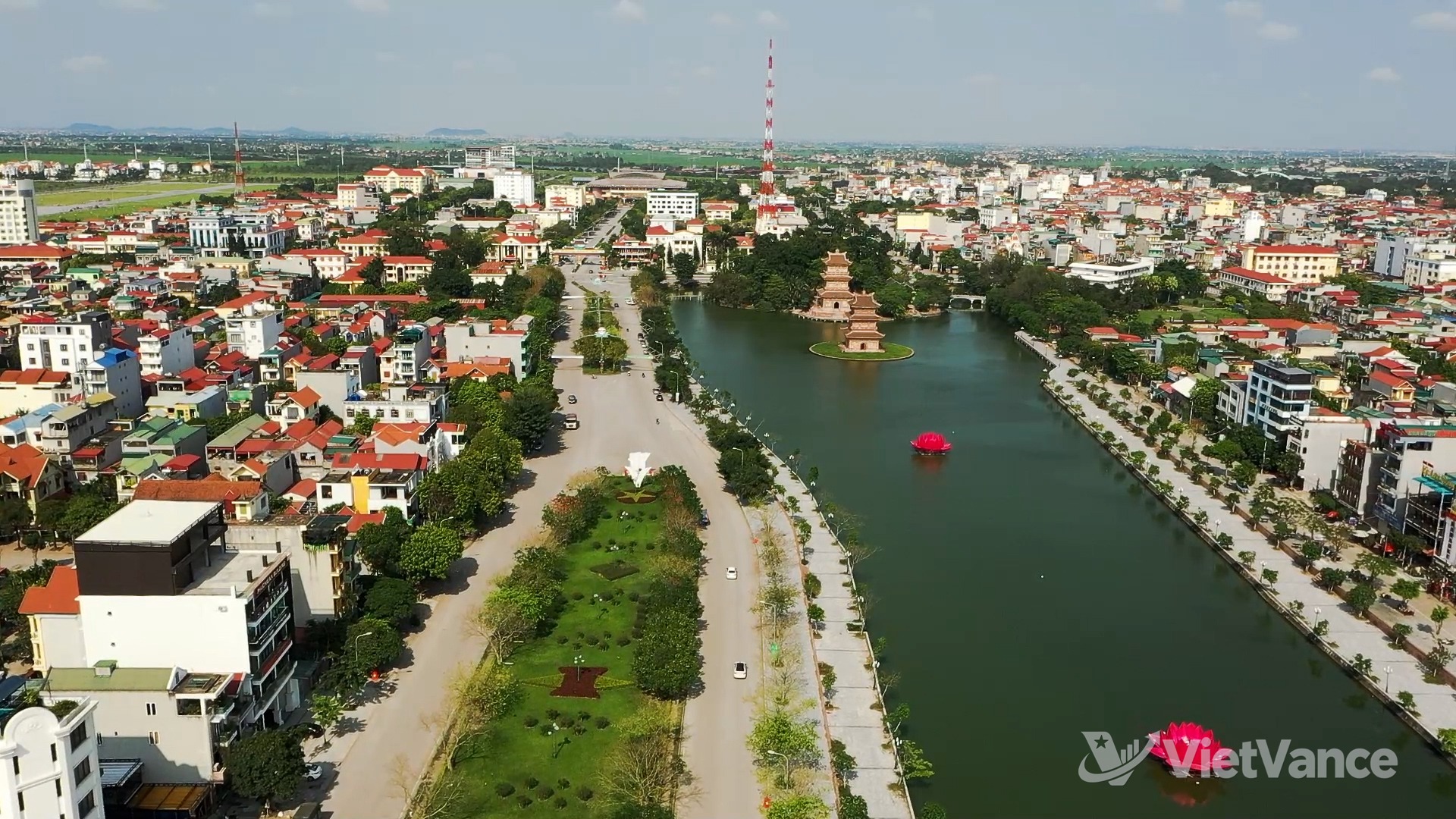
A corner of Hoa Lư Ward.(VietVance)
The transport plan proposes Ninh Binh International Airport, a deepwater port in the Ninh Cơ Economic Zone, and stations along the North–South high-speed railway. It also explores transit-oriented development around stations and major transport corridors. In the province’s east, the Ninh Cơ Economic Zone is slated for expansion, with development focused on ports, logistics, coastal services, ecotourism, and aquaculture and seafood processing. These projects remain proposals; investment decisions on individual projects must be based on approved plans, funding capacity and relevant laws.
The plan also targets average housing space of 40 square meters per person provincewide by 2030 and 8–10 square meters of public green space per person. At least 97% of urban household solid waste is to be collected and treated to the required standards, and all new industrial parks and clusters are to have centralized wastewater treatment systems. All newly purchased buses will run on electricity or green energy. Proposed funding sources include government budgets, official development assistance, concessional loans, public-private partnerships and private capital. The urban economy is targeted to contribute about 85% of the province’s gross regional domestic product.
Source: VietVance