Quảng Ninh Studies Two-Level, 10-Lane Cửa Lục Bridge With Proposed Investment of VND 25.56 Trillion
Quảng Ninh City held a meeting on November 11 to review an investment proposal for the Cửa Lục Bridge. The proposed 5.2-kilometer bridge would have 10 motor vehicle lanes on its upper level and pedestrian, sightseeing and commercial spaces below. Preliminary investment is estimated at VND 25.56 trillion.

Quảng Ninh City held a meeting on November 11 to hear a report on the investment and construction proposal for the Cửa Lục Bridge. The consultant proposed a bridge approximately 5.2 kilometers long, with preliminary investment estimated at VND 25.56 trillion. One end would connect to National Highway 18 in Bãi Cháy Ward, and the other to National Highway 279 in Hoành Bồ Ward. The design and investment plans are still being studied and refined.
The proposal calls for a two-level structure: the upper level would have 10 motor vehicle lanes, while the lower level is planned as an ecological park over the water, with a pedestrian street, bicycle lanes, lanes for electric tourist vehicles and viewing platforms. Commercial services, leisure and entertainment spaces, and a yacht marina are also proposed for the bridge, giving it tourism and service functions alongside its transport role.
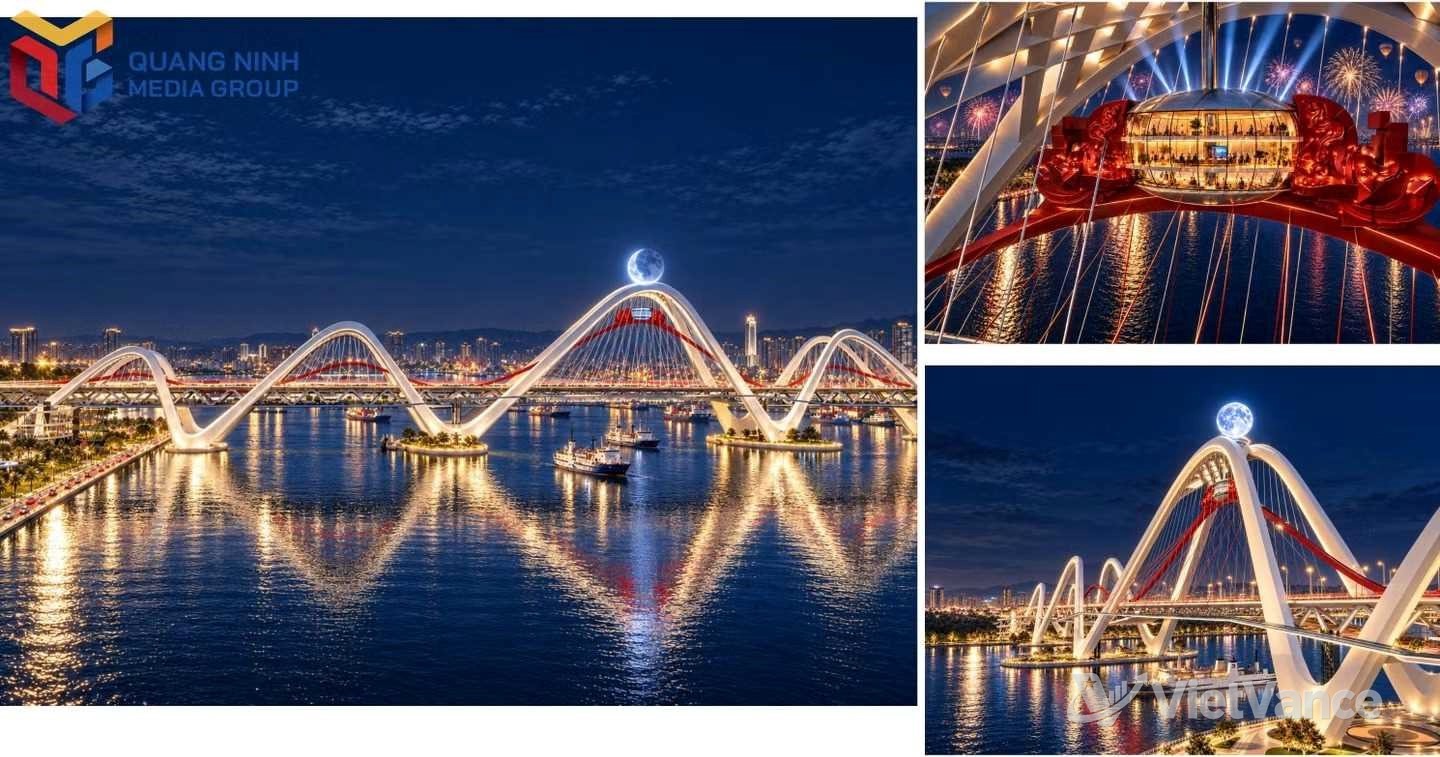
Design rendering of the Cửa Lục Bridge.(VietVance)
The architectural design draws on the concept of a “dragon gazing at the moon” and proposes five continuous steel truss arch spans that would complement the Hạ Long Bay landscape. The consultant also proposed a three-story elliptical conference center and a landing and takeoff area for flying taxis atop the arches, and is studying the addition of holographic light displays and a 360-degree viewing space. These features remain proposals.
Bùi Văn Khắng, chairman of the Quảng Ninh City People’s Committee, chaired the meeting and asked the consultant to incorporate feedback from relevant departments and continue refining the design and investment plans. He called for a clearer account of how the cultural, commercial and tourism spaces would operate, and for assessments of the proposed functions’ feasibility, financing options and socioeconomic benefits.
Source: VietVance