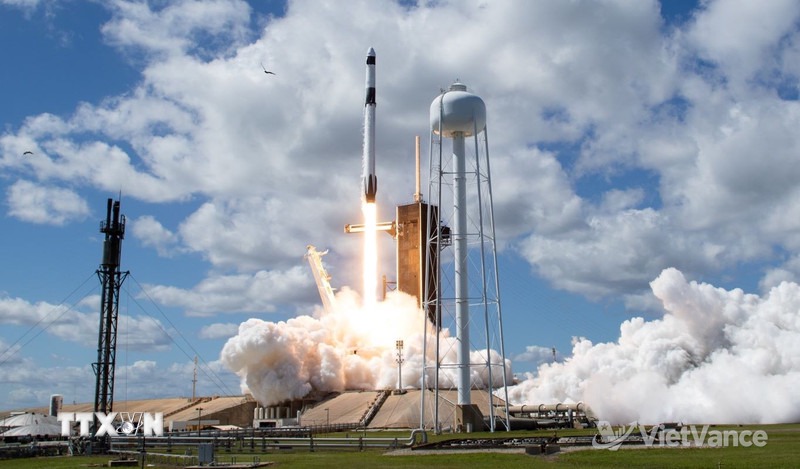
SpaceX Aims to Recover Starship on Its 15th Test Flight
SpaceX plans to conduct Starship’s 15th test flight in Texas on November 13, 2026, attempting to catch the spacecraft with launch tower arms and recover the booster. The spacecraft is also set to deploy 26 Starlink satellites. The recovery attempt will depend on technical and safety conditions.

SpaceX plans to launch Starship from its Starbase facility in southern Texas at 4:45 p.m. local time on November 13, 2026, for its 15th test flight. The flight aims to use the launch tower’s mechanical arms to catch Starship’s upper stage for the first time after the spacecraft completes its orbital mission. If both the booster and spacecraft are recovered, both stages of the 124-meter-tall rocket system will have been recovered.
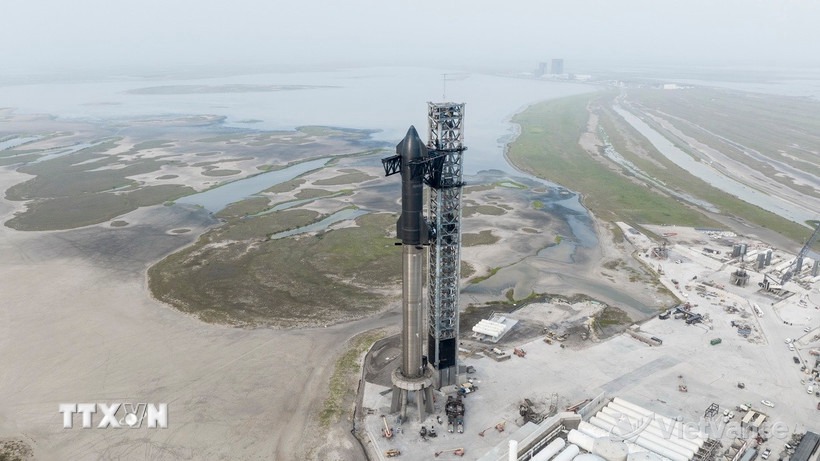
SpaceX’s Starship rocket on the launch pad at its Starbase facility in Texas, United States.(VietVance)
Under the plan, the Super Heavy booster will separate from the spacecraft about 6 minutes and 30 seconds after launch and return to the launch tower on the Gulf of Mexico coast, where mechanical arms will catch it. SpaceX has previously recovered the booster this way three times. The spacecraft is planned to enter Earth orbit, deploy 26 Starlink internet satellites and, after circling Earth 14 times, return to the launch tower in approximately 22 hours for an attempted catch by the mechanical arms.
Recovering the upper stage is more complex than recovering the booster because the spacecraft returns from a greater height at a higher speed. SpaceX says it will attempt the maneuver only if technical and safety conditions are favorable. The company says a successful recovery would mark the first complete recovery of an orbital launch system and help advance rockets that can be reused quickly.
Clayton Swope, an aerospace expert at the Center for Strategic and International Studies, said full reusability remains a goal the space industry has yet to achieve. To be used again quickly, the spacecraft must withstand the extreme heat of reentry into Earth’s atmosphere without requiring lengthy repairs or maintenance. The Starship project has faced repeated delays due to technical challenges; refueling in orbit is also an important requirement for missions to the Moon and Mars. NASA plans to use Starship as a lunar lander in its Artemis program.
Source: VietVance