US Plans to Keep Tariff on South Korean Goods at 15%
The US has announced a new tariff plan for trading partners, but the proposed rate for South Korean goods remains at 15%, in line with a 2025 bilateral agreement. US officials warned that the rate could rise if concerns about new semiconductor plants in South Korea are not resolved. South Korea says it will continue consultations.

The US has announced a new tariff plan for some trading partners, alleging that their economies have excess production capacity. The proposed rate for South Korean goods remains at 15%, matching the level agreed in the 2025 US–South Korea trade and investment agreement. However, the US warned that the rate could rise if its concerns about new semiconductor plants in South Korea are not resolved.
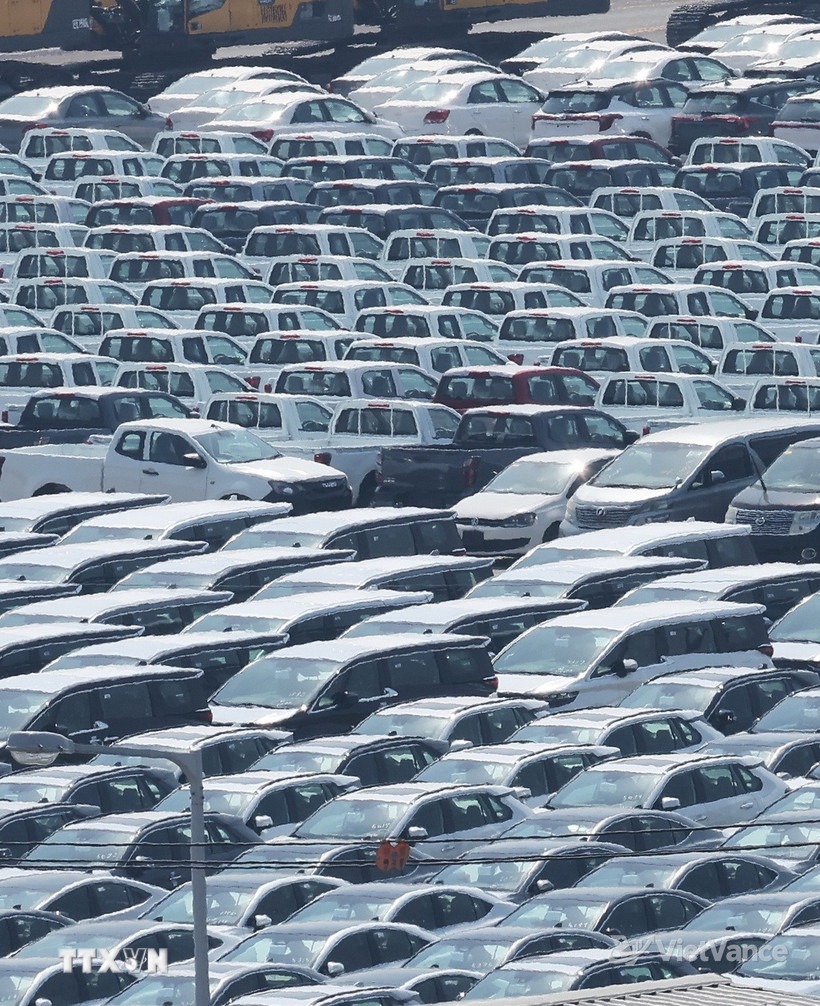
Cars await export at the port of Pyeongtaek, south of Seoul, South Korea. File photo.(VietVance)
The Office of the US Trade Representative investigated 16 economies, including South Korea, under Section 301 of the Trade Act of 1974, examining trade practices linked to alleged “structural” excess capacity and production. Under the plan, the total tariff rate applied to South Korean goods under Section 301 would reach 15%. In July 2026, the office announced new tariffs of up to 12.5% on South Korea and other countries following a US investigation into labor issues.
In its report, the Office of the US Trade Representative said South Korea’s economy showed signs of structural excess capacity and production, and cited its persistent trade surpluses in automobiles, semiconductors and petrochemicals. The report said manufacturing’s share of South Korea’s gross domestic product was about three times that of the US. Those findings and plans for new semiconductor plants were cited by the US as grounds for a possible tariff increase.
An official at South Korea’s Ministry of Trade, Industry and Energy expects the US to leave unchanged the current tariff rate agreed in bilateral negotiations. The official said US concerns about new semiconductor plants may be linked to rising South Korean chip exports to the US and a growing trade surplus. South Korea will continue consultations with the US and maintain that it is not among the economies the US considers to have structural excess capacity.
Under the 2025 agreement, the US agreed to reduce tariffs on South Korean goods from 25% to 15%; South Korea pledged to invest $350 billion in the US, with an annual cap of $20 billion. Chang Sang-sik, an expert at the Korea International Trade Association, said the South Korean government needs to consider the issue of excess capacity and the possibility of further tariff increases in its trade negotiations with the US.
Source: VietVance