US Stocks End Friday Mixed as Oil Prices Fall for a Second Straight Week
The S&P 500 and Nasdaq fell on November 13 while the Dow Jones edged higher, though all three indexes gained for the week. Brent and WTI crude futures each fell about 2.5% for the week. Markets focused on US producer price data, Nvidia shares and the International Energy Agency’s assessment of oil supply.

US stocks closed mixed on November 13. The S&P 500 fell 0.4% to 7,561.67; the Nasdaq declined 0.91% to 25,136.27; and the Dow Jones rose 0.1% to 52,347.55. Nvidia shares fell 2% that day, following a decline of more than 4% in the previous session.

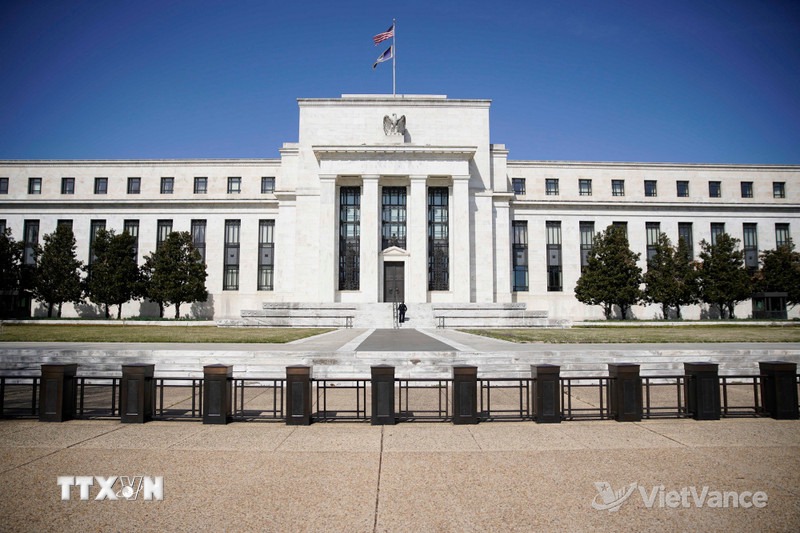
File photo.(VietVance)
The US Labor Department reported that the Producer Price Index rose 0.3% in October from the previous month, below economists’ forecast of 0.4%. It rose 6.5% from a year earlier, the largest annual increase since November 2022. According to market pricing reflected in CME’s FedWatch tool, investors still saw a 100% probability of a Federal Reserve rate increase in December, while the probability of a 0.5 percentage point increase fell to 5% from 15% in the previous session.
Despite Friday’s declines, all three major US stock indexes gained for the week: the Nasdaq rose 2.3%, the S&P 500 gained 2.5% and the Dow Jones climbed 2.1%. Each recorded its biggest weekly gain since early August. Nvidia shares fell 6% for the week. HSBC downgraded the stock to “hold” on Friday.
In the crude oil market, Brent futures rose $0.2 on Friday to close at $95.84 a barrel, while WTI futures fell $0.18 to $88.56 a barrel. Both fell about 2.5% for the week, their second consecutive weekly decline.
The International Energy Agency’s monthly report, released on November 13, showed that the global oil market was oversupplied and that the surplus was growing. The original article also noted recent increases in US crude oil and fuel inventories, as well as rising oil exports from the Gulf region. Oil markets were watching these shifts in supply and demand.
Source: VietVance