U.S. Air Traffic Control Communications Failure Leads to Nearly 6,000 Flight Cancellations
A U.S. air traffic control communications failure on November 13 halted departures nationwide for about four hours and led to nearly 6,000 flight cancellations. Although air traffic control facilities have been restored, flight operations will take time to return to normal. The incident exposed weaknesses in aging equipment and backup networks, as well as planning challenges in the modernization program.

A failure in the U.S. air traffic control communications system on November 13 halted flight departures nationwide for about four hours. The ground stop was lifted at 8:15 p.m. Eastern Time, and air traffic gradually resumed. U.S. Transportation Secretary Sean Duffy said air traffic control facilities were fully operational again, but flight schedules would take time to return to normal.
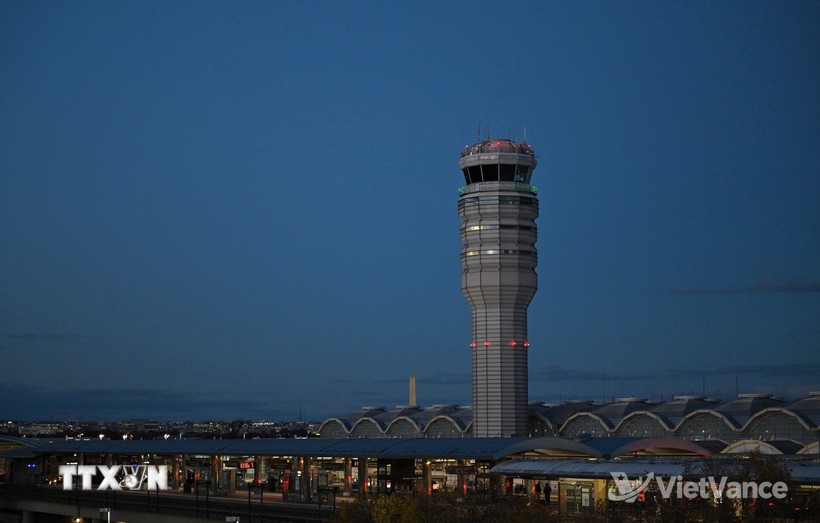
The air traffic control tower at Ronald Reagan Washington National Airport in Arlington, Virginia, on November 13, 2026.(VietVance)
AFP, citing data from flight tracking platform FlightAware, reported that nearly 6,000 flights were canceled, including some international flights. Passengers in many locations could not determine when they would depart, and some returned to the terminal after boarding. This was only the second nationwide ground stop in the United States since the September 11, 2001 attacks; the previous one occurred in January 2023.
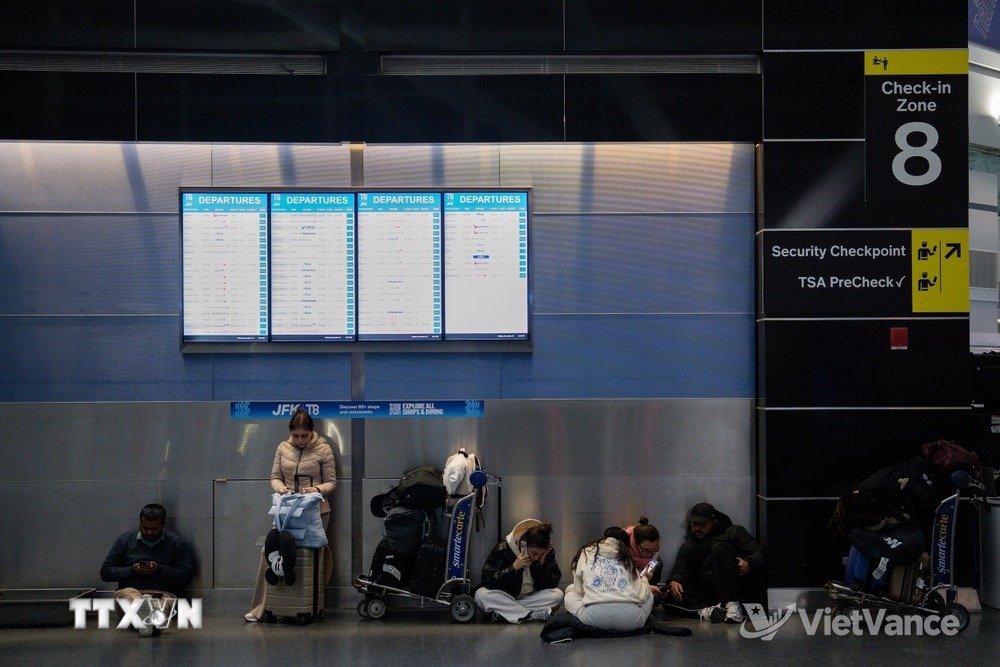
Passengers wait at John F. Kennedy International Airport in New York on November 13, 2026.(VietVance)
Duffy said the failure originated in the Federal Aviation Administration’s aging network: switching and routing equipment stopped working after becoming overloaded with data, affecting all long-distance air traffic control centers. U.S. officials said there is currently no evidence of a cyberattack, and the precise cause of the overload remains under investigation. In 2024, the Government Accountability Office reported that, of 138 air traffic control systems assessed, 51 could no longer reliably sustain long-term operations and another 54 faced similar risks.
Federal Aviation Administration Administrator Bryan Bedford said in September 2026 that more than 300 air traffic control facilities use separate technology systems, with some equipment having operated for decades. In July 2025, Congress approved $12.5 billion to modernize air traffic control infrastructure and hire more controllers. The White House and Transportation Department subsequently requested another $30.1 billion for airports and air traffic control, including $10.1 billion specifically for air traffic control system upgrades. The agency has replaced 68% of its old copper-wire communications network with high-speed fiber-optic cable, but Bedford warned that replacing the lines alone would not prevent future failures.
The Government Accountability Office also warned in September 2026 that the Federal Aviation Administration lacked a reliable cost estimate and a unified overall schedule. As of May 2026, the agency had 11,389 uncoordinated project schedules, potentially leading to duplicate construction work, delays and cost overruns. The Federal Aviation Administration plans to complete the first phase of modernization by December 2028; the Government Accountability Office said inadequate planning could prolong reliance on aging systems.
Source: VietVance