White House Signals Tariff Policy Will Continue as US Price Pressures Spark Debate
A White House official said on November 10 that the Trump administration plans to continue its tariff policy for the rest of the president’s term. A former economic adviser said American consumers are bearing the costs, while voter surveys and recent price data have added pressure on the policy.

A White House official said on November 10 that the Trump administration plans to continue its tariff policy. Jim Goyer, director of the White House Office of Public Liaison, told the B20 Summit in Washington that tariffs help revive US manufacturing, secure supply chains and protect national security. He said the administration hopes to maintain the current pace of its policy for the rest of the president’s term.
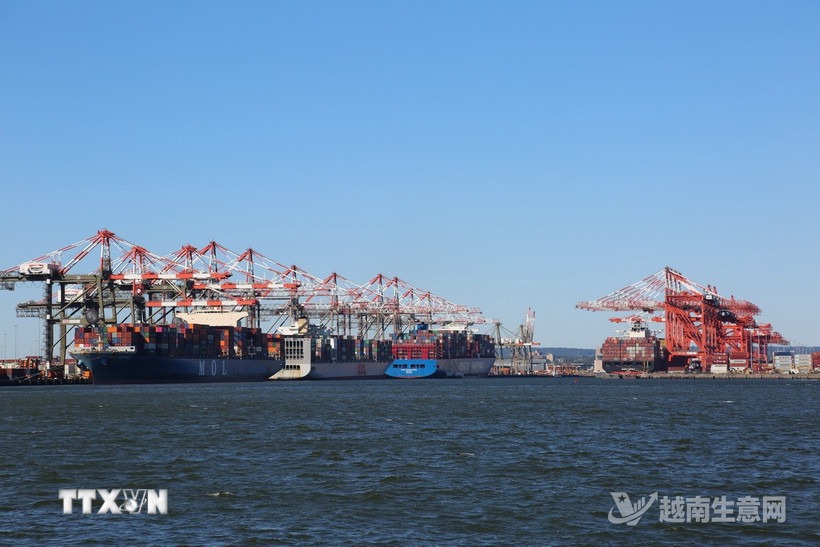
A cargo port in Bayonne, New Jersey, US.(VietVance)
Gary Cohn, who served as chief economic adviser during Trump’s first term, said the same day that tariffs amount to a consumption tax borne by American consumers. He said they are driving up prices and prompting people to reconsider purchases. Although tariffs generate government revenue, he said, consumers bear the cost. A study by the Federal Reserve Bank of New York estimated that about 26% of tariff increases have been passed on to consumer prices, with some effects taking nine to 12 months to work their way fully through supply chains.
The tariff policy also faces pressure from voters. A CNBC voter survey conducted during the November 3 midterm elections found that about two-thirds of respondents believed Trump’s policies had contributed to inflation; nearly nine in 10 said the cost of living was important or decisive in their vote. A separate Reuters/Ipsos survey released on November 10 found that 62% of Americans surveyed supported repealing Trump’s tariffs.
US government data released on November 10 showed that consumer prices rose 0.4% in October, above economists’ expectations. The latest year-on-year data showed inflation at 3.7% in September. Democrats are expected to press for changes to the tariff policy when they take control of Congress next January, but the president’s veto power and broad trade authority could make it difficult to reverse.
Source: VietVance