Vietnam’s Adhesives Industry Faces Demand for Material Innovation and Greener Production
Growth in the automotive, electronics and semiconductor industries is raising requirements for heat resistance, stability and material compatibility in industrial adhesives. Henkel Vietnam’s president says manufacturers also need to adjust formulations and reduce reliance on petroleum-based inputs to meet customers’ environmental requirements.

Industrial adhesives in Vietnam are used in packaging, textiles, footwear, automobiles, electronics and semiconductors. Lê Minh Tuấn, president of Henkel Vietnam, said adhesive formulations must be adjusted to meet the needs of different products as manufacturing materials and processes change. For example, packaging paper now comes in a wider variety of surfaces and materials, requiring producers to improve adhesion for different types of paper.
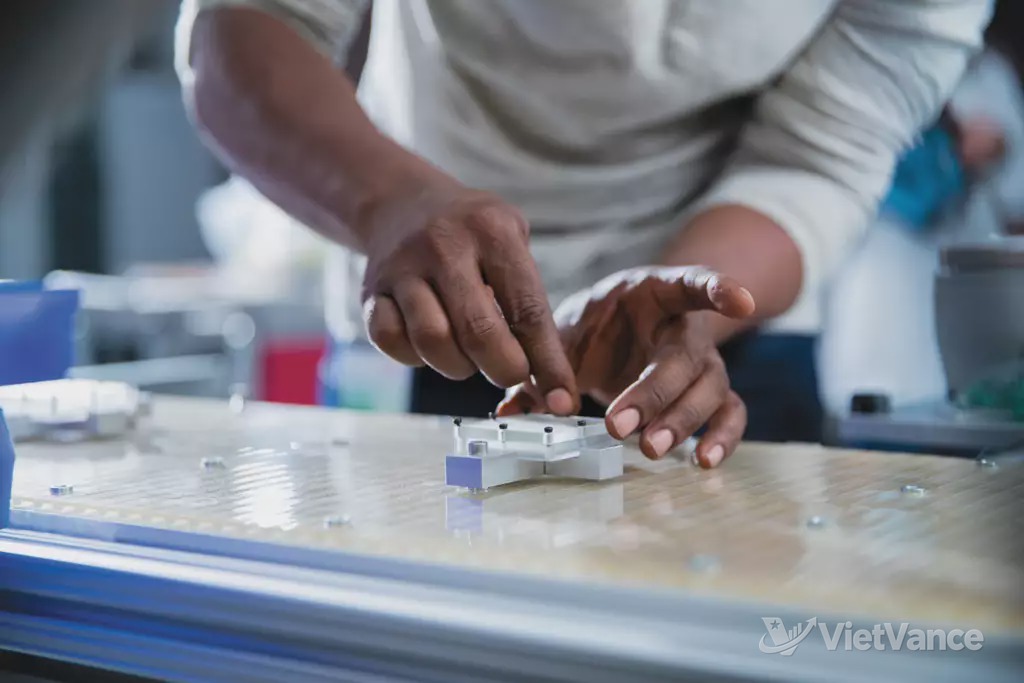
Changes in industrial materials and technology are driving continuous adjustments to adhesive formulations.(VietVance)
Electronics and automotive manufacturing are placing higher performance demands on adhesives. Lê Minh Tuấn said 5G equipment and telecommunications base stations generate considerable heat during operation, requiring adhesives with better heat resistance and stability. Automotive assembly requires materials that balance durability, vibration resistance and weight control. According to Vietnam’s Statistics Office, the industrial production index for motor vehicle manufacturing rose 14.6% year on year in the first 10 months of 2026.
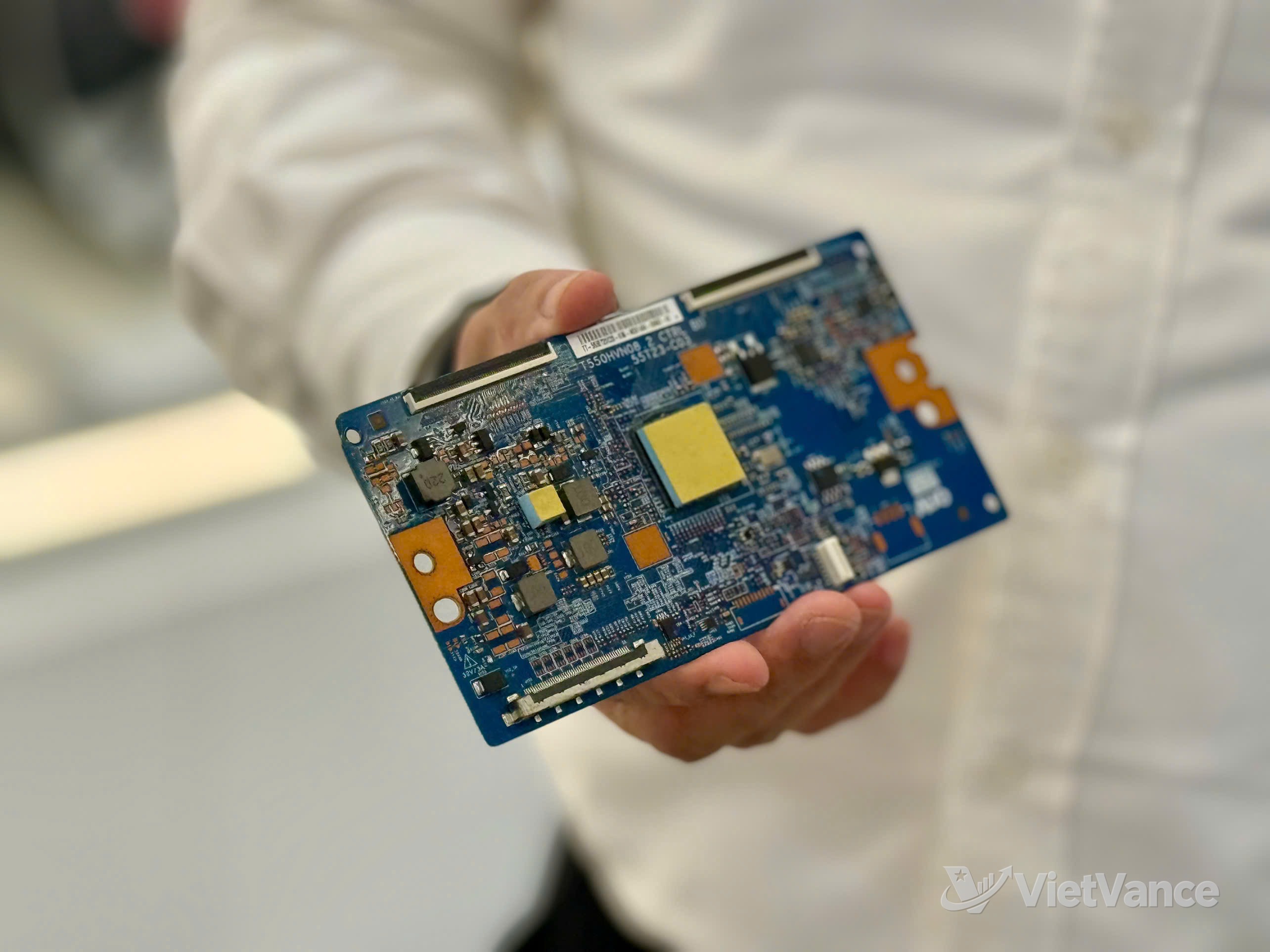
Adhesives are used to assemble, package and protect semiconductor and microelectronic components.(VietVance)
Specialized adhesives used in semiconductor and electronic device assembly, packaging and component protection must also meet increasingly demanding precision and reliability requirements as chips shrink and packaging processes grow more complex. Lê Minh Tuấn said multinational companies and major brands are tightening carbon emissions and environmental requirements for contract manufacturers, prompting adhesive companies to save energy, control adhesive use and seek alternative materials.
Lê Minh Tuấn also said fluctuations in the prices of petroleum and its derivatives are prompting companies to study ways to reduce their use of petroleum-based inputs. As an example, he said companies could explore reducing the solvent share of a formulation from 80% to 60% or 50% according to customer needs. This is a potential adjustment for study, not a formulation change that has already been implemented.
Source: VietVance