Vietnam’s Banking Sector Nonperforming Loan Ratio Rises to 2.3%
VIS Rating says Vietnam’s banking sector nonperforming loan ratio rose to 2.3% in the first nine months of 2026, while the loan loss coverage ratio fell to 75% in the third quarter. Higher borrowing costs weakened borrowers’ ability to repay, with smaller banks under particular pressure. Short-term liquidity improved slightly.

VIS Rating’s analysis shows that Vietnam’s banking sector nonperforming loan ratio rose to 2.3% in the first nine months of 2026, up from 2.2% at the end of June. Rising borrowing and operating costs weakened the ability of individual and small and medium-sized enterprise borrowers to repay their debts. Asset quality came under broad pressure, with small and medium-sized banks more affected because these loans account for a larger share of their portfolios.

Vietnam’s banking sector nonperforming loan ratio rose to 2.3% in the first nine months of 2026.(VietVance)
Nonperforming loans also increased at large banks. At some large banks, the nonperforming loan ratio rose by an average of 14 basis points from the previous quarter, mainly involving mortgages, consumer loans, and loans to small and medium-sized enterprises in real estate, construction and manufacturing. VIS Rating expects high borrowing costs to continue constraining borrowers’ ability to repay, keeping asset risks elevated across the sector.
Despite rising credit costs, the banking sector’s average return on assets remained at 1.5% in the first nine months of the year. Higher lending yields and net interest margins at some large banks offset the additional credit costs, although profit performance varied among large banks. At small and medium-sized banks, intense competition for deposits narrowed net interest margins from a year earlier.
In the third quarter, the sector’s loan loss coverage ratio fell by 4 percentage points to 75%, indicating a weaker buffer against losses as troubled loans increased. The ratio of tangible common equity to total assets remained at 8.3% in the first nine months of the year. VIS Rating believes slow progress on capital-raising plans will limit banks’ room to expand lending.
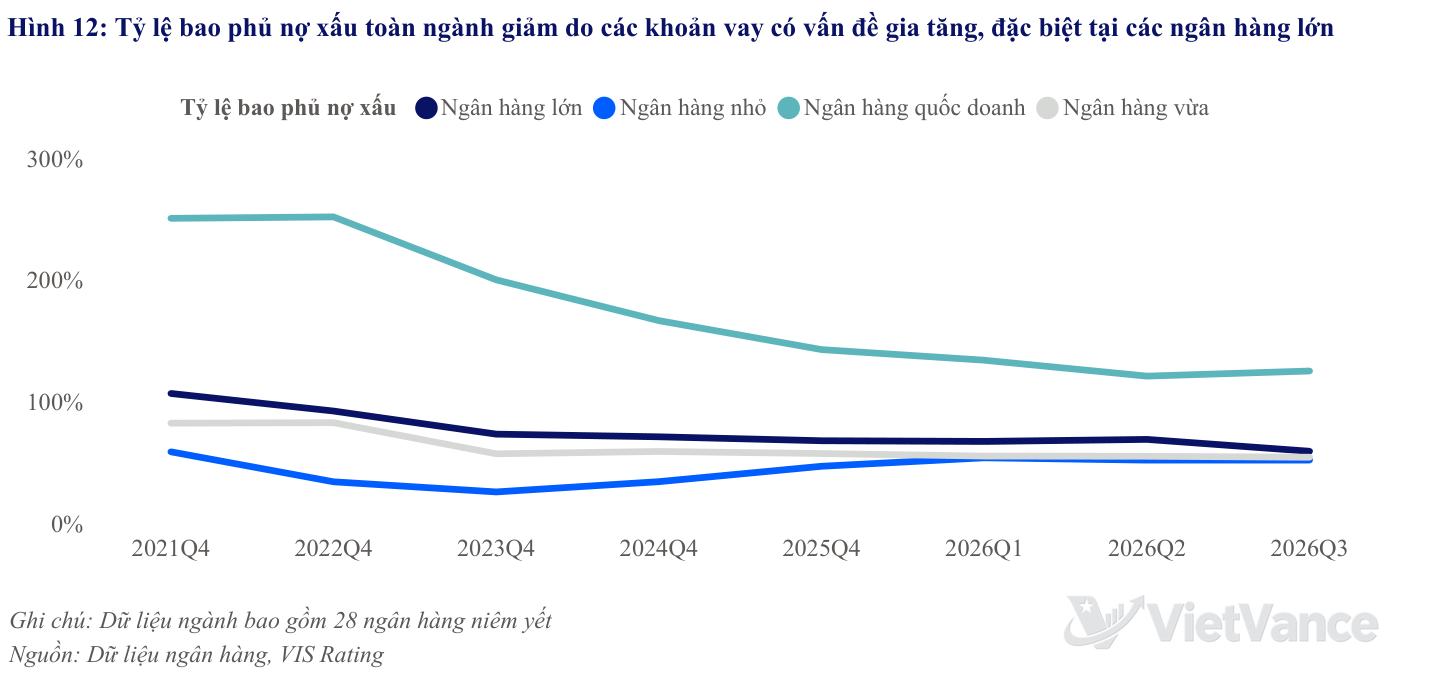
Vietnam’s banking sector loan loss coverage ratio fell to 75% in the third quarter of 2026.(VietVance)
On the funding side, the ratio of demand deposits to total loans fell by 0.5 percentage points from the previous quarter to 17.3% in the third quarter. VIS Rating says depositors are shifting to higher-yielding term deposits and certificates of deposit. The sector’s loan-to-deposit ratio fell from 114% at the end of June to 112%, easing short-term liquidity pressure slightly. The agency expects asset risks, credit costs and funding costs to remain high over the next 12 to 18 months.
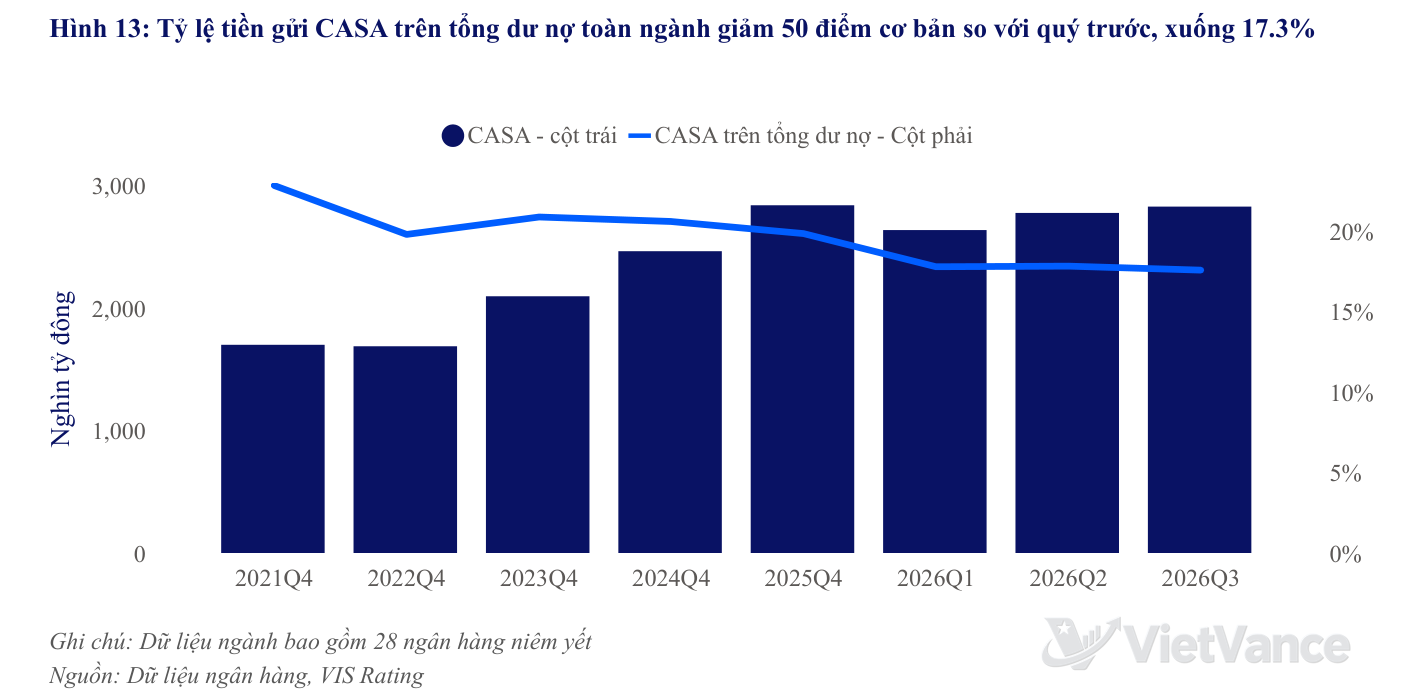
Vietnam’s banking sector loan-to-deposit ratio fell from 114% at the end of June 2026 to 112%.(VietVance)
Source: VietVance