
Vietnam Proposes Higher Asset Threshold for Large Banks; Four Could Change Groups
The State Bank of Vietnam proposes raising the asset threshold for large commercial banks from over VND 300 trillion to over VND 500 trillion starting with the 2027 rating year. Based on the average standalone assets of 28 listed or registered-for-trading banks in the first three quarters of 2026, the number meeting the threshold would fall from 17 to 13. Four banks could change groups, potentially affecting how their liquidity is scored.

The State Bank of Vietnam is seeking comments on amendments to Circular No. 21/2025/TT-NHNN. From the 2027 rating year, it proposes raising the standalone total asset threshold for large commercial banks from over VND 300 trillion to over VND 500 trillion, an increase of 66.7%. Bank size is determined using the average of each quarter’s standalone total assets in the rating year.
An analysis of standalone financial statements from 28 listed or registered-for-trading banks shows that 17 exceeded the current threshold based on average assets in the first three quarters of 2026; only 13 would meet the proposed threshold. Nam A Bank, MSB, SeABank and OCB had average assets between the two thresholds. The analysis does not cover all Vietnamese banks, and their actual grouping in 2027 will depend on average assets across all four quarters of that year.
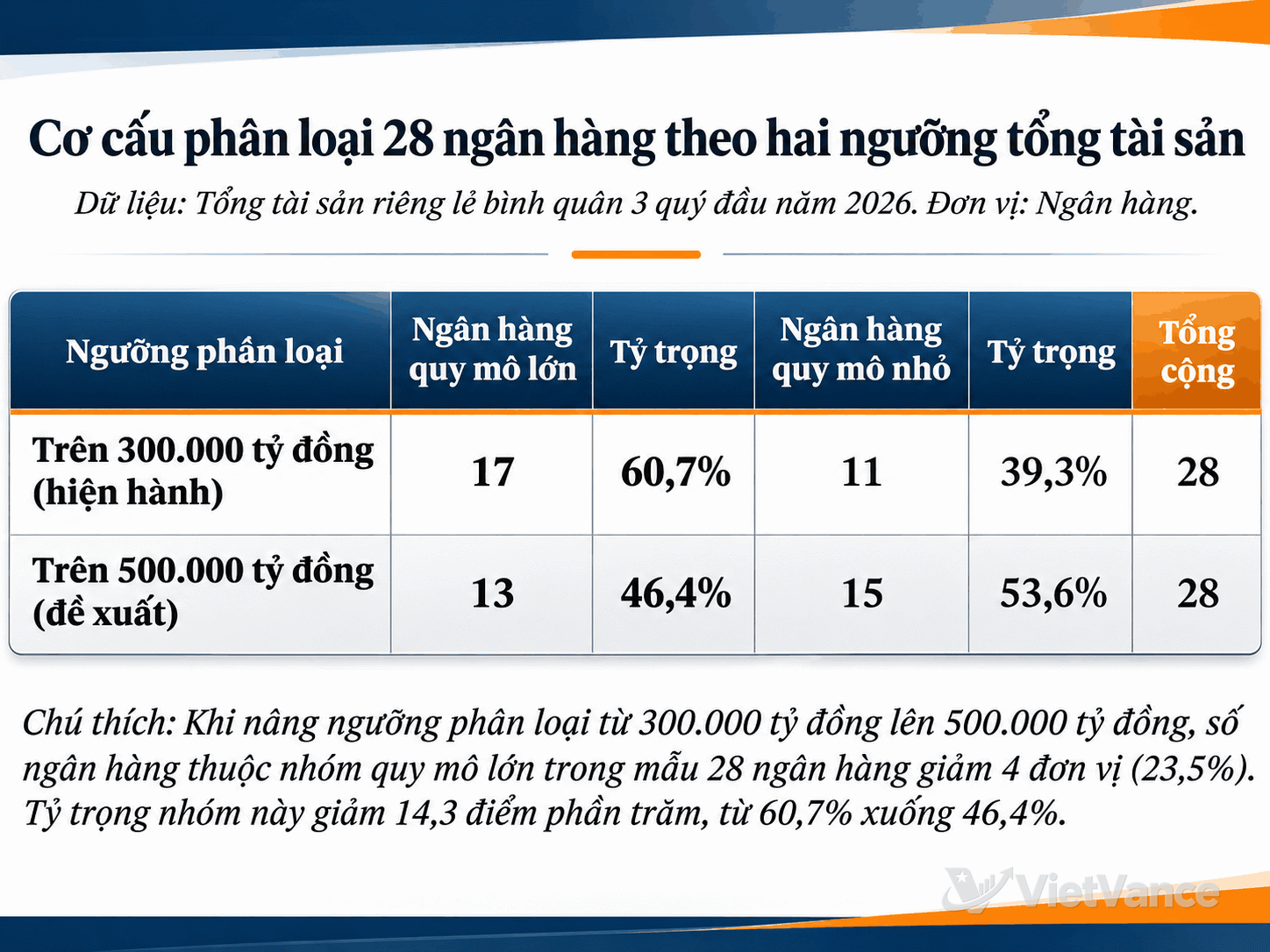
Under the two asset thresholds, the number of banks qualifying as large would fall from 17 to 13.(VietVance)
Of the four banks, Nam A Bank is closest to the new threshold, with average assets of VND 441.618 trillion in the first three quarters, VND 58.382 trillion below the proposed level. The averages for MSB, SeABank and OCB were VND 432.477 trillion, VND 420.523 trillion and VND 353.658 trillion, respectively.
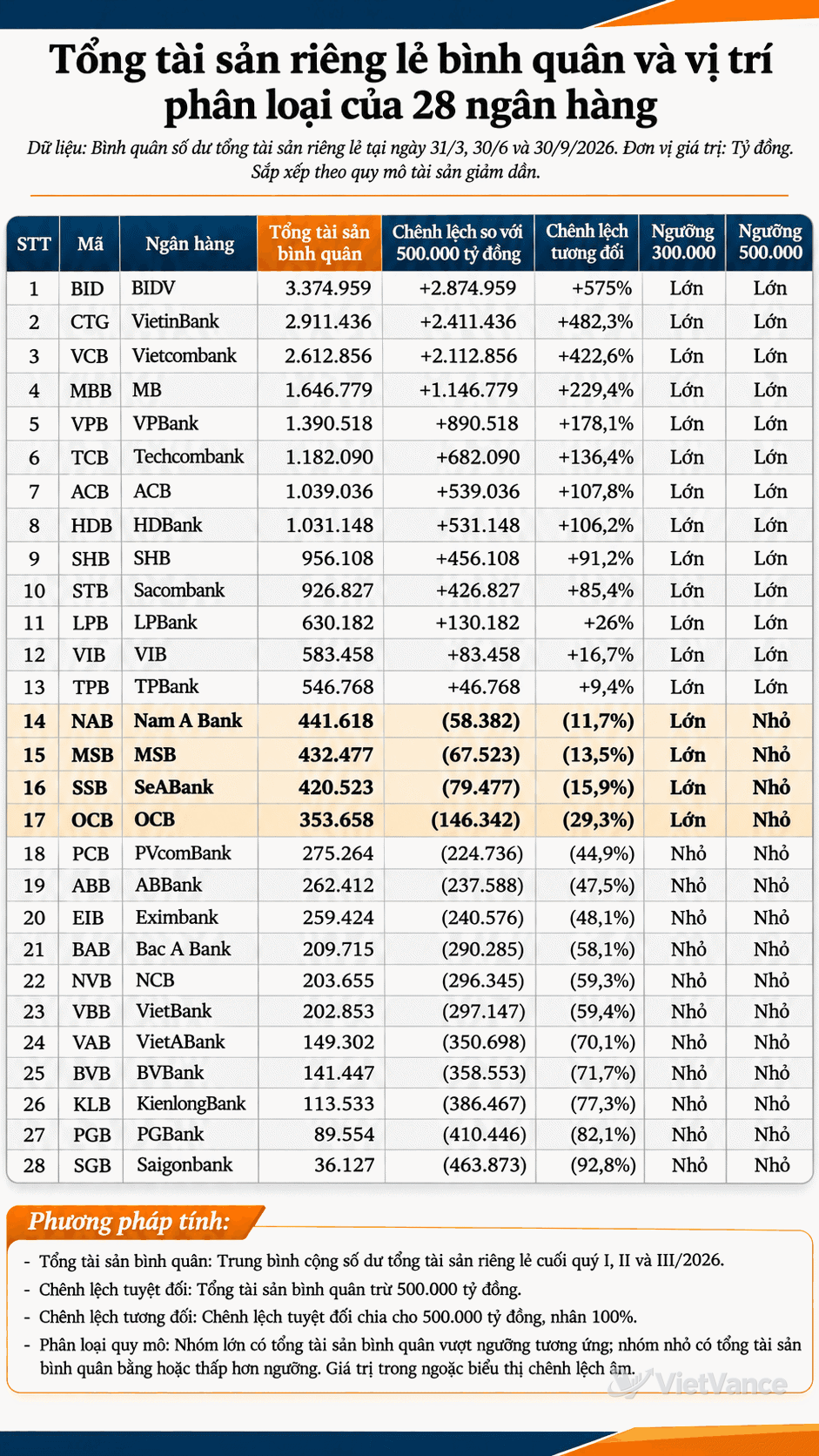
Average assets of 28 banks, including the four between the two classification thresholds.(VietVance)
A change in grouping could also affect liquidity scores. For the period when banks have begun applying the liquidity coverage ratio and net stable funding ratio but are not yet required to meet a 100% minimum for both, the draft assigns each measure a 25% weight for large banks. For small banks, the respective weights are 20% and 30%. A bank’s liquidity score could therefore rise or fall after a change in grouping, even if its performance on the measures remains the same, depending on its scores for each measure.
Under the implementation schedule in Circular No. 50/2026/TT-NHNN, banks must meet a liquidity coverage ratio of at least 50% and a net stable funding ratio of at least 90% from October 1, 2028. The rating draft sets the highest scoring thresholds for these measures in 2028 at 70% and 110%, respectively, above the initial compliance requirements.
Source: VietVance