

Funding Gap Widens for 27 Vietnamese Banks in the 3–12 Month Maturity Band
By the end of September 2026, the 3–12 month asset–liability gap at 27 Vietnamese commercial banks had widened by nearly VND 379 trillion from the end of the second quarter. Vietnam plans to change how the loan-to-deposit ratio is calculated and introduce a new 95% ceiling in October 2028, raising questions about funding maturities and costs.

Liquidity risk disclosures from 27 Vietnamese commercial banks for the third quarter of 2026 show that, at the end of September, liabilities exceeded assets in the 3–12 month remaining maturity band by nearly VND 1.6 quadrillion. The gap widened by nearly VND 379 trillion, or 31%, from the end of the second quarter. Liabilities in this band rose by VND 474 trillion, including an increase of about VND 401 trillion in customer deposits; assets rose by VND 95.5 trillion over the same period.
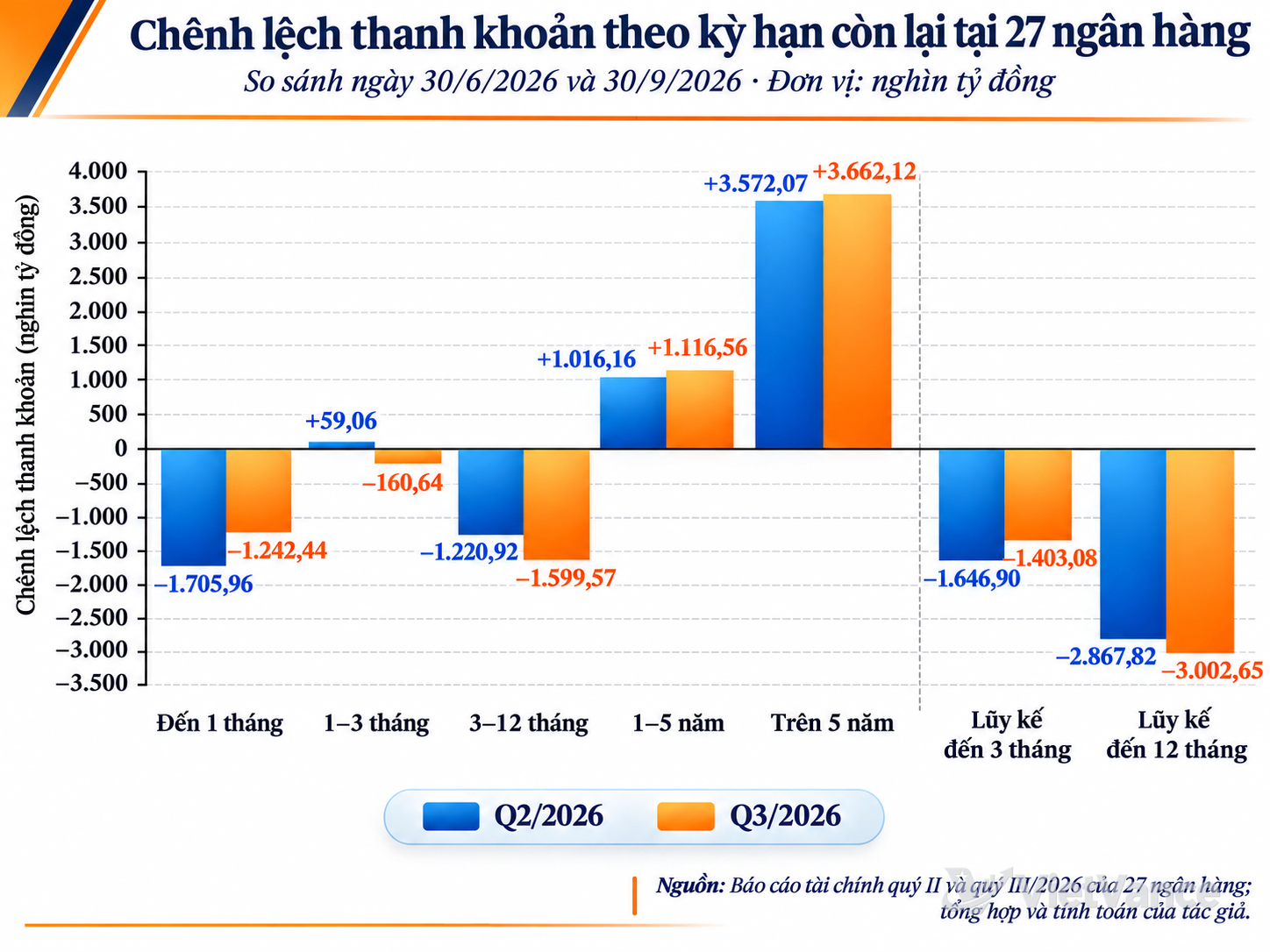
Liquidity gaps by remaining maturity at 27 banks at the end of the second and third quarters of 2026.(VietVance)
The widening gap in this maturity band was concentrated at VPBank, MB, Techcombank and HDBank, where the combined balance deteriorated by nearly VND 339 trillion. VPBank’s shortfall widened by VND 111 trillion; MB moved from a VND 50 trillion surplus to a VND 37 trillion shortfall. The balances at VIB and ACB improved by VND 34 trillion and VND 33 trillion, respectively.
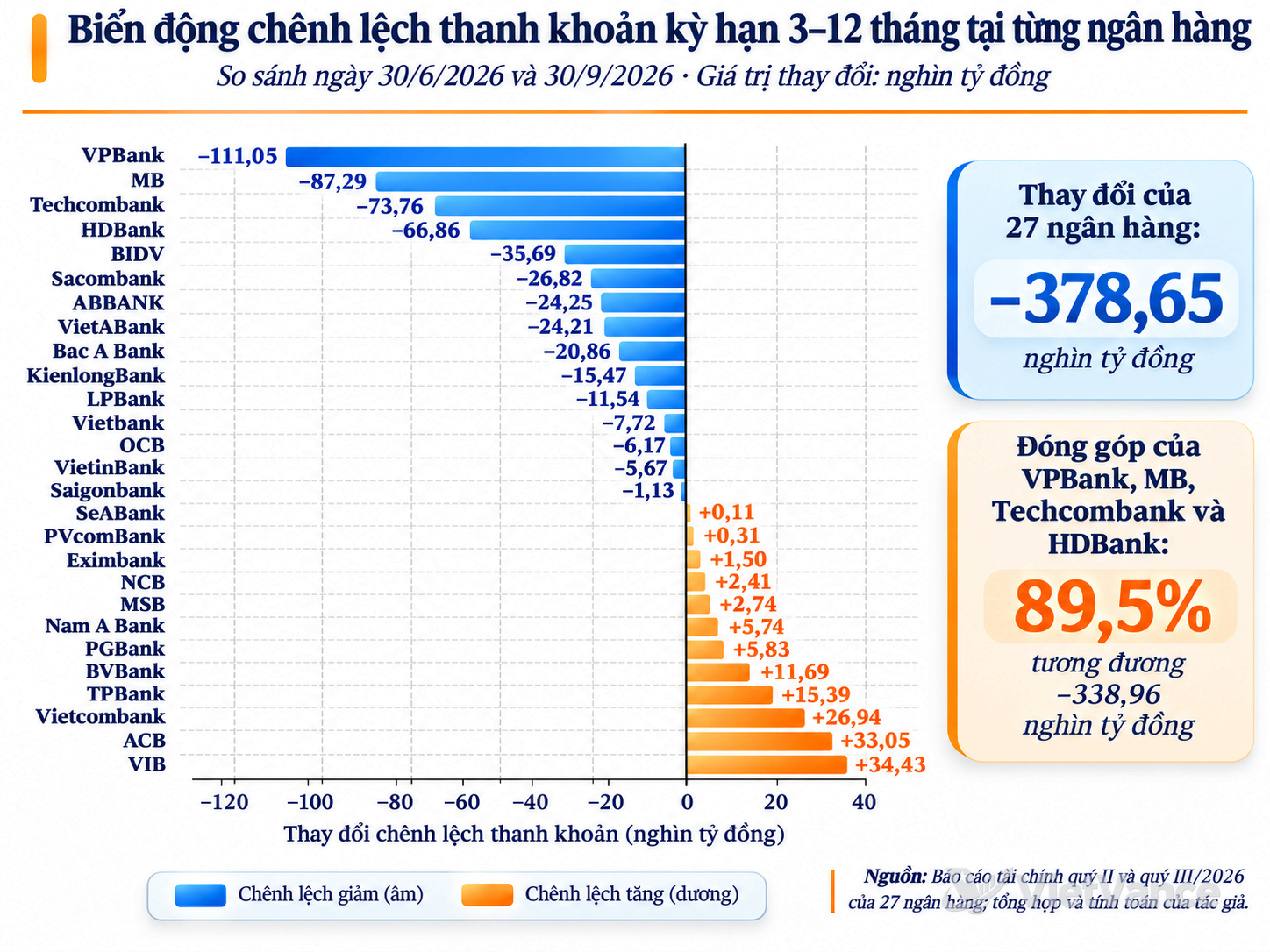
VPBank, MB, Techcombank and HDBank recorded the largest deterioration in their 3–12 month maturity balances.(VietVance)
Funding maturities and loan repricing dates do not necessarily coincide. At the end of the third quarter, about 59.9% of outstanding loans at the 27 banks were due to be repriced within three months, compared with 48.3% of customer deposits on the same basis. At 14 banks, the cumulative interest rate sensitivity gap for maturities of up to three months was positive, while the liquidity gap for the same period was negative. Deposit renewal terms and the pace of loan rate adjustments could affect future funding costs and net interest margins.
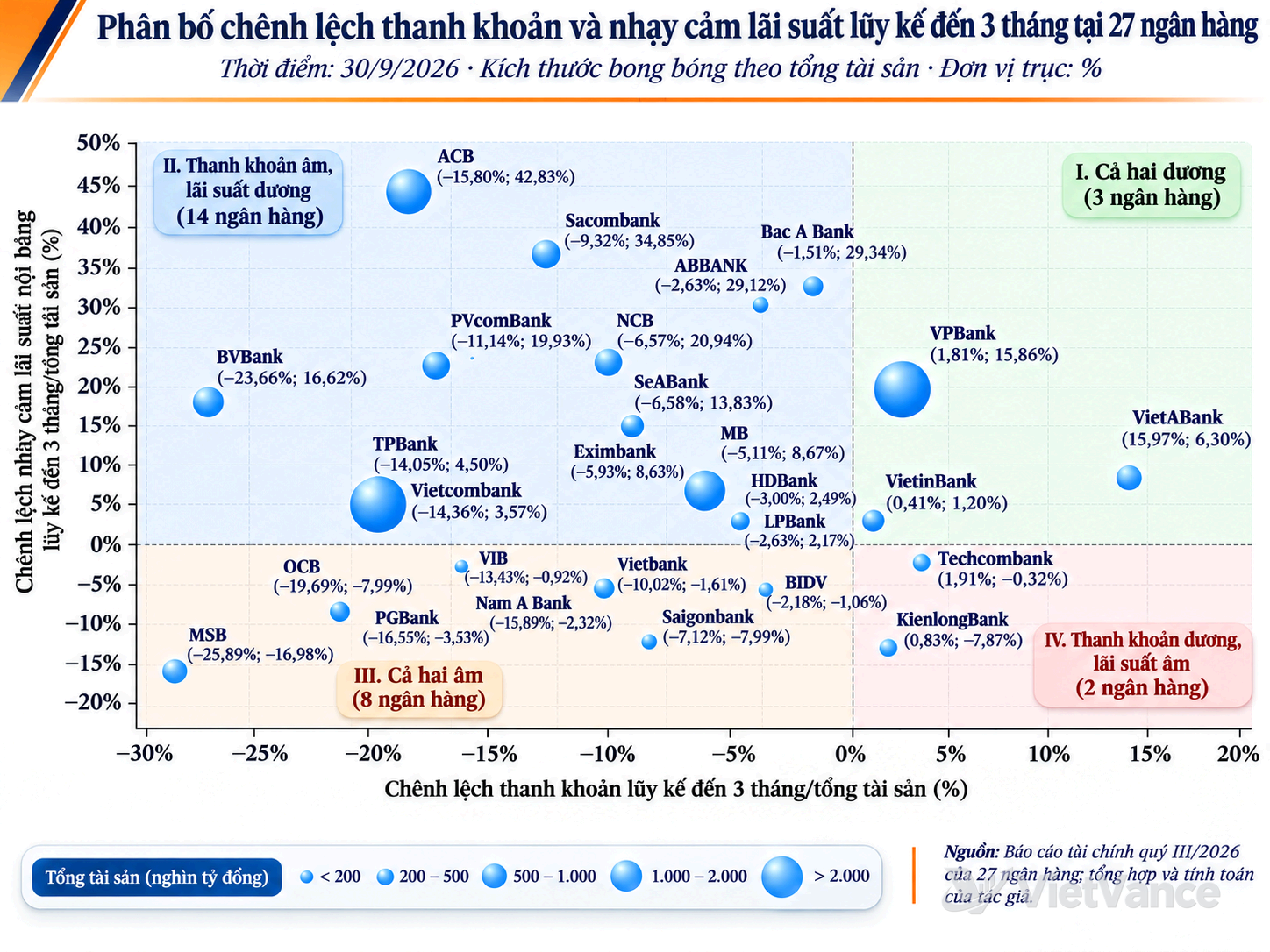
Fourteen banks had negative liquidity gaps but positive interest rate sensitivity gaps for maturities of up to three months.(VietVance)
According to the State Bank of Vietnam, systemwide outstanding credit reached VND 20.75 quadrillion at the end of September 2026, up 11.6% from the end of 2025. Circular 50/2026/TT-NHNN raises the loan-to-deposit ratio ceiling from 85% to 95% while changing the calculation method. The circular takes effect on December 1, 2026, and the new 95% ceiling is scheduled for general implementation from October 1, 2028; eligible banks may apply to implement it early.
The liquidity coverage ratio and net stable funding ratio are also scheduled to be introduced from October 1, 2028, with their minimum requirements rising to 100% in October 2033 and October 2030, respectively. Banks that apply to implement them and meet the 100% threshold for both ratios may be exempt from the 95% loan-to-deposit ratio ceiling, but must still report to and remain under regulatory supervision. For banks whose funding matures before loans are repaid, extending deposit terms or holding more liquid assets could change funding costs or asset yields.
Source: VietVance