Vietnamese Experts Call for Broader Medium- and Long-Term Financing for Businesses
At a business financing seminar on November 25, experts said Vietnamese small and medium-sized enterprises still face obstacles including insufficient collateral, opaque financial information and mismatched financing terms. They recommended improving credit assessments and guarantee mechanisms while developing bonds and other medium- and long-term financing channels.

On November 25, the Institute for Economic and Financial Research held a seminar on business financing. Phạm Thị Hồng Yến, a full-time member of the National Assembly’s Economic and Financial Committee, said Vietnamese businesses still struggle to obtain medium- and long-term funding at reasonable cost. Information gaps between small and medium-sized enterprises and banks, insufficient financial transparency, and the capital market’s heavy reliance on banks are major obstacles. Banks’ funds come mainly from short-term deposits, while business investment projects need medium- and long-term financing, creating a maturity mismatch.

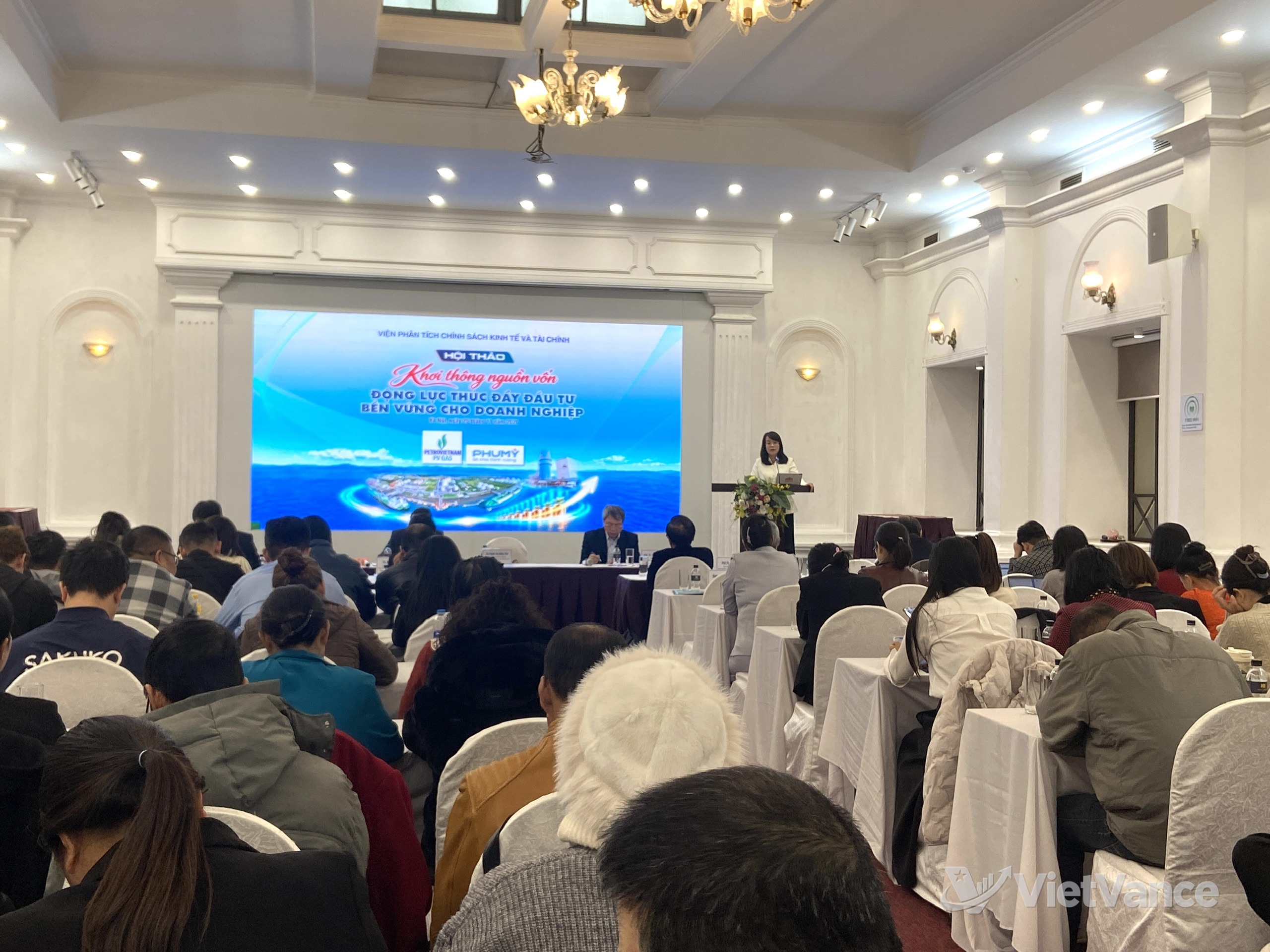
The business financing seminar held on November 25.(VietVance)
Phạm Thị Hồng Yến said businesses’ actual financing costs also include non-interest expenses such as preparing documents, complying with regulations and waiting for administrative approvals. She said the large investments required for digital transformation, green transition and the circular economy would add to financing pressure.
Phạm Thị Hồng Yến speaks at the seminar.(VietVance)
Phí Vĩnh Tường, deputy director of the Institute for Vietnamese and World Economy, cited a 2026 World Bank report estimating that Vietnam raised an average of about US$62 billion a year through the banking system from 2023 to 2026, compared with about US$2.9 billion through the stock market. He also said that, as of October 2026, public investment disbursement had reached about 65.9% of the plan, leaving nearly 350 trillion Vietnamese dong yet to flow into the economy.
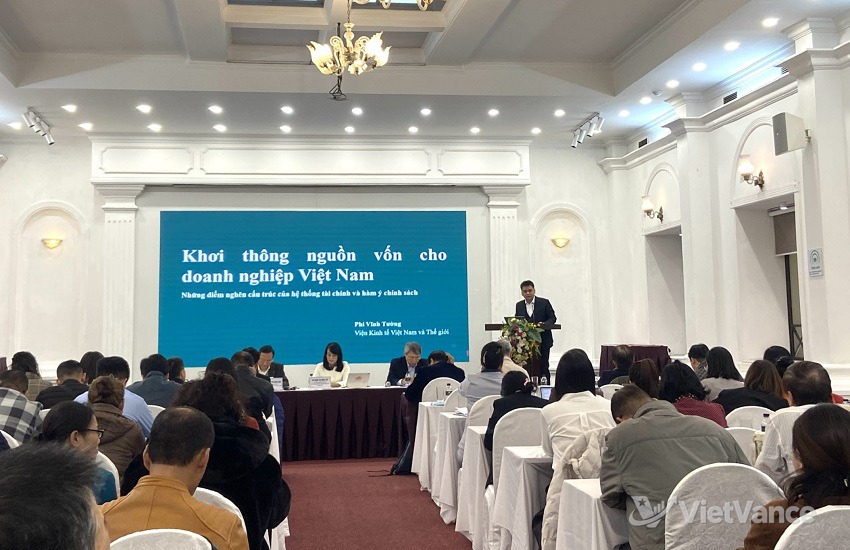
Phí Vĩnh Tường speaks at the seminar.(VietVance)
The two experts recommended that banks place greater weight on businesses’ operating capacity, future cash flows and order quality when assessing loans, while using data from electronic invoices and customs to improve credit assessments. Phạm Thị Hồng Yến recommended improving rules for using assets such as intellectual property and receivables as collateral and adjusting credit guarantee mechanisms. Phí Vĩnh Tường called for higher-quality corporate bond issuance, the development of independent rating agencies and a broader base of long-term institutional investors.
Source: VietVance