Vietnamese Language Lecturer Calls for More Vietnam–China Cultural Exchanges
Trần Kế Hoa, a Vietnamese language lecturer who has taught in China for many years, has called for more public cultural events in China and more exchanges between young people from the two countries. He said traditional clothing, food and sports can build mutual understanding, while some existing activities could welcome a wider range of participants.

Trần Kế Hoa, an associate professor of Vietnamese at Guangdong University of Foreign Studies, told a Vietnam News Agency reporter that Vietnam should take a more active role in promoting its culture in China and create more opportunities for people from both countries, especially young people, to interact. He said cultural activities could help the Chinese public learn about Vietnam and help both sides understand each other through familiar things.
Trần Kế Hoa said the Vietnamese áo dài and cuisine had left a deep impression on him. When Chinese people encounter these aspects of Vietnamese culture, they can draw parallels with their own qipao and distinctive dishes, deepening their understanding through comparison. He also said Vietnam’s openness deserves wider recognition, while related promotional and exchange activities in China remain fairly limited.
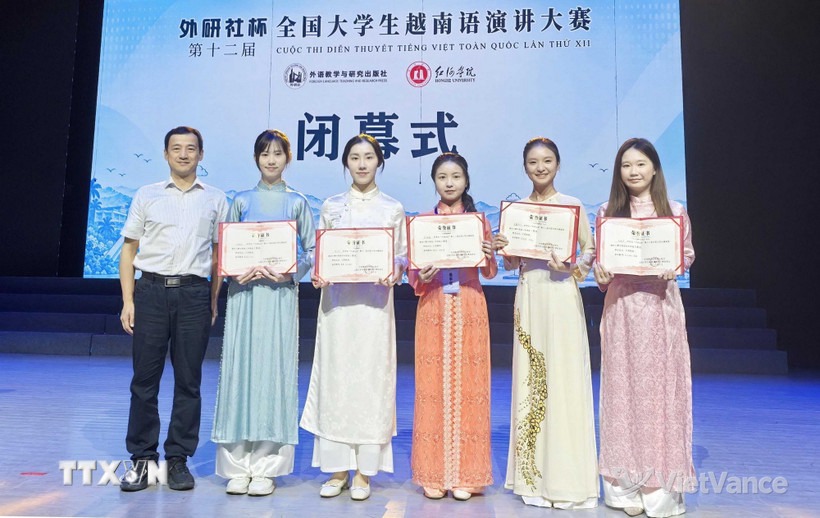
Trần Kế Hoa (first from left) with students who received certificates at a nationwide Vietnamese language speech contest for university students in China.(VietVance)
As an example, he said there is already an áo dài club in China, but its activities mainly serve the local Vietnamese community. It could broaden participation to include more communities. He said he had suggested promoting Vietnamese culture and the image of Vietnamese people more actively in China’s Guangdong province as early as 2007.
On youth exchanges, Trần Kế Hoa said he hoped Vietnamese students studying abroad and Chinese students would have more activities together, including football matches. He also proposed festivals featuring traditional clothing, introductions to Vietnamese cuisine, cultural tourism, video game and cosplay activities, and academic forums for researchers and experts to create more opportunities for people from the two countries to meet and interact.
Source: VietVance