Vietnam’s Food Exports to the EU: Beyond Preferential Tariffs, Supply Chain Data Must Be Verifiable
The Vietnam–EU Free Trade Agreement gives Vietnamese agricultural and food products a tariff advantage, but the EU market has more detailed requirements for food safety, traceability, packaging and sustainable production. Industry experts advise exporters to record and verify data from the source of raw materials to avoid discovering compliance problems only after shipments arrive.

To enter the EU market, Vietnamese agricultural and food products must do more than benefit from tariff preferences under the Vietnam–EU Free Trade Agreement: exporters must also demonstrate that food safety, raw material sourcing and production processes meet requirements. At an industry seminar in Ho Chi Minh City, EuroCham experts said European importers look beyond the quality of finished products. They also expect companies to explain where raw materials come from, how products are made and whether that information can be verified.
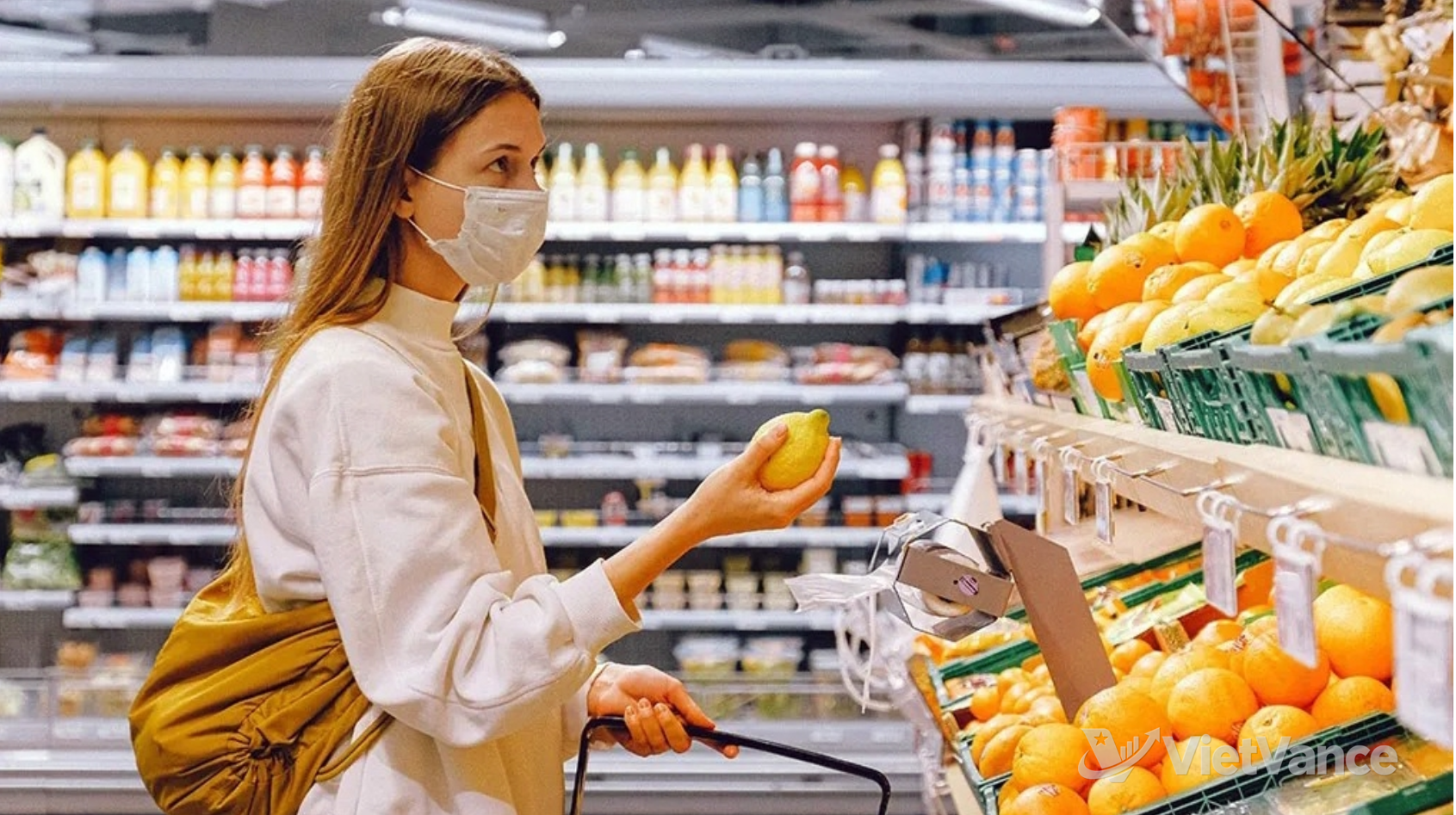
Goods exported from Vietnam to the EU must comply with strict labeling rules.(VietVance)
EuroCham Vice Chairman Jean-Jacques Bouflet said the EU focuses its checks on pesticide residues, contaminants, allergens and labeling information. Current border inspection rates are 50% for okra and chili peppers, 30% for dragon fruit and 20% for durian. He advised companies to control pesticide use and complete necessary tests before shipping. If a shipment is refused entry, the exporter may have to bear the cost of returning or destroying it.
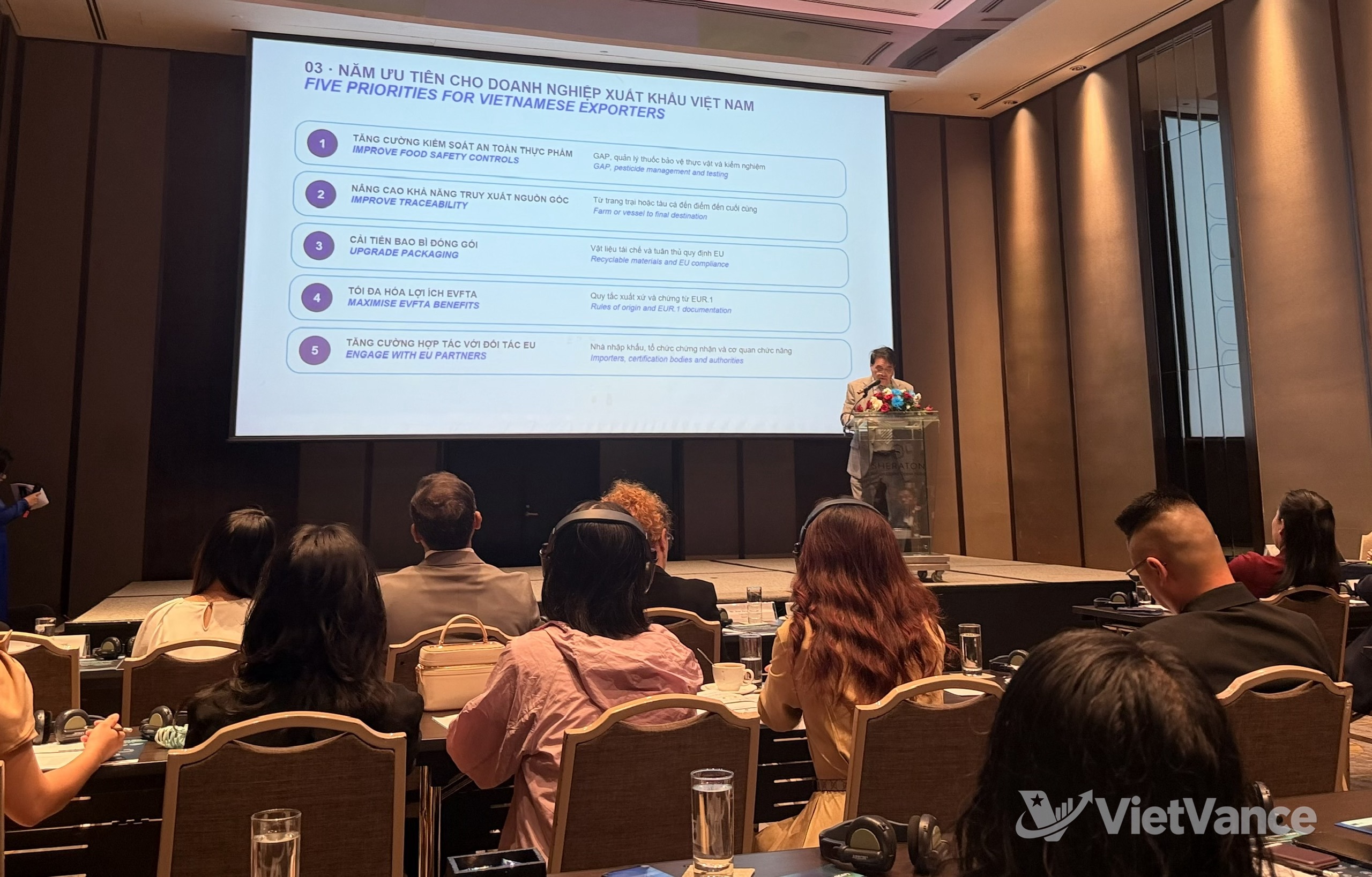
EuroCham Vice Chairman Jean-Jacques Bouflet outlines the EU’s requirements for imported food.(VietVance)
For goods covered by the EU Deforestation Regulation, companies must also provide the location of production areas and demonstrate that their products meet the relevant requirements. Nguyễn Thu Thủy, Co-Chair of EuroCham’s Food, Agri and Aqua Business Sector Committee, said obtaining the coordinates of growing areas alone is insufficient: companies must link individual plots, farming households, buyers and export batches. She said that although the EU classifies Vietnam as a low-risk country, companies must still provide reliable, verifiable data on their products and places of origin.
Compliance requirements for food of animal origin likewise extend across the entire production chain. Nguyễn Thu Thủy said Vietnam has been included on the relevant EU lists for some farmed aquatic products and honey, but poultry, eggs and pork have not yet been included. Companies need supporting records for every stage, from breeding stock, feed, farming and veterinary care to slaughter and processing. Testing finished products alone cannot resolve market access issues across the chain.
European buyers also consider carbon emissions, water use, energy, labor responsibilities and whether packaging can be recycled. Nguyễn Thu Thủy said De Heus began collecting baseline sustainability data in 2022 and is still improving its systems. She advised Vietnamese companies to standardize how supply chain data is recorded and verified, train farmers and suppliers, and maintain communication with trade partners and regulators about new requirements.
Source: VietVance