Vietnamese cooperative develops medicinal plants under forest canopy; golden camellia earns four-star OCOP rating
A Vietnamese organic agricultural cooperative is conserving and cultivating golden camellia and other native medicinal plants through a layered planting model under forest canopy. Its golden camellia product received a four-star OCOP rating in 2025, while the cooperative has established growing and conservation areas in Hanoi and Thái Nguyên and encouraged households to try cultivation.

Tiên Dương Organic Agricultural Cooperative is conserving and propagating native medicinal plants through a layered planting model under forest canopy. Its golden camellia product, Hakodae Orgavina, received a four-star rating under Vietnam’s One Commune One Product (OCOP) program in 2025 and was recognized as having five-star potential.
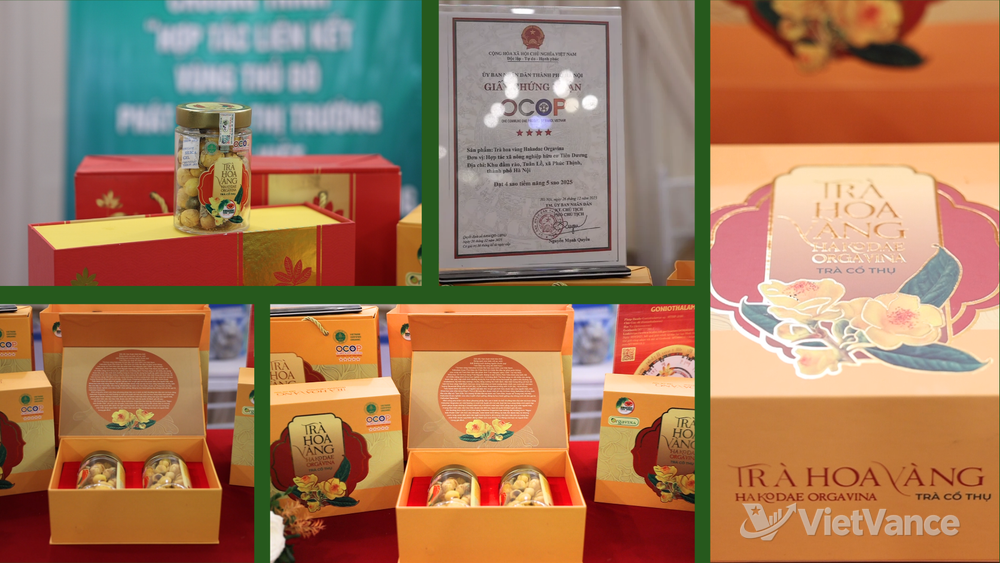
The cooperative’s Hakodae Orgavina golden camellia product received a four-star OCOP rating in 2025.(VietVance)
The cooperative has established a golden camellia growing area of about 15 hectares in Hanoi, with more than 20,000 plants, and a conservation area of about 10 hectares in Thái Nguyên, with approximately 20,000 plants. In 2024, with support from local authorities, the cooperative encouraged about 1,700 households to join the expansion of the model and provided seedlings for trial cultivation.
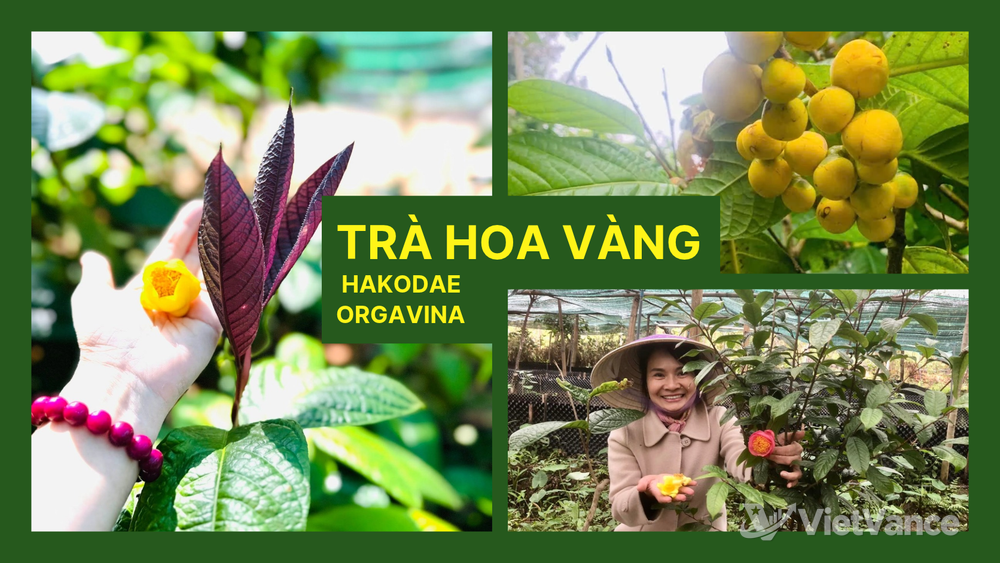
The cooperative conserves and propagates golden camellia through its model for growing medicinal plants under forest canopy.(VietVance)
Phạm Thị Lý, the cooperative’s director, said the planting model combines forest trees or fruit trees in the upper layer, golden camellia in the middle and other suitable medicinal plants below, making use of different levels of the same plot of land. Some crops can be harvested sooner, helping growers cover costs during golden camellia’s long growing period. Increasing household income still depends on reliable purchasing and sales channels.
The cooperative has adopted freeze-drying technology to process golden camellia and produces tea bags. Its growing area is certified under Vietnamese organic standards, and its processing plant meets the ISO 22000:2018 standard. Phạm Thị Lý said further development of the product requires standardizing the sources of its genetic material, expanding a reliable supply of raw materials, and improving cultivation, processing and marketing.
Source: VietVance