Vietnam's live hog prices steady on November 23 as African swine fever affects a locality
Live hog purchase prices across Vietnam were broadly steady on November 23, with regional quotes ranging from VND 51,000 to 57,000 per kg. Experts expect little change on November 24. In a Thanh Hóa locality, 29 hogs belonging to seven households had been culled due to African swine fever as of November 17; local authorities have introduced transport controls and disinfection measures.

On the morning of November 23, live hog purchase prices in northern Vietnam held at VND 53,000–55,000 per kg. Hải Phòng, Lai Châu and Phú Thọ quoted VND 55,000 per kg, the highest price in the north; Tuyên Quang, Cao Bằng and Sơn La quoted VND 53,000 per kg. Prices in the central and Central Highlands regions ranged from VND 51,000 to 56,000 per kg, with Đắk Lắk and Lâm Đồng at VND 56,000 and Quảng Trị and Huế at VND 51,000.
Live hog prices in the south remained at VND 52,000–57,000 per kg, making it the region with the highest prices nationwide. Đồng Nai and Ho Chi Minh City quoted VND 57,000 per kg, while An Giang, Cà Mau and Cần Thơ quoted VND 52,000. The lowest regional quote listed in the source is VND 51,000 per kg, while its nationwide price overview gives a range of VND 52,000–57,000 per kg, a discrepancy. Experts expect purchase prices across the country to remain relatively stable on November 24, with little fluctuation.
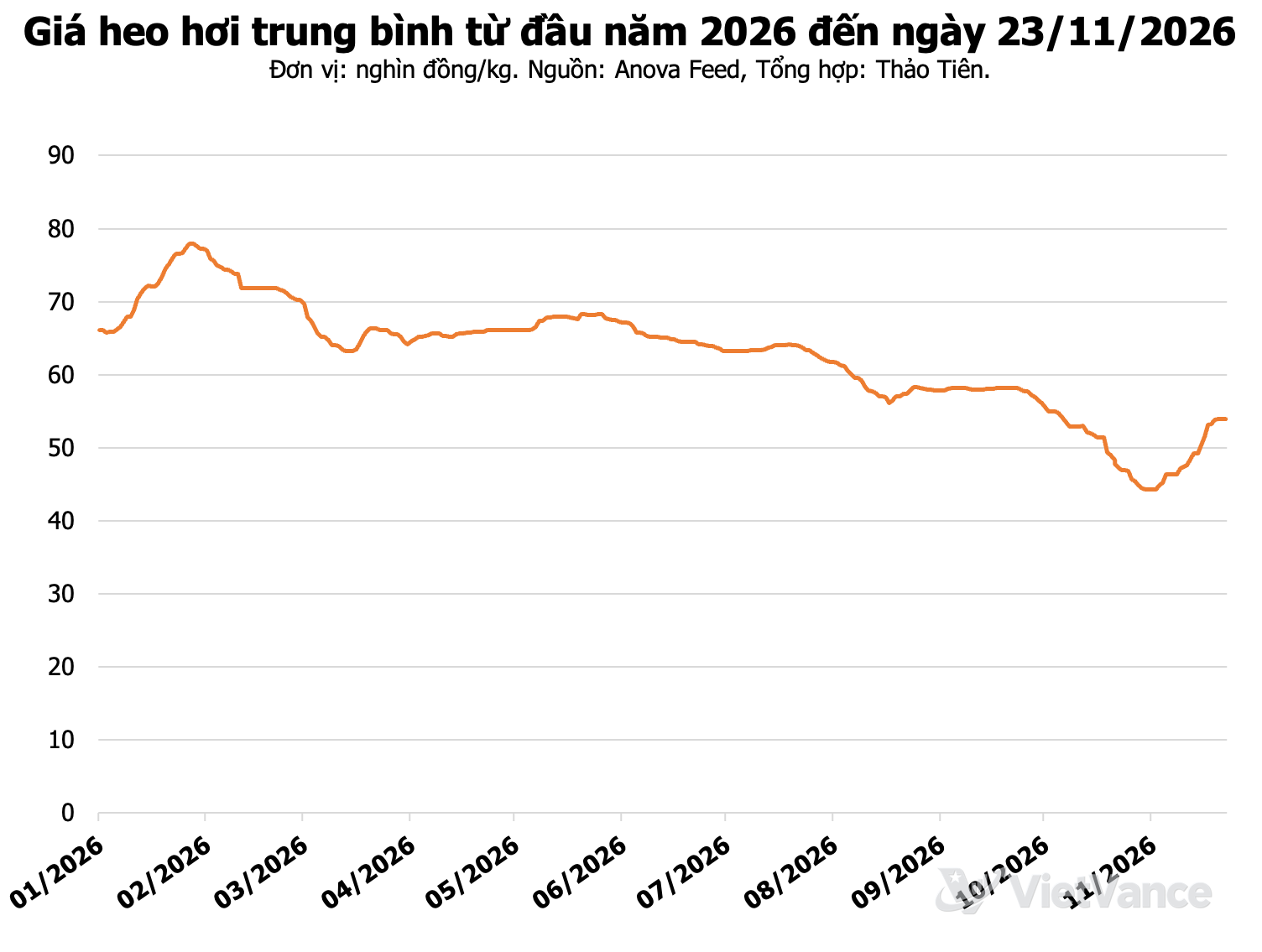
Live hog purchase prices across Vietnam were broadly steady on November 23.(VietVance)
In Thượng Ninh commune, Thanh Hóa province, the local public service center reported that, as of November 17, African swine fever had affected three villages. A total of 29 hogs belonging to seven farming households, weighing 1,480 kg in all, had been culled. The first outbreak was detected in a village on November 4, and tests were positive for the African swine fever virus; the chair of the commune People's Committee declared an outbreak in that village on November 6.
Local authorities have set up two temporary animal checkpoints in the village where the outbreak was detected to control the movement of hogs and pork products in and out. They have also supplied 20 liters of disinfectant to farming areas, disinfected hog pens and monitored herds nearby. The local government has urged farmers to report any unusual signs in their hogs promptly, avoid selling or slaughtering sick or dead hogs, and refrain from restocking in affected areas until conditions permit.
Source: VietVance