Vietnam’s Finance Ministry and IMF Discuss 2027 Fiscal Policy
Vietnam’s Finance Ministry and an IMF Article IV consultation delegation discussed the economy and fiscal policy. The IMF delegation head said Vietnam’s economy performed well in 2026 and recommended a broadly neutral fiscal stance and cautious public investment in 2027. The ministry said it would keep policy flexible.

Vietnamese Deputy Minister of Finance Trần Quốc Phương met with Martin Sommer, head of an International Monetary Fund (IMF) Article IV consultation delegation, to discuss Vietnam’s macroeconomic situation, fiscal policy direction and growth outlook. Sommer said Vietnam’s economy achieved positive results in 2026 despite challenges arising from the global environment, with inflation remaining close to its target and investment inflows staying high.
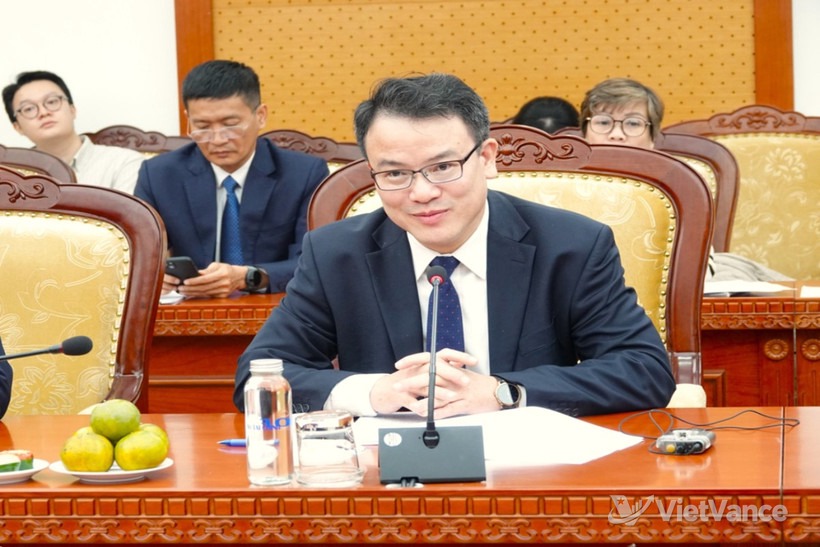
Vietnam’s deputy minister of finance speaks at the meeting.(VietVance)
Trần Quốc Phương said GDP growth of more than 10% from 2026 to 2030 is a strategic goal for Vietnam. Achieving it will require new growth drivers and private investment in transport infrastructure, energy, digital transformation, science and technology. He stressed that efforts to promote growth must also maintain macroeconomic stability, control inflation and safeguard the economy’s major balances.
Responding to the IMF’s recommendation that fiscal policy remain broadly neutral in 2027 and that public investment proceed cautiously and in stages, Trần Quốc Phương said the Finance Ministry valued the analysis, but policy implementation must respond to actual conditions. The ministry would be ready to make adjustments if inflationary pressures or financial risks rise.
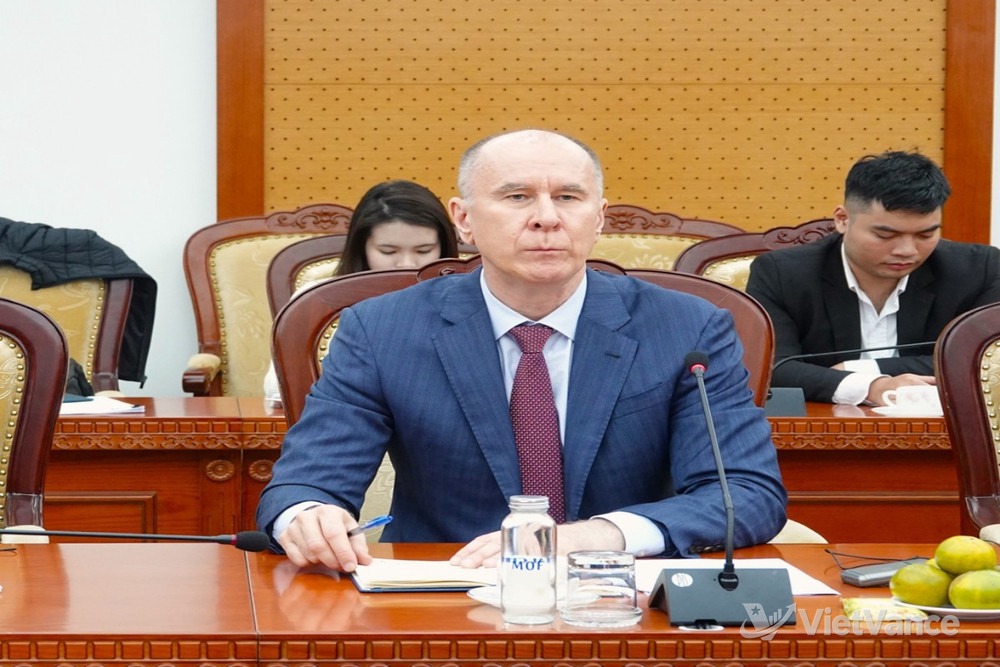
The head of the IMF Article IV consultation delegation attends the meeting.(VietVance)
In 2027, the Finance Ministry plans to strengthen coordination between fiscal policy, monetary policy and other macroeconomic policies. Depending on actual conditions, it will selectively implement tax and fee reductions and payment extensions, reduce recurrent spending, prioritize resources for development investment, social security and urgent tasks, and strictly control the fiscal deficit and public debt.
On public investment, the ministry will review its list of projects, shift funds from projects with slow disbursement to those better able to use them, and link disbursement to work completed. It is also pursuing institutional reforms in the state budget law, public investment, taxation and securities. The IMF said it was willing to continue policy exchanges and technical support in areas including public investment and public financial management.
Source: VietVance