Malaysian Scholar Discusses Vietnam’s Role in Mekong Cooperation
A Malaysian scholar says Vietnam can advance cross-border water governance and trade links in the Mekong subregion while bringing these issues into ASEAN cooperation. He notes that infrastructure gaps and environmental pressures still constrain progress, and sees scope for deeper Vietnam–Malaysia cooperation in the digital economy, high-tech manufacturing and green energy.

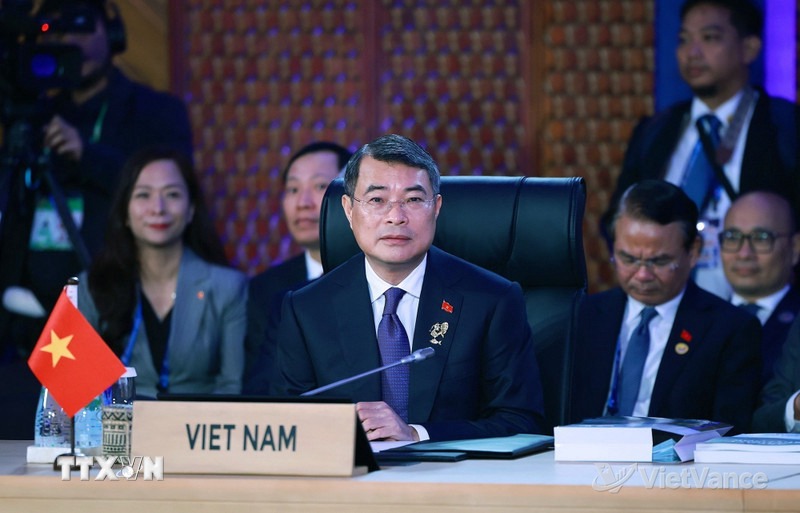
University of Malaya Professor Awang Azman Awang Pawi said, in remarks about the 49th ASEAN Summit, that Vietnam’s participation in mechanisms including the Greater Mekong Subregion Economic Cooperation Program and the Mekong River Commission helps connect subregional development issues with ASEAN’s agenda for economic integration, environmental sustainability and regional resilience. The summit is being held in Manila, the Philippines, from November 14 to 17, 2026.

University of Malaya Professor Awang Azman Awang Pawi.(VietVance)
He said Vietnam has contributed to cross-border connectivity, agricultural development, trade integration and water resource management, but infrastructure gaps, environmental pressures and differing national development priorities have led to uneven results. Climate change, drought, saltwater intrusion and upstream water management affect food production and livelihoods in the Mekong Delta. He called for stronger cross-border water governance, hydrological data sharing and cooperation on climate adaptation.
On economic connectivity, he said Vietnam could promote more efficient border clearance, electronic customs systems and transport corridors, while encouraging industrial cooperation linking Cambodia, Laos, Thailand and Vietnam with other ASEAN economies. He added that the key is to enable small and medium-sized enterprises and local communities to participate in regional trade.
Vietnam and Malaysia upgraded their bilateral relationship to a Comprehensive Strategic Partnership in November 2024. According to Vietnam’s Ministry of Industry and Trade, trade between the two countries reached approximately US$17.4 billion in the first nine months of 2026, exceeding the total for all of 2025. Awang Azman Awang Pawi said the two countries could combine Malaysia’s strengths in semiconductors with Vietnam’s electronics manufacturing capabilities to develop a regional high-tech production network.
He also proposed cooperation under the ASEAN Digital Economy Framework Agreement, focusing on cross-border data governance, digital payments and cybersecurity. On green growth, the two countries could explore cooperation on renewable energy transmission among Vietnam, Malaysia and Singapore. He said these efforts need clear investment commitments and implementation plans to produce measurable results.
Source: VietVance