Vietnam’s Double-Digit Growth Goal Puts Pressure on Power Supply
Vietnam aims for average annual double-digit GDP growth from 2026 to 2030, requiring commercial electricity demand to grow 11% to 12% a year. A policy official warned that delays in power generation and grid projects, along with rising dependence on imported energy, make changes to investment and electricity trading mechanisms urgent.

At an energy forum held in Ho Chi Minh City on November 19, Nguyễn Đức Hiển, deputy head of Vietnam’s Central Policy and Strategy Commission, said commercial electricity must grow by 11% to 12% annually to support the country’s goal of average annual double-digit GDP growth from 2026 to 2030. That would be 1.2 to 1.5 times the rate of economic growth. Gas-fired power generation is expected to grow by 13.2% a year, while renewable energy is projected to account for 26.1% of total primary energy supply by 2030.
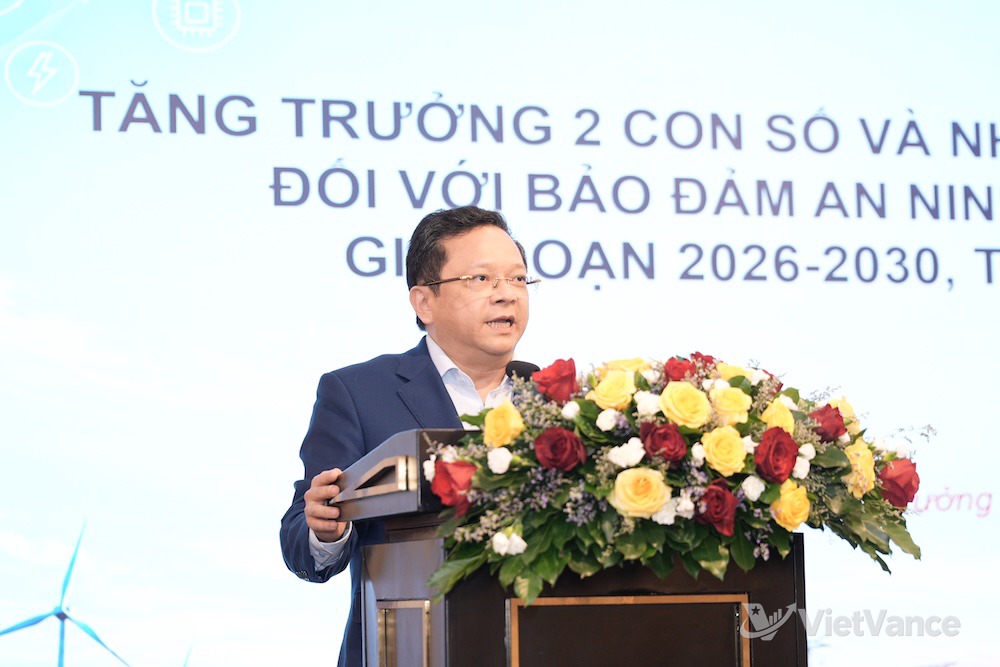
Nguyễn Đức Hiển speaks at the energy forum.(VietVance)
Vietnam’s dependence on imported primary energy rose from 8.4% in 2015 to 44% in 2025. Citing Ministry of Industry and Trade estimates, Nguyễn Đức Hiển said that without major changes to electricity mechanisms, the power system could face a capacity shortfall of about 4,300 MW in 2027, widening to 13,964 MW by 2030, with an associated electricity shortfall of about 61.2 billion kWh. He said that nearly three years into implementation of the revised Power Development Plan VIII, about 5% of projects had entered commercial operation and about 9% were under construction.
Mismatched progress on power generation and transmission networks has also created regional imbalances in supply and demand: the north lacks firm power capacity, while transmission facilities from central to southern Vietnam cannot keep pace with the need to move electricity out of the region. The planned capacity target for liquefied natural gas power generation is 22,524 MW, of which about 1,600 MW is currently operating. Nguyễn Đức Hiển said unresolved issues involving the pass-through of gas prices in power purchase agreements, minimum purchase commitments and long-term risk-sharing mechanisms are holding back the projects.
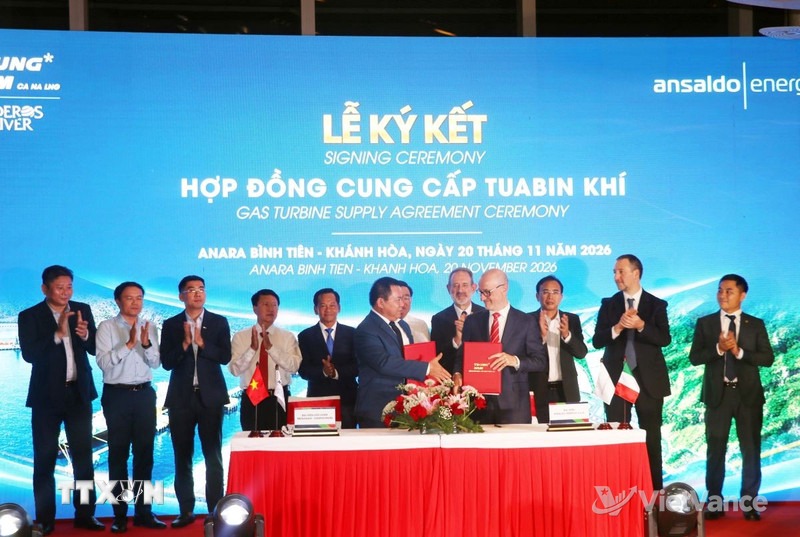
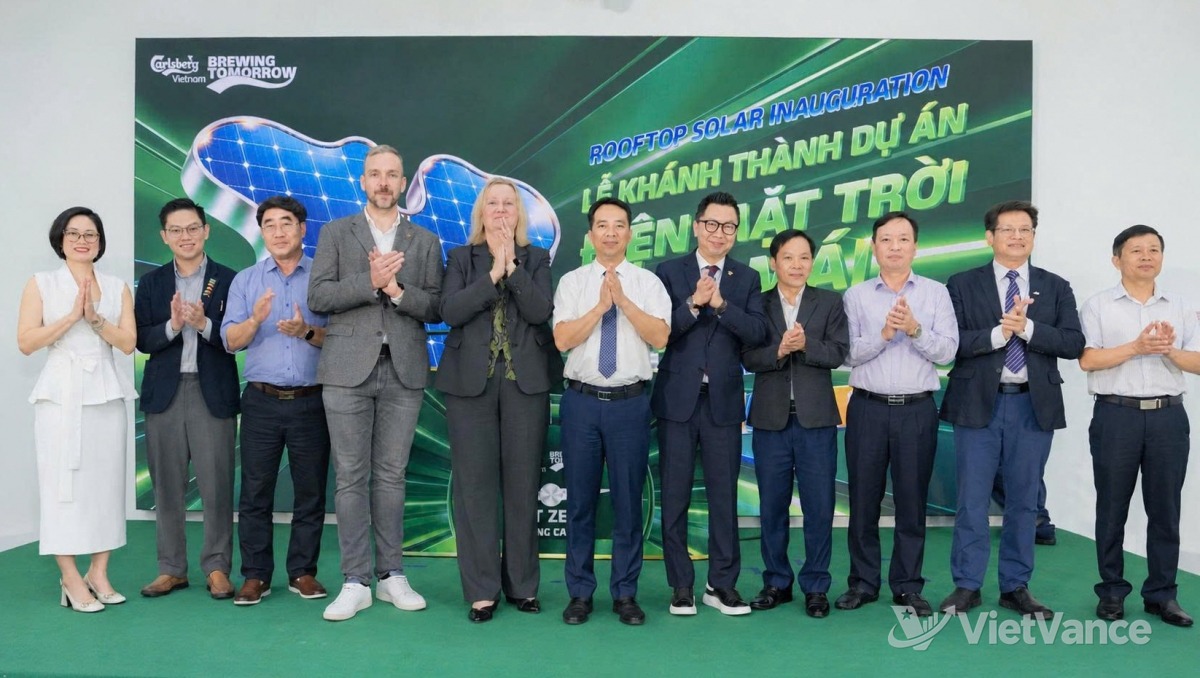
Nguyễn Đức Hiển recommended improving financial mechanisms for liquefied natural gas and offshore wind projects, establishing dedicated mechanisms for concentrated energy centers in Quảng Ngãi and Cà Mau, and building shared liquefied natural gas storage and transport facilities. He also recommended resolving legal procedures for existing renewable energy projects and issuing detailed rules to implement the 2024 Electricity Law so private investors can participate in transmission infrastructure investment, while advancing direct power purchases, green financing and rooftop solar power for self-generation and self-consumption.
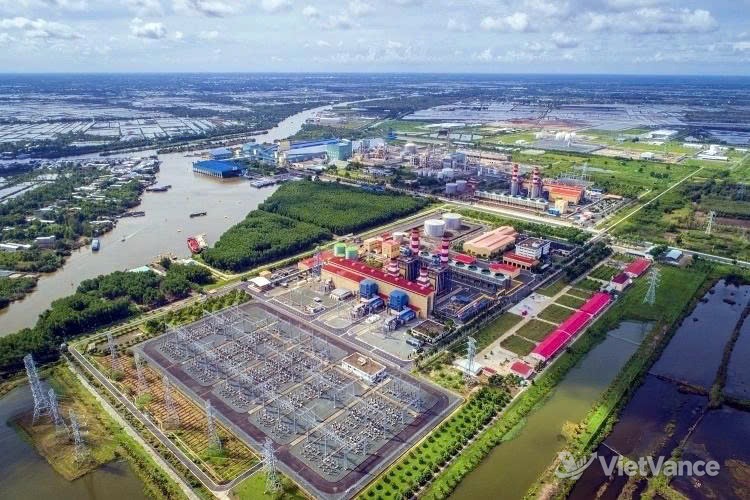
Panoramic view of the Cà Mau gas, power and fertilizer industrial complex.(VietVance)
Source: VietVance