Vietnam’s Raw Rice Prices Rise by 100 Dong per Kilogram as Philippine Farmers Propose Higher Import Tariffs
On November 12, prices for two types of raw rice in Vietnam’s Mekong Delta rose by 100 dong per kilogram, while paddy purchase prices in An Giang remained stable. Philippine farmer groups proposed a uniform 55% tariff on imported rice, including rice from Vietnam, the country’s largest supplier. The proposal remains under review.

On November 12, raw rice prices in Vietnam’s Mekong Delta edged up, while fresh paddy prices remained stable. IR 504 raw rice rose by 100 Vietnamese dong per kilogram from the previous trading day to 9,500–9,600 dong per kilogram; OM 5451 raw rice also rose by 100 dong per kilogram to 11,300–11,400 dong per kilogram.
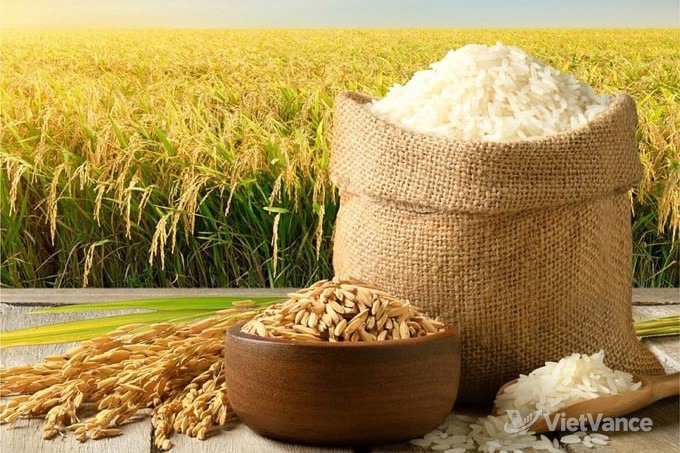
Raw rice prices in Vietnam’s Mekong Delta edged up on November 12.(VietVance)
Data from An Giang province’s agriculture and environment department showed that local paddy purchase prices were unchanged. Đài Thơm 8 and OM 18 were priced at 7,100–7,200 dong per kilogram, and OM 5451 at 6,400–6,600 dong per kilogram. Export offers published by the Vietnam Food Association were also stable: Jasmine rice at US$565–569 per tonne, fragrant rice with 5% broken grains at US$535–540 per tonne, and white rice with 5% broken grains at US$442–446 per tonne.
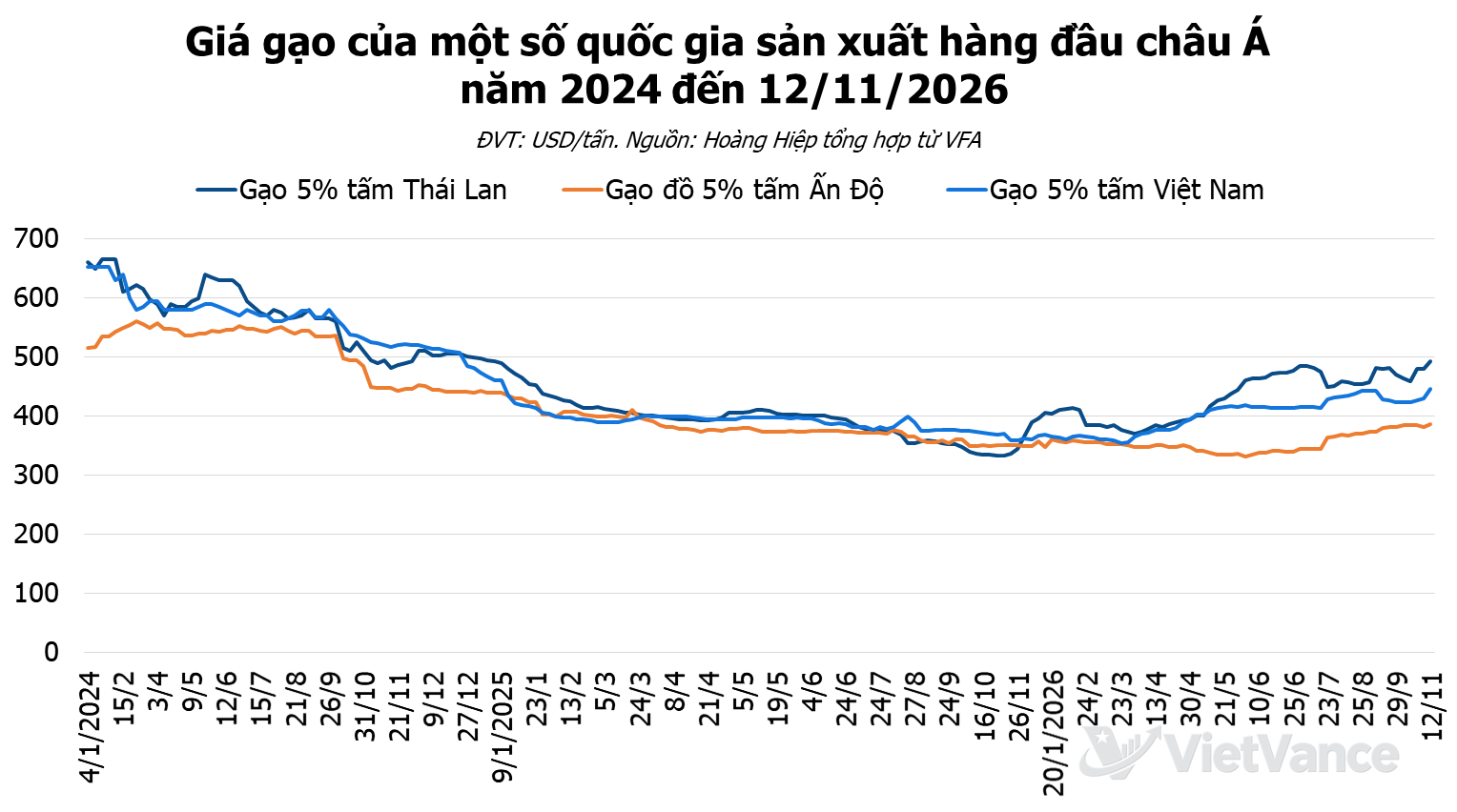
Vietnam’s rice export offers remain stable, while Philippine farmer groups propose higher tariffs on imported rice.(VietVance)
At a Philippine Tariff Commission hearing on November 2, the Federation of Free Farmers (FFF) and the Magsasaka Party proposed a uniform 55% tariff on imported rice to bring its wholesale price in line with domestically produced rice. This would raise the current most-favored-nation tariff from 15% by 40 percentage points and the tariff under the ASEAN Trade in Goods Agreement from 35% by 20 percentage points. The proposal has not become policy.
The two groups argued that raising only the most-favored-nation tariff could allow ASEAN suppliers to continue exporting to the Philippines under the lower agreement tariff. Their proposed 55% rate is based on an assumed import price of US$450 per tonne and an average exchange rate during the investigation period of 57.11 pesos to the US dollar. They said the required rate would vary with international rice prices. The Philippine Tariff Commission is investigating whether to impose formal safeguard measures on imported rice.
Data from the Philippines’ Bureau of Plant Industry showed that, as of October 22, the country had imported 4.37 million tonnes of rice. Vietnam was its largest supplier, accounting for 2.8 million tonnes; Thailand and Myanmar supplied 624,841 tonnes and 472,762 tonnes, respectively.
Source: VietVance