Vietnam plans to train about 50,000 semiconductor engineers
Vietnam plans to train about 50,000 semiconductor engineers and invest in around 30 university laboratories. Science and Technology Minister Vũ Hải Quân called for international chip companies to assess engineers’ skills so training better meets business needs, while helping domestic firms enter higher-value parts of the supply chain.

Vietnam plans to train about 50,000 semiconductor engineers and invest in around 30 laboratories at universities. At the 2026 Vietnam Semiconductor Conference in Ho Chi Minh City on November 23, Minister of Science and Technology Vũ Hải Quân said Vietnam would focus on chip design, advanced packaging and testing, and specialized chips for the electronics industry.
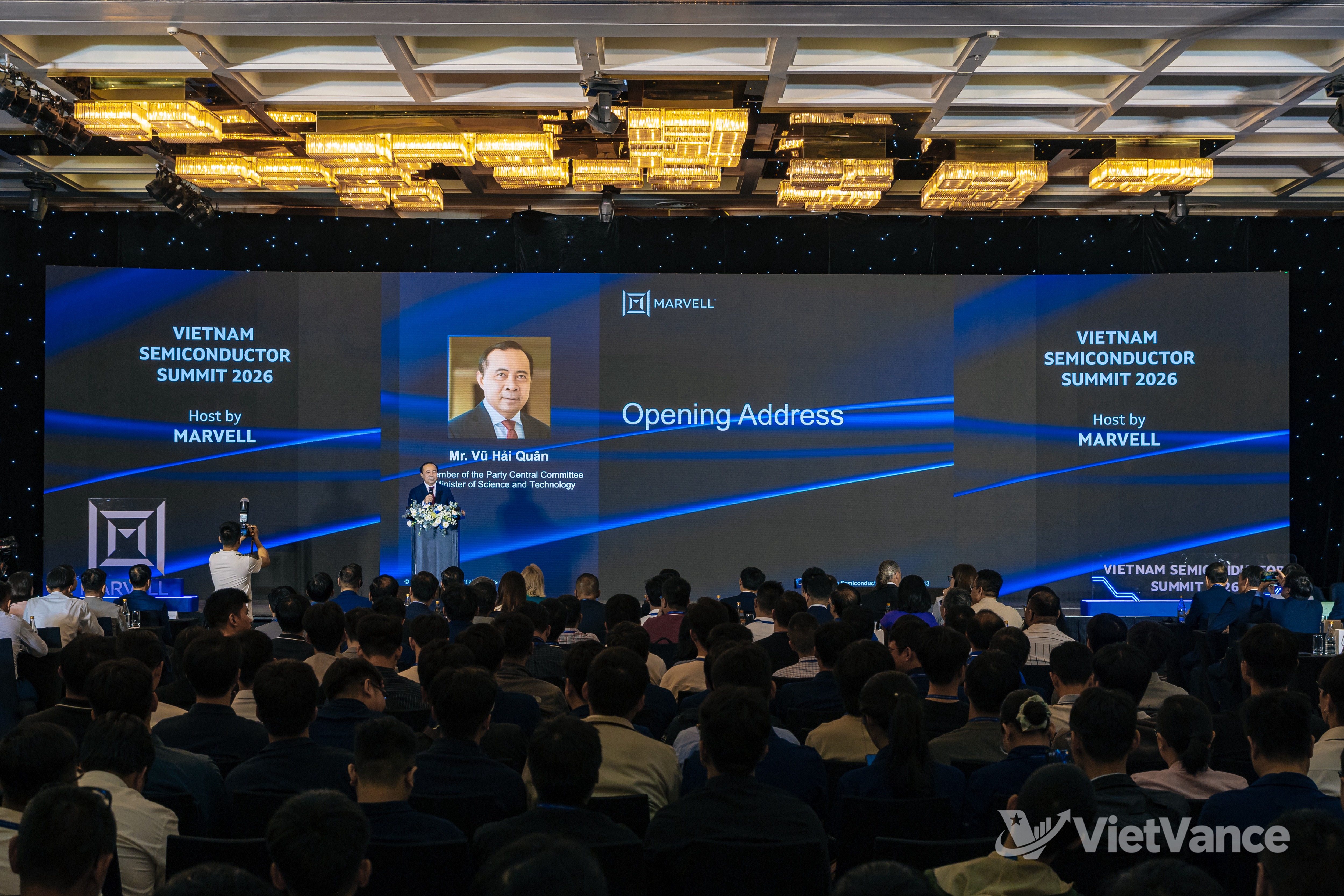
Minister of Science and Technology Vũ Hải Quân speaks at the 2026 Vietnam Semiconductor Conference in Ho Chi Minh City on November 23.(VietVance)
Vũ Hải Quân said artificial intelligence is driving demand for specialized chips while also providing tools for chip design and testing, making it essential for training to improve technical skills. He suggested that companies including Marvell Technology, Synopsys and Renesas help assess Vietnamese engineers, particularly their ability to fill key chip design roles, to identify skill gaps and adjust training.
He also proposed shared microelectronics and AI research facilities for companies, startups and universities. Efforts to attract foreign direct investment should also create opportunities for Vietnamese companies to join supply chains and take part in higher-value activities. Conference organizer Marvell Technology said businesses, universities and the government need to work together to develop talent, while international companies can contribute by sharing expertise and participating in training.
Nguyễn Văn Được, Standing Deputy Secretary of the Ho Chi Minh City Party Committee, said the city would align training with business needs, prioritize research and development in chip design, AI and data centers, and improve its regulatory framework and technology infrastructure. He called for stronger links between foreign-invested and Vietnamese companies and support for domestic firms to improve their research, design and product commercialization capabilities.
Source: VietVance