Vietnam–Singapore Subsea Cable Project Begins Construction, Targeting Completion in 2030
Construction of the VTS subsea cable linking Vietnam, Thailand and Singapore began in Ho Tram, Ho Chi Minh City, on November 26, 2026. The approximately 2,500-kilometer cable is designed for 600 Tbps of capacity and is expected to be completed in the fourth quarter of 2030. Vietnamese companies helped initiate, plan and design the project.

On November 26, 2026, construction began on the VTS subsea cable project in Ho Tram Commune, Ho Chi Minh City. The planned cable will connect Vietnam, Thailand and Singapore. Initiated by Viettel and Singtel, it is the first international subsea cable initiated by a Vietnamese company that also plays a leading role in its planning and design. The cable will span approximately 2,500 kilometers, have a design capacity of 600 Tbps and is expected to be completed in the fourth quarter of 2030.
The Vietnam–Singapore trunk route will be approximately 1,200 kilometers long, with a design capacity of 240 Tbps, about 2.5 times the combined capacity of Vietnam’s existing international subsea cables. Using eight fiber pairs and next-generation wavelength-division multiplexing technology, the project is expected to achieve two-way data transmission latency of about 12 milliseconds between Vietnam and Singapore, roughly 50% lower than the average for existing routes.
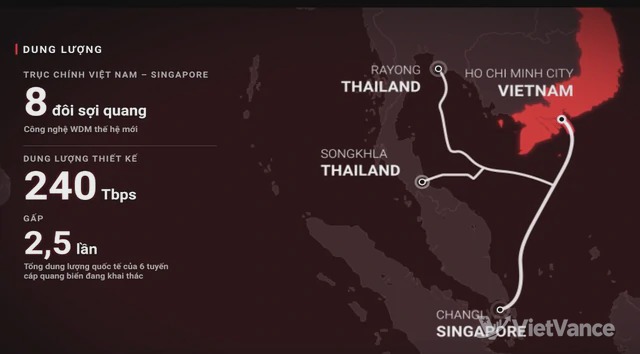
A route map and technical specifications for the VTS subsea cable.(VietVance)
The entire cable will be buried beneath the seabed, with the trunk route buried approximately 3 meters deep to reduce the risk of damage from fishing and ship anchoring. A branch to Thailand will also provide an additional direct connection from Vietnam to Singapore and a backup route for existing international subsea cables.
Viettel and Singtel initiated the project by signing a memorandum of understanding in April 2024. AIS, VNPT, FPT Telecom and Viettel IDC subsequently joined, while NEC Corporation and ASEAN Cableship serve as construction contractors. Viettel Chairman and General Director Tào Đức Thắng said subsea cable investment requires years of preparation, so companies must deploy capacity in advance.
Viettel currently participates in operating five of Vietnam’s eight international subsea cables, accounting for approximately 65% of the country’s international connectivity capacity. By 2030, the company plans to participate in about 10 international subsea cables, including routes designed and led by Vietnam.
Source: VietVance