Vietnam’s construction steel prices hold steady as iron ore futures fall
As of November 12, 2026, construction steel prices quoted by Vietnamese companies remained stable. On November 11, Shanghai rebar futures rose while iron ore futures fell in Dalian and Singapore. Analysts cited expectations of production curbs in Hebei and weak purchasing demand from steel mills as pressures on iron ore prices.

As of November 12, 2026, construction steel prices quoted in Vietnam remained stable. Hòa Phát quoted CB240 steel at 14,920 Vietnamese dong per kilogram and D10 CB300 at 14,210 Vietnamese dong per kilogram; Pomina quoted CB240 at 14,850 Vietnamese dong per kilogram.
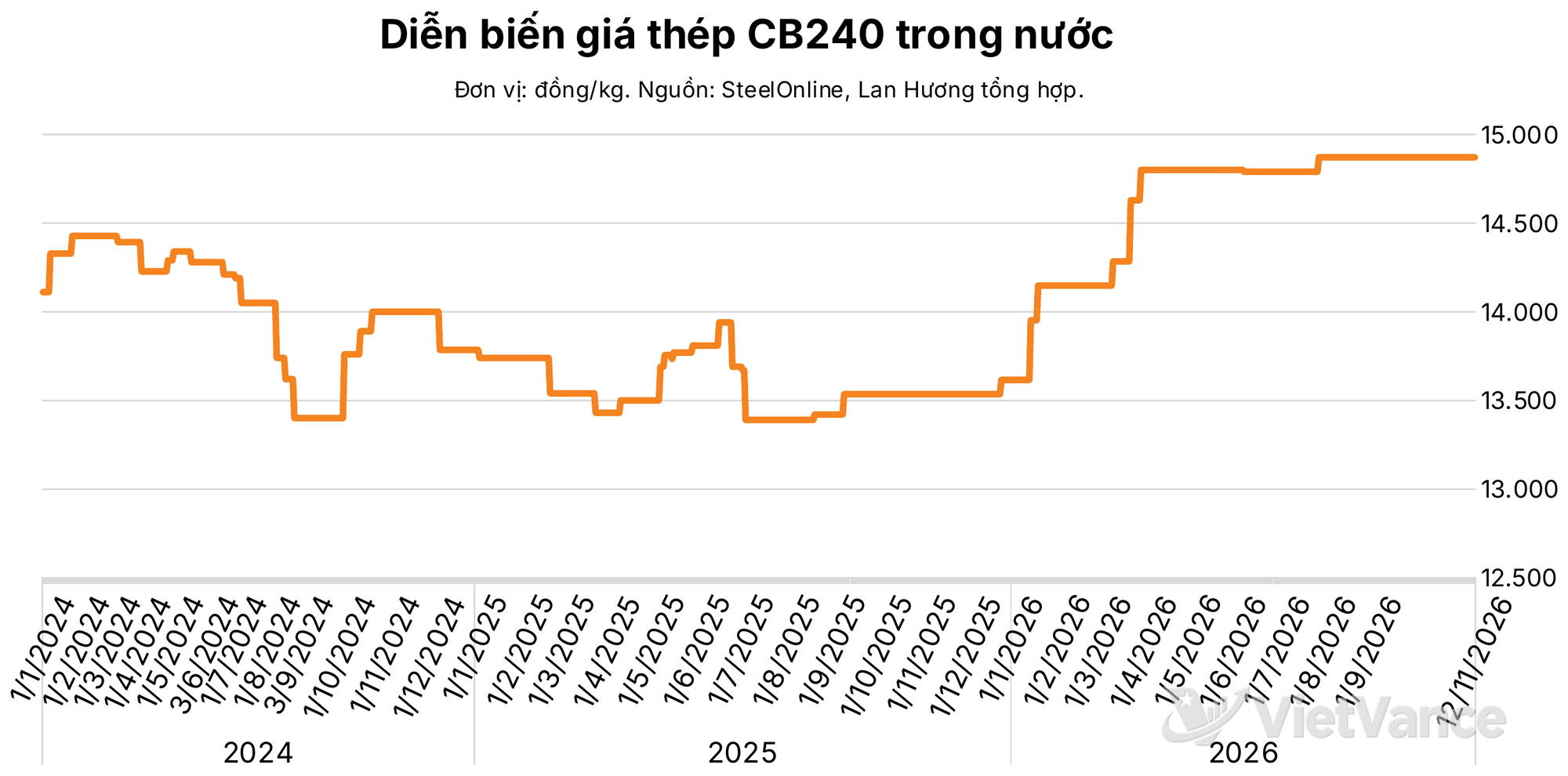
Vietnamese construction steel prices as of November 12, 2026.(VietVance)
At the close on November 11, December 2026 rebar futures on the Shanghai Futures Exchange rose 8 yuan, or 0.26%, to 3,052 yuan per tonne. December iron ore futures on the Dalian Commodity Exchange fell 0.66% to 682.5 yuan per tonne; iron ore futures for the same month on the Singapore Exchange fell 0.55% to US$92.05 per tonne.
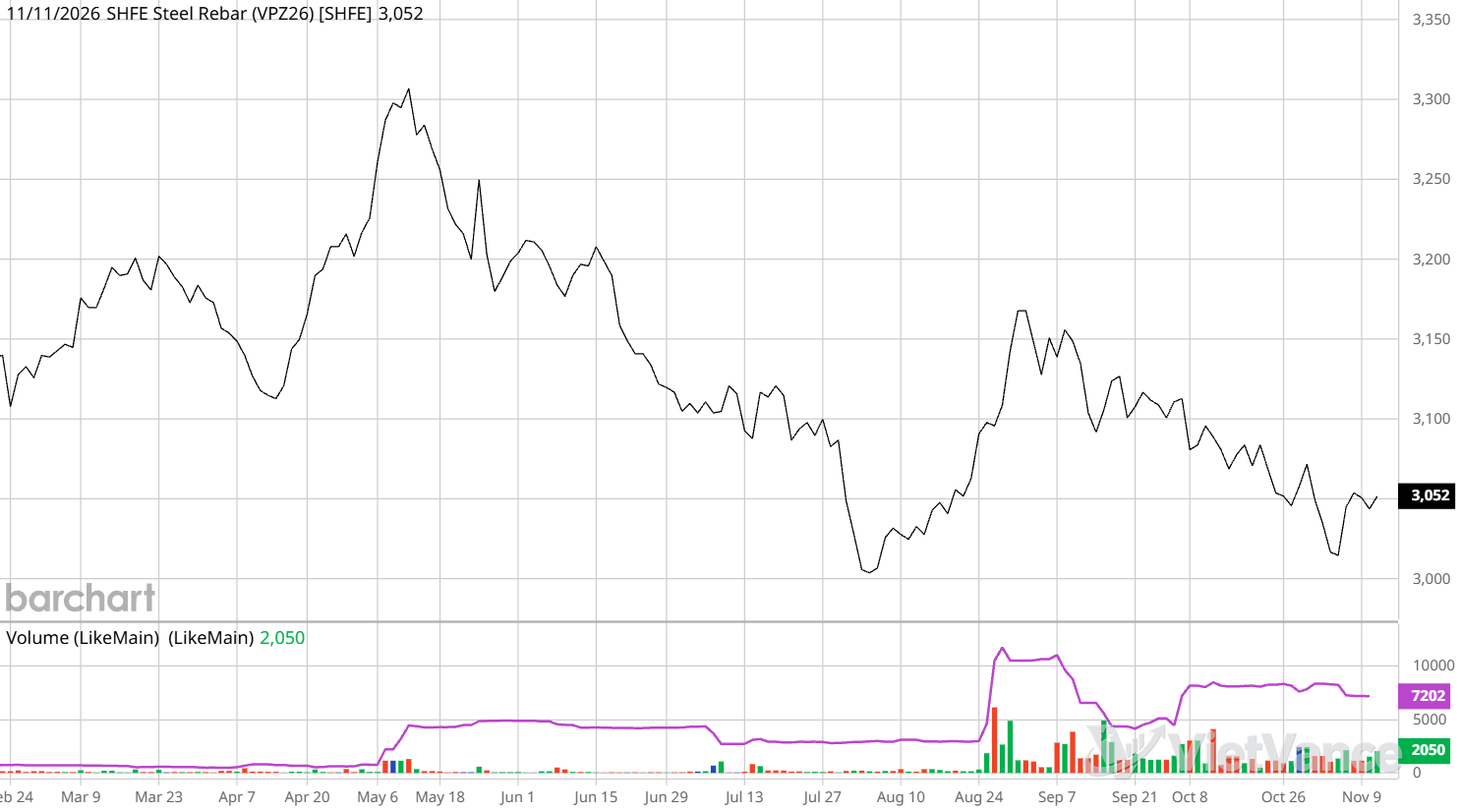
Price movement of December 2026 rebar futures on the Shanghai Futures Exchange.(VietVance)
Iron ore prices came under pressure from production curbs at steel mills in China’s Hebei province and weak purchasing demand. Analysts at Guoyuan Futures said Tangshan and Handan had entered the autumn and winter air pollution control period, with related measures and adverse weather affecting sintering and blast furnace operations; if Hebei expands production curbs, steel mill output could fall further.
Mysteel data showed that blast furnace capacity utilization fell 0.32 percentage points from the preceding week to 79.71% in the previous week. Its analysts said steel mills’ short-term profits had yet to improve significantly, order demand remained weak, and emergency anti-pollution measures in many areas had made mills cautious about purchasing, with most restocking only to meet near-term needs.
Source: VietVance