Vietnam’s Tourism Industry Advances AI Services and Data Integration
Vietnamese tourism businesses are using AI for travel advice and product recommendations, while tourism authorities are standardizing resource data. International visitor arrivals rose 13.8% year on year in the first 10 months of 2026, but data sharing, technical talent and customer information protection remain challenges.

According to the Vietnam National Authority of Tourism, Vietnam welcomed about 19.5 million international visitors in the first 10 months of 2026, up 13.8% year on year. As visitor needs change, tourism businesses are using artificial intelligence for travel advice, product recommendations and online bookings, while tourism authorities are integrating data to support management and marketing.
Phạm Văn Bảy, deputy manager of Vietravel’s Hanoi branch, said the company has launched an updated online platform with Tripi, an AI chatbot available around the clock. Users can search for travel products by departure point, book online and pay. Tripi can recommend itineraries based on their needs, but complex matters such as international travel, visa procedures and customized tours still require human advisers.
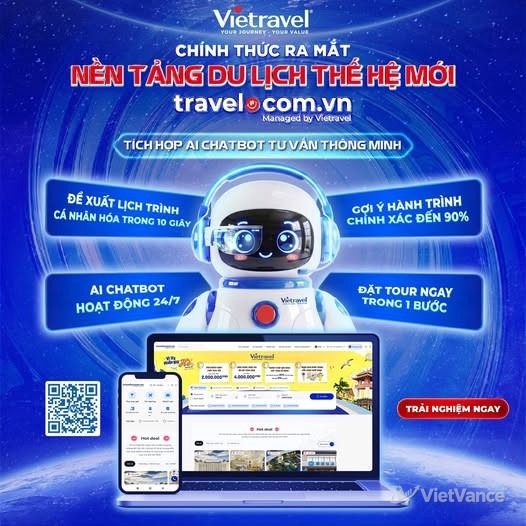
Vietravel’s Tripi AI chatbot application.(VietVance)
BestPrice Travel has also developed Bipi, a travel chatbot that recommends products based on budget, travel dates and preferences. The company’s marketing director, Bùi Thanh Tú, said it also analyzes users’ search and booking behavior to tailor recommendations and supports itinerary customization during consultations.
Nguyễn Thị Hoa Mai, deputy director of the Vietnam National Authority of Tourism, said data and technology can improve tourism management, market research and promotion. The authority is standardizing tourism resource data and guiding localities in the use of data management software. In October 2026, training sessions on the tourism resource survey database were held in northern and southern Vietnam to standardize methods for collecting, assessing and updating information.
The tourism industry’s digital transformation still faces challenges involving investment resources, technical talent, data interoperability and protection of customer information. For small and medium-sized businesses, technology solutions must also fit their size, costs and capacity to use them in practice.
Source: VietVance