Vietnam’s Goods Trade Tops $1 Trillion for First Time in First 10 Months
Vietnam’s goods trade exceeded $1.01 trillion in the first 10 months of 2026, up 32.3% year on year and crossing the $1 trillion mark for the first time. Electronics exports and manufacturing investment support further growth, while tariffs, energy costs, hiring pressures and limited domestic value added remain challenges.

Vietnam’s Statistics Office reported that the country’s total goods imports and exports exceeded $1.01 trillion in the first 10 months of 2026, up 32.3% year on year and passing the $1 trillion mark for the first time. The total stood at $100 billion in 2007 and reached $500 billion in 2019. The office linked subsequent trade growth to expanded production capacity, increased investment, growth in processing and manufacturing, and the use of free trade agreements.
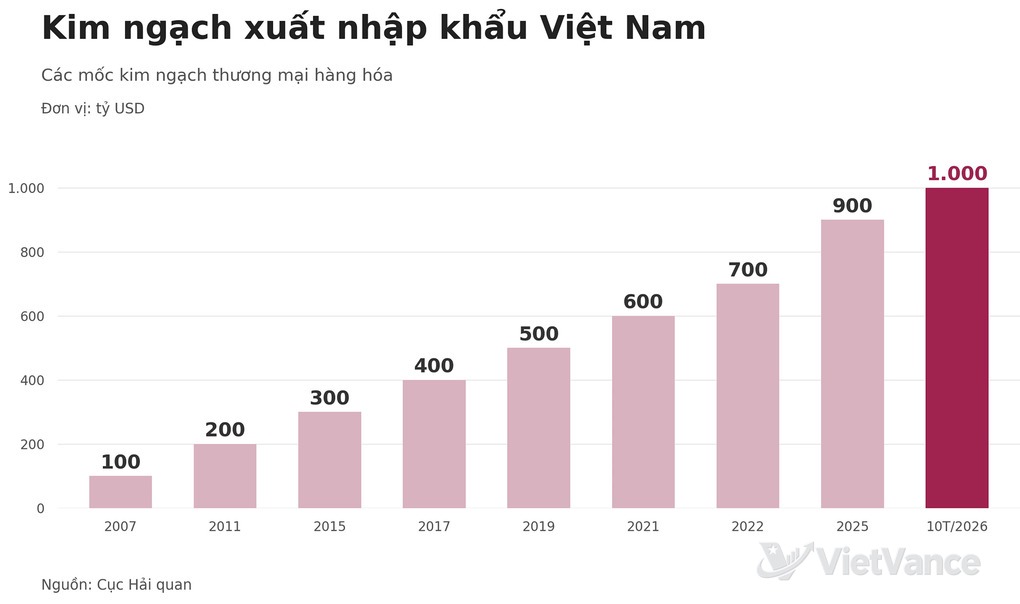
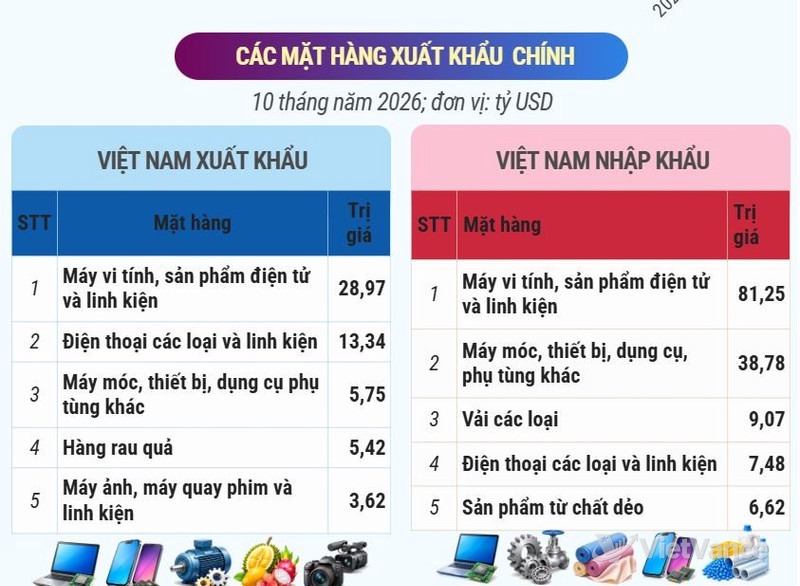
Chart showing changes in Vietnam’s goods imports and exports since it joined the World Trade Organization.(VietVance)
As of October 2026, Vietnam had joined 19 free trade agreements. Registered foreign direct investment in the first 10 months approached $55 billion, a 17-year high, with processing and manufacturing accounting for 51.6%. Over the same period, electronics, computers, machinery, equipment and parts, and phones and components contributed more than half of export value.
Recruitment firm Navigos Search recently surveyed 22 electronics manufacturers operating in Vietnam; 82% planned to expand hiring over the next 12 months. In November 2026, Federal Express added 567 tons of weekly freight capacity between Asia-Pacific and the United States to meet demand for shipping high-value goods such as semiconductors and servers. This gave goods from Vietnam an additional route via Clark in the Philippines.
S&P Global’s purchasing managers’ index report showed that Vietnamese manufacturers were optimistic about output over the next 12 months, although new orders grew more slowly in October than in September. In HSBC’s 2026 global trade survey, 52% of Vietnamese respondents cited tariff costs and 49% cited energy costs; 97% said barriers still prevented them from making wider use of free trade agreements. The electronics companies surveyed by Navigos Search also faced hiring pressures.
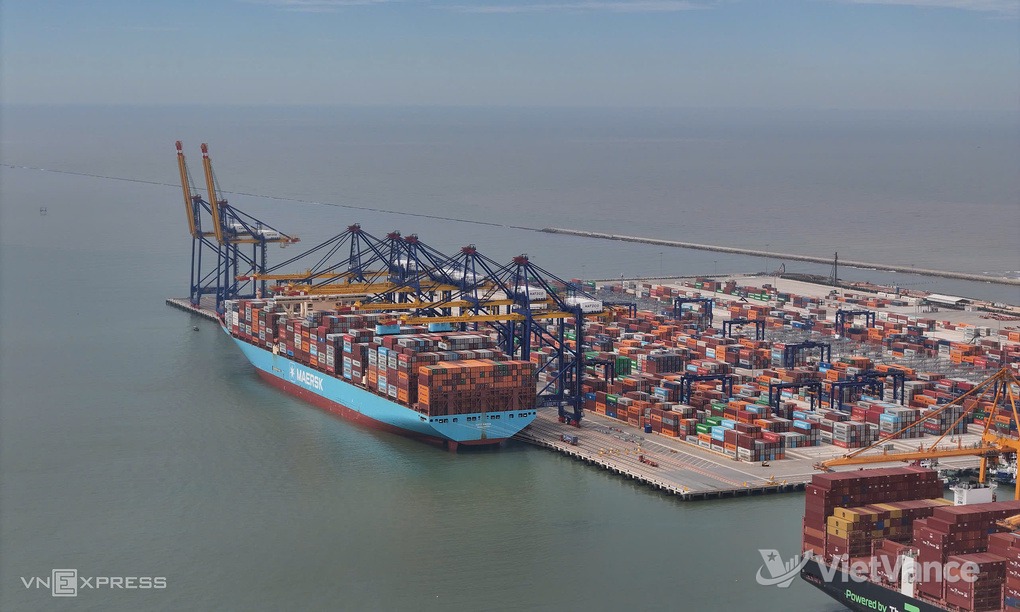
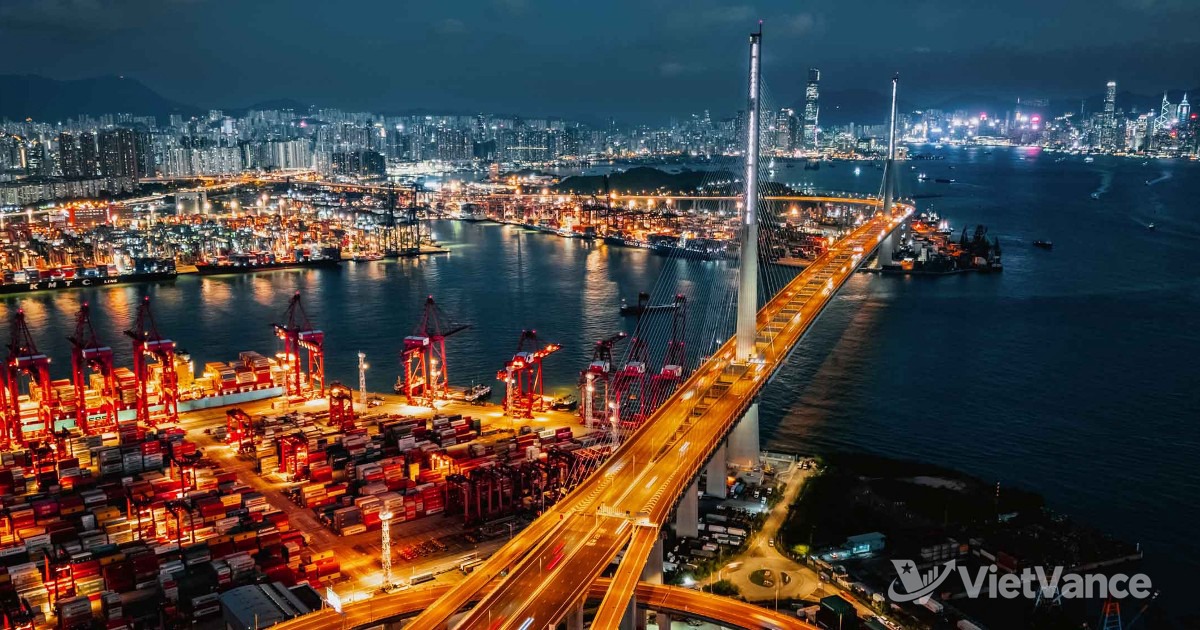
The Lạch Huyện deepwater port complex in Hải Phòng, photographed on June 23, 2026.(VietVance)
Expanding trade does not necessarily mean a corresponding increase in domestic value added. Vietnam’s Statistics Office noted that production and exports still depend considerably on imported raw materials and components. At the Autumn Economic Forum in October 2026, Mariam J. Sherman, the World Bank official responsible for Vietnam, Cambodia and Laos, said foreign-invested enterprises accounted for 73% of Vietnam’s export value and that Vietnamese businesses and workers retained too little value. The Statistics Office said the next stage requires stronger domestic production capacity, a higher local content rate and more value added by Vietnamese businesses.
Source: VietVance