COP31 Electrification Plan Sets Out Clean Energy Investments
The global electrification initiative announced at COP31 brings together plans and progress from more than 150 countries, the EU, 37 cities and over 260 companies. Participating utilities plan to invest at least $156 billion annually in grids, renewable energy and storage, while climate finance initiatives and an Asia-focused fund have announced new funding targets.

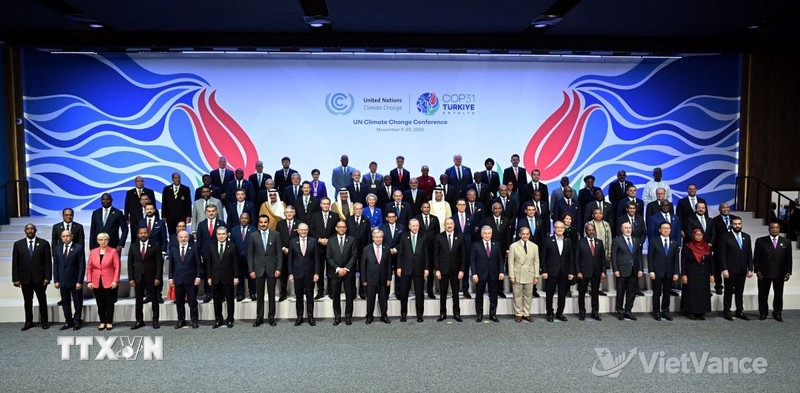
The global electrification initiative announced at COP31 brings together progress and plans from more than 150 countries, the EU, 37 cities and over 260 companies, covering clean energy, power grids, transport and industry. Of the cities, 37 reported progress on electrification in 2026 or announced actions for 2027; the participating companies have combined annual revenue of more than $4 trillion.

The global electrification initiative announced at COP31 covers clean energy investment, grid expansion and transport electrification. File photo.(VietVance)
Participating utilities announced that they built more than 21,000 kilometers of new power grids in 2025 and plan to invest at least $156 billion annually in grids, renewable energy and storage. In transport, 13 zero-emission freight corridors are under development across six continents, spanning more than 29,000 kilometers of roads; six cities have pledged to add about 2,200 electric buses in 2027.
On climate finance, a new mechanism has received an initial major contribution of £400 million from the United Kingdom and aims to raise up to £5 billion for clean power, grids, storage and electrification projects in emerging markets and developing economies. Octopus Energy launched an Asia-focused electrification fund at COP31 with a target of $600 million; it has received $50 million from Japanese investors.
The fund’s first investment will support a developer in the Philippines in planning a 450-megawatt solar project and a 350-megawatt-hour battery storage project. Business representatives at the conference said industrial electrification can help cut emissions, but accelerating the transition still requires faster grid connections, more storage capacity and action on the price gap between electricity and fossil fuels.
Source: VietVance