Da Nang Advances Digital Technology Industry Policies as Businesses Seek Clearer Application Procedures
A Vietnamese Ministry of Science and Technology agency held a briefing on digital technology industry regulations in Da Nang on November 17. Local businesses called for clearer guidance on eligibility, conditions and application procedures for support policies. Da Nang is improving its digital infrastructure and using tax, investment and land policies to support the industry.

On November 17, 2026, the Department of Digital Technology and Artificial Intelligence under Vietnam’s Ministry of Science and Technology held a briefing on digital technology industry regulations in Da Nang. Participants included representatives of local government departments, training institutions, industry associations and businesses in electronics, semiconductors and artificial intelligence. The meeting discussed problems businesses face when applying regulations and seeking support under government policies.
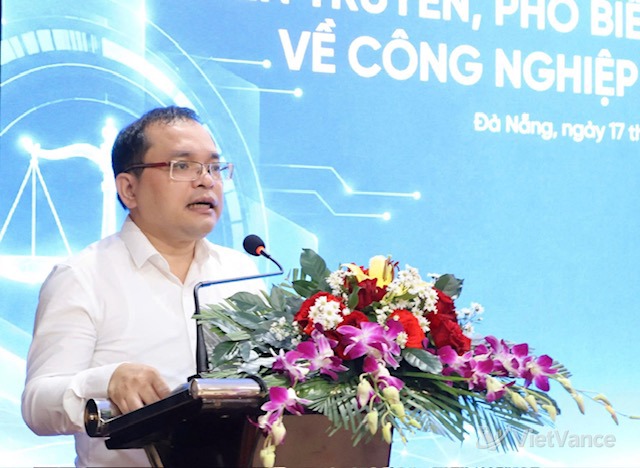
Trần Anh Tú speaks at the briefing on digital technology industry regulations.(VietVance)
Trần Anh Tú, deputy director of the department, said businesses need to understand the latest regulations and support mechanisms to make use of policies, mobilize resources for technological innovation and expand their operations. He said Vietnam’s digital technology industry generated revenue of more than VND 5.38 quadrillion in the first nine months of 2026, up 32.1% year on year. Against this backdrop, he said, clarifying who qualifies for support, the eligibility conditions and application procedures is especially urgent. The Digital Technology Industry Law took effect on January 1, 2026, but its implementing regulations still need further detail.

Trần Ngọc Thạch outlines Da Nang’s plans for its digital technology industry at the briefing.(VietVance)
Trần Ngọc Thạch, deputy director of the Da Nang Department of Science and Technology, said the city has designated information technology, software, semiconductors and artificial intelligence as strategic priorities. It is improving digital infrastructure, strengthening cooperation among government, educational institutions and businesses, and implementing special mechanisms to attract investment and support technology companies. The briefing covered policies on taxation, investment, finance, land and customs.
Digital technology businesses attending the briefing said Da Nang has issued several resolutions and plans to develop talent and support companies’ digital transformation, but obstacles remain in implementation. They called for clearer guidance on applying for support. The Department of Digital Technology and Artificial Intelligence said it would coordinate with local departments to provide answers and compile issues requiring referral to higher authorities. Da Nang aims for the digital economy to account for 35% to 40% of its gross regional domestic product by 2030 and for at least 70% of small and medium enterprises to have access to digital transformation support programs.
Source: VietVance