Hanoi Proposes Two Electric Minibus Routes for Low-Emission Zone
Hanoi’s Department of Construction has proposed two electric minibus routes linking the Ring Road 1 area with nearby transfer points. The routes are expected to open in stages in 2027, carry about 2.27 million passengers annually and require VND 42.4 billion in annual subsidies.

Hanoi’s Department of Construction has proposed two new electric minibus routes connecting the Ring Road 1 area with nearby transport hubs to serve travel needs after the low-emission zone is introduced. After reassessing travel demand, the department reduced the number of proposed routes by 18 from its earlier plan to avoid overlap and save on bus subsidies.
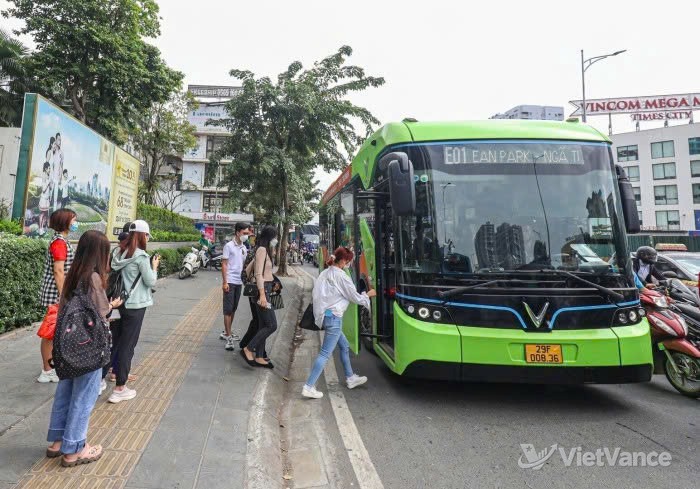
Hanoi has proposed two new electric minibus routes serving the low-emission zone. Illustrative image.(VietVance)
The proposed routes are “Hào Nam—Khu liên cơ—Hào Nam” and “Hào Nam—Ring Road 2.5—Hào Nam,” measuring about 21.1 km and 21.3 km, respectively. Both start and end near Cát Linh station. The first route is scheduled to begin operating in the first quarter of 2027; the second is expected to open in the third quarter of 2027, after Ring Road 2.5 is completed. Bus passenger services on both routes will be put out to tender in accordance with regulations.
Hanoi’s Department of Construction said the two routes would improve transfers between the city center and outlying areas and serve some streets that currently have no bus service. It estimates that the average distance residents in those areas travel to reach a bus stop could fall from 700 meters to 400 meters.
Each route is planned to have 13 vehicles, including 11 in operation. The vehicles will have a capacity of 30 passengers, with departures every 15 minutes. The two routes are expected to carry about 2.27 million passengers annually, increasing Hanoi’s citywide bus capacity by 1.3% and capacity in the Ring Road 1 area by about 3%.
Annual subsidies for the two routes are estimated at VND 42.4 billion. Based on the opening schedule, subsidies in 2027 are expected to total about VND 28.4 billion, with funding included in the annual budget for bus passenger services.
Source: VietVance