How Small Businesses Can Use Data and AI to Analyze Performance
A university lecturer in Vietnam explains how small businesses and sole proprietors can use Airtable to organize sales data, analyze revenue and compare results with business targets. AI tools can help identify trends and forecast demand, but their findings and recommendations should be checked against actual data.

Small businesses and sole proprietors can use existing sales data to analyze business performance and AI to help assess future trends. Trần Triệu Quân, a lecturer at Ho Chi Minh City University of Economics and Finance, explains how to build a data management system with Airtable without advanced programming knowledge.
After creating a database, businesses can organize information by customer, product, order, marketing activity and business plan. Existing Excel or Google Sheets data can also be imported. Sales records can include transaction times, products, quantities, amounts, staff members responsible and sales channels, and can be linked to customer profiles.
Once sales data has been collected, managers can filter and summarize revenue by month or quarter to see which products and channels perform well and when business results fluctuate. Businesses can also enter targets for revenue, new customers and order numbers, then compare actual results with their plans. If a target is missed, they can examine the details by employee, product or sales channel.
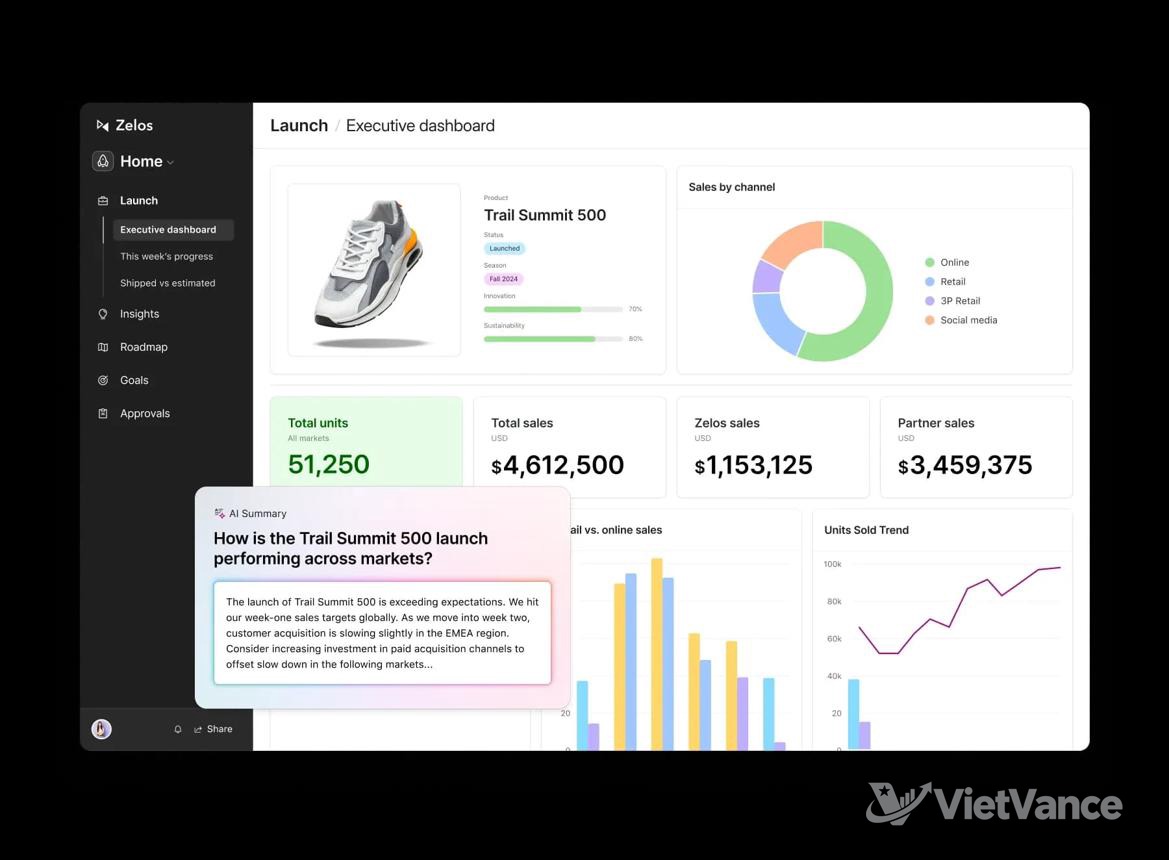
Illustration of Airtable’s revenue and business performance analysis interface(VietVance)
For forecasting, businesses first need to organize complete, consistent revenue data over time, then use historical records to identify growth trends, recurring fluctuations and seasonality. Simple forecasts can be saved in the application; more complex forecasts can be modeled by connecting statistical analysis or AI tools. For example, a business could estimate demand for the next quarter to plan inventory, staffing and marketing budgets.
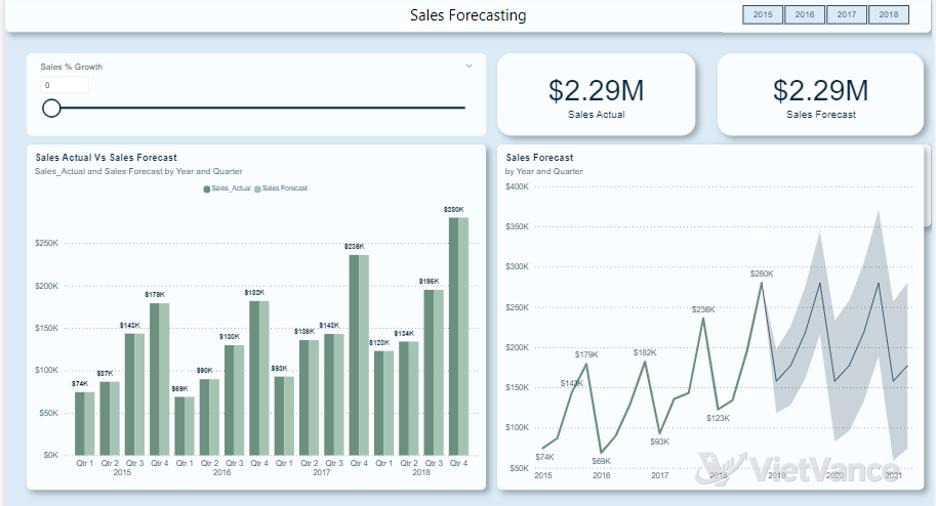
Illustration of a business trends and revenue forecasting chart(VietVance)
With appropriate access to data, AI features in the application or external tools can summarize sales results, identify growth trends and suggest ways to improve business performance. Trần Triệu Quân advises managers to check AI findings against actual data before acting on its recommendations.
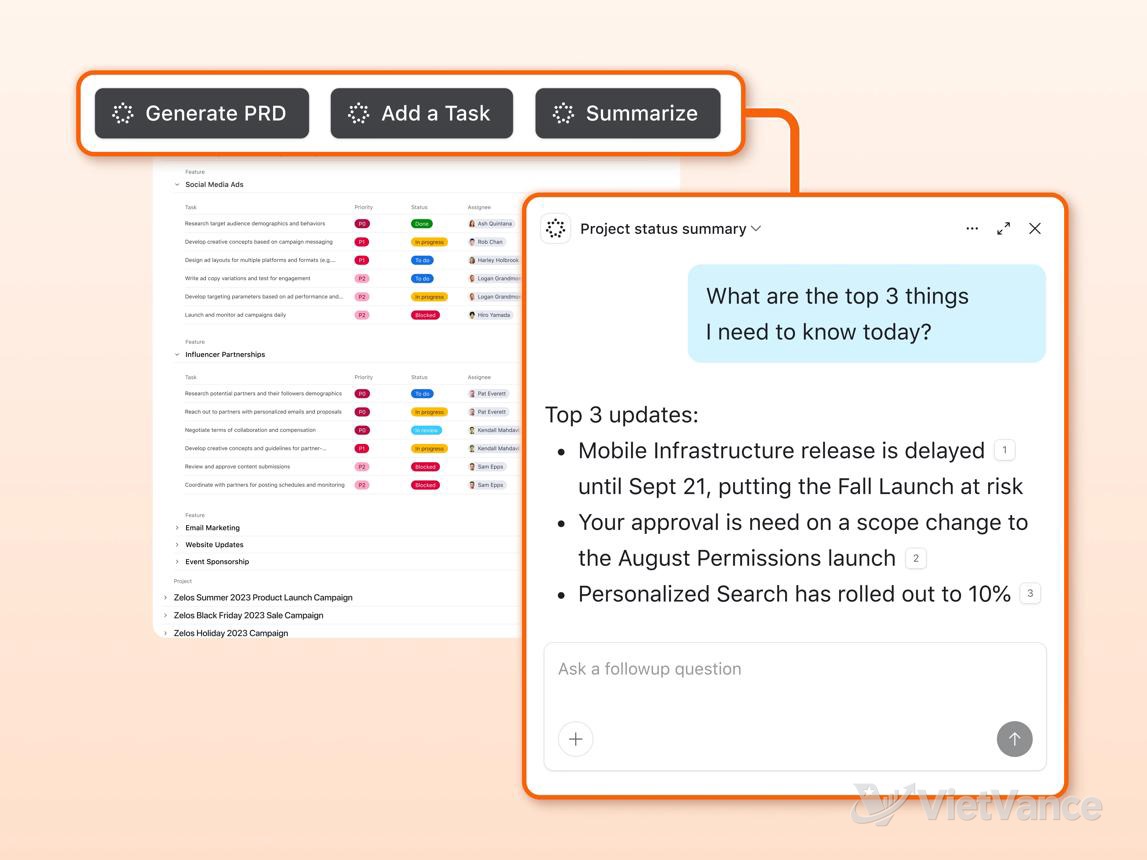
Illustration of the AI assistant interface in the application(VietVance)
Source: VietVance