US Treasury yield tops 5% intraday as Vietnam’s currency and bond markets diverge
The 10-year US Treasury yield briefly exceeded 5% on November 10, adding pressure to the Vietnamese dong. The State Bank of Vietnam began buying US dollars in the spot market on November 11, offering banks another source of dong liquidity. Overnight rates fell sharply, while Vietnamese government bond yields did not rise in step with US yields.

On November 10, the 10-year US Treasury yield briefly exceeded 5% before closing at about 4.98%. Previously released US consumer and core price indexes for October rose 0.4% and 0.3% month on month, respectively. The higher-than-expected inflation figures raised market expectations that the Federal Reserve would increase interest rates again in December. International quotes put Vietnam’s 10-year government bond yield at about 4.57%, roughly 41 basis points below the US yield.
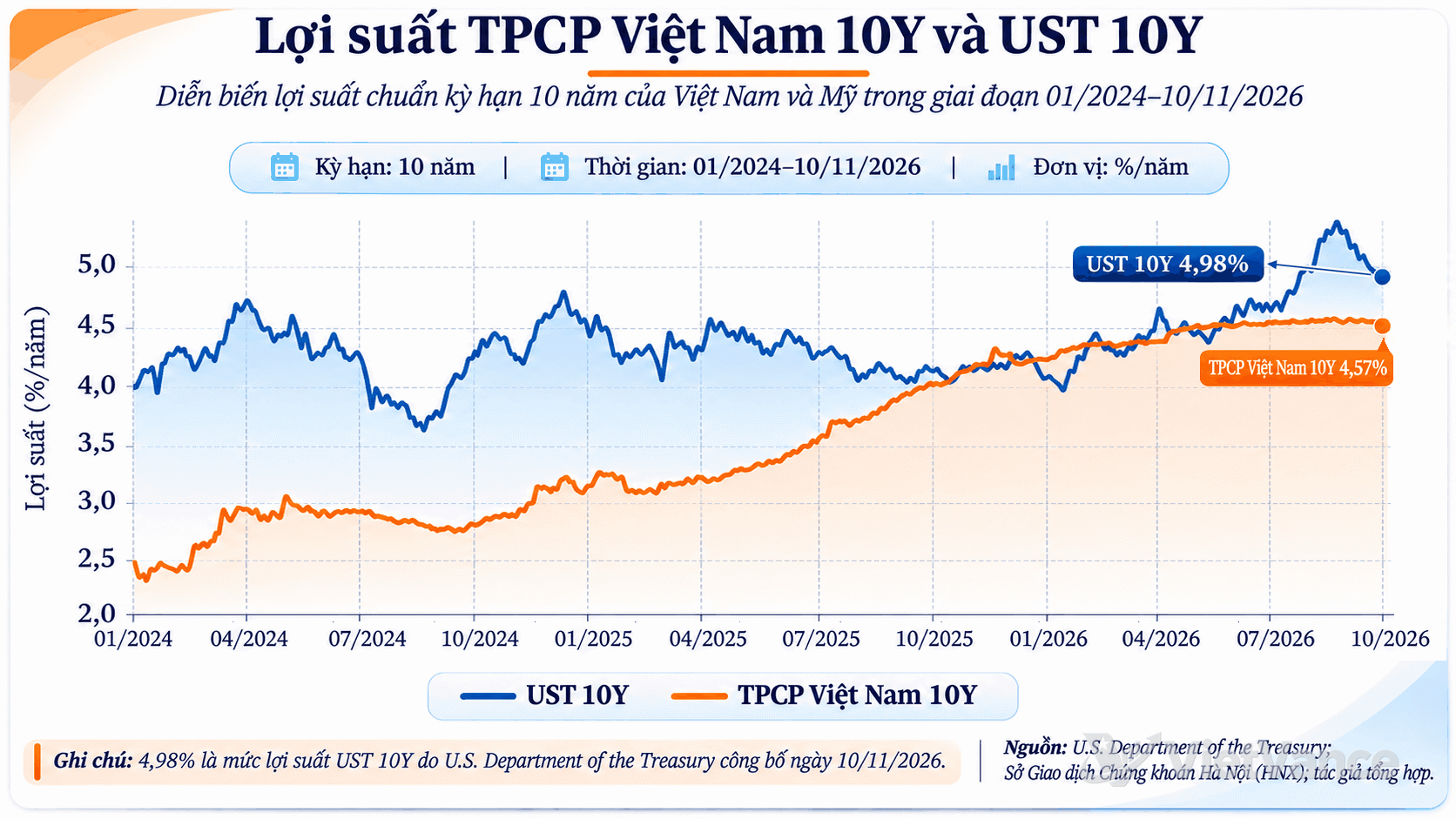
The gap between Vietnamese and US government bond yields narrowed from 2024 to 2026.(VietVance)
Vietnam recorded a goods trade deficit of US$12.07 billion in the first 10 months of 2026, while a stronger US dollar also put pressure on the exchange rate. On November 11, the State Bank of Vietnam began buying US dollars in the spot market at VND25,500 per dollar. The interbank USD/VND rate closed that day at VND25,660 per dollar, up VND55 from the previous session and VND160 above the central bank’s purchase rate. Whether a bank can obtain dong liquidity through this operation depends on its positive net foreign exchange position and the amount of dollars it sells.
From November 6 to 11, the overnight dong interbank rate fell about 190 basis points, from 6.2% to 4.30% annually, while the one-month rate continued to fluctuate around 5.4% to 5.5%. The overnight rate began falling before the central bank started its spot dollar purchases. The State Bank of Vietnam made net withdrawals through open market operations on both November 11 and 12; the amount of additional dong liquidity will also depend on the volume of dollars purchased and the timing of settlement.
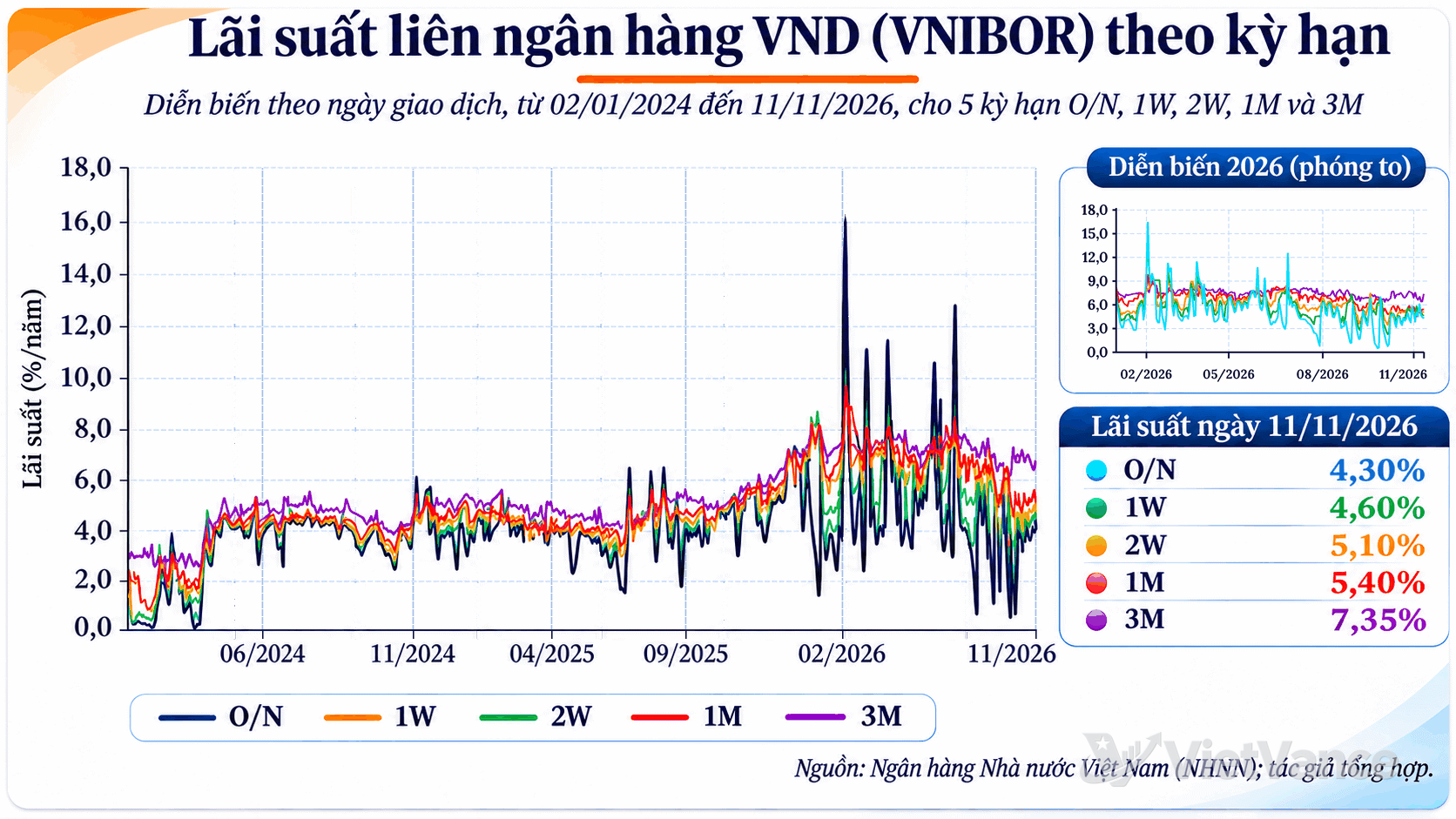
Dong interbank rates diverged across maturities, with the overnight rate falling markedly.(VietVance)
Daily movements in US and Vietnamese government bond yields showed only a weak relationship. An analysis of 704 trading days from the start of 2024 through November 10, 2026, found that for every 10-basis-point rise in the 10-year US Treasury yield, the corresponding Vietnamese yield rose by an estimated average of just 0.41 basis points. Changes in US yields explained only about 1% of day-to-day movements in Vietnamese government bond yields. On the 25 trading days when US yields rose by at least 10 basis points, Vietnamese yields rose by an average of about 2 basis points.
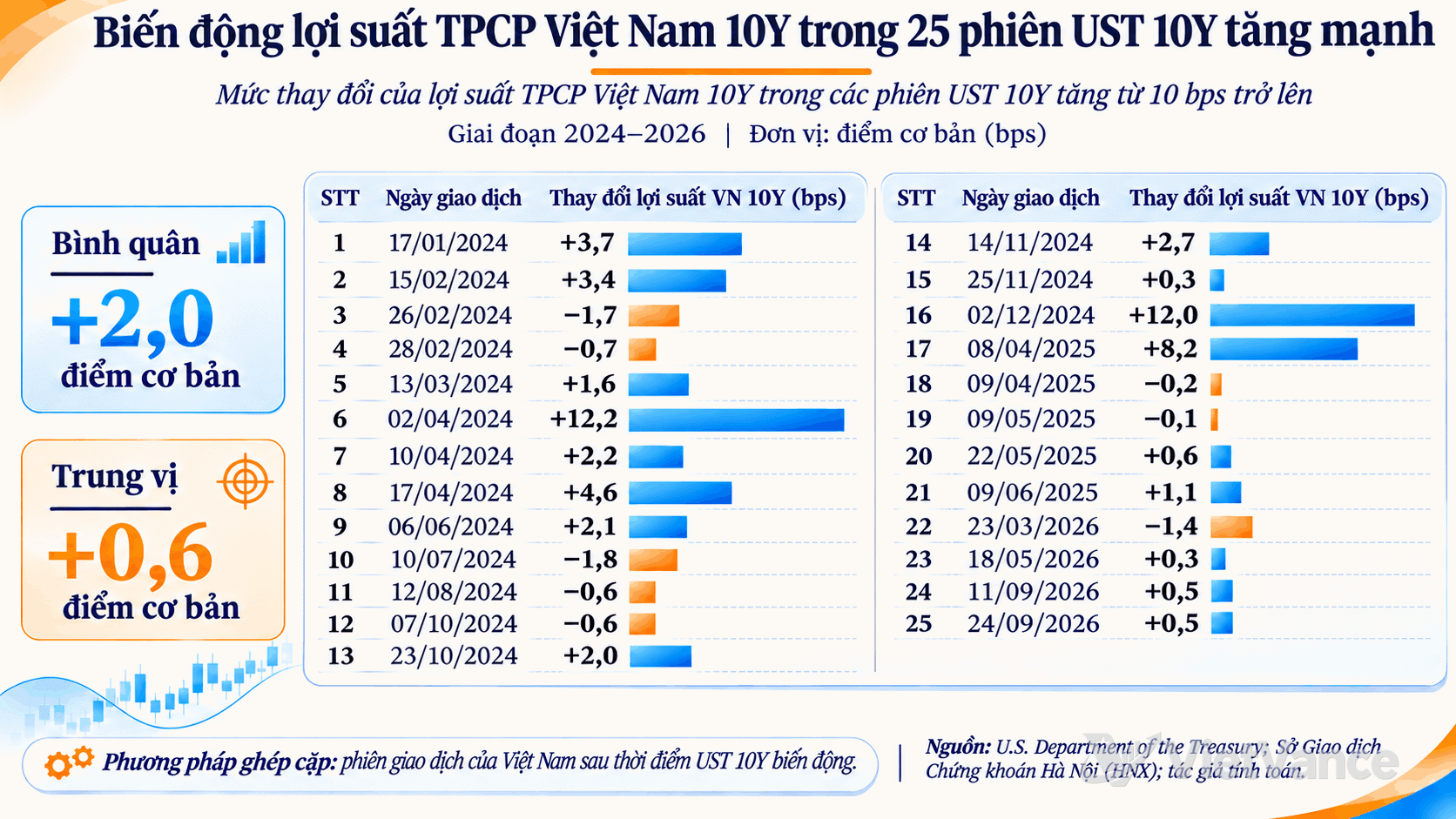
On the 25 trading days when US yields rose sharply, Vietnamese government bond yields increased by an average of only about 2 basis points.(VietVance)
On November 11, the Vietnam State Treasury successfully issued VND6 trillion in government bonds, including VND5 trillion in 10-year bonds, whose winning yield remained at 4.43% annually. The reference yield for the same maturity in the secondary market edged down to 4.46%. In October, foreign investors accounted for only 3.75% of total trading value in Vietnam’s secondary government bond market. Domestic institutions’ allocation needs, government bond issuance plans and bank liquidity remain important factors affecting local yields.
Source: VietVance