Vietnam’s Ministry of Industry and Trade Approves Revision of Oil and Gas Storage and Supply Infrastructure Plan
Vietnam’s Ministry of Industry and Trade issued a decision on November 17 approving a nationwide revision of its 2021–2030 plan for gasoline, petroleum and natural gas storage and supply infrastructure. The review will assess supply and demand forecasts, reserve requirements and project locations, while aligning the plan with the national energy reserve strategy.

On November 17, Vietnam’s Ministry of Industry and Trade issued Decision No. 3055/QĐ-BCT, approving in principle a revision of the national plan for gasoline, petroleum and natural gas storage and supply infrastructure for 2021–2030. The plan has a vision to 2050, and the revision covers the entire country. The decision sets the direction for the revision; specific proposals will follow a comprehensive review.
The revision will examine the original plan approved on July 18, 2023, and changes approved by the ministry on October 8, 2026, assessing implementation results, outstanding issues and the continued suitability of its objectives. The ministry said the revision should meet new economic development requirements and align with the national energy reserve strategy through 2030 and its vision to 2045.
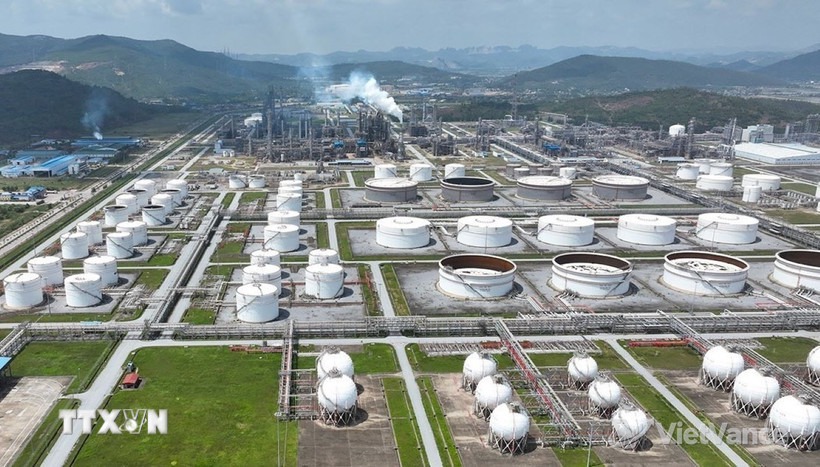
Fuel storage tanks at the Nghi Son Refinery and Petrochemical Complex in the Nghi Son Economic Zone, Nghi Son Ward, Thanh Hoa Province.(VietVance)
The review will also update place names, project addresses and administrative jurisdictions following changes to administrative boundaries, and reassess regional supply forecasts, consumption demand and reserve requirements for gasoline, petroleum and natural gas. On that basis, proposed changes to the infrastructure layout and project list will specify locations, scale, capacity, schedules, investment phases and connections.
The revised plan must also assess land, marine space and investment funding needs, propose ways to mobilize resources and implement the plan, and use strategic environmental assessment results to compare options. The ministry requires a detailed comparison with the revised national energy master plan and relevant regional and provincial plans to identify overlaps or inconsistencies and propose solutions.
Source: VietVance