Two Vietnamese Energy-Saving and Emissions-Reduction Technologies Win First Prizes at VIFOTEC
On the evening of November 17, 2026, two studies on building materials and rice cultivation won first prizes in the 2025 Vietnam Science and Technology Innovation Awards. Project leaders reported energy savings from ultrafine dry grinding of shale and emissions reductions from combining mechanization, biological products and water-saving irrigation in rice farming.

On the evening of November 17, 2026, two studies won first prizes in the 2025 Vietnam Science and Technology Innovation Awards (VIFOTEC). One concerns ultrafine dry grinding of shale for brick production; the other combines mechanization and biological products in low-emission rice cultivation.
The brick project was carried out by a research team at Công ty Cổ phần Gốm Đất Việt. Project leader Nguyễn Quang Mâu said the process replaces ordinary clay with shale containing less than 6% moisture and grinds it dry to nanometer-scale particles. During production, hot exhaust gas from the kiln dries the bricks, while the sintering temperature is reduced by 80 to 120 degrees Celsius.
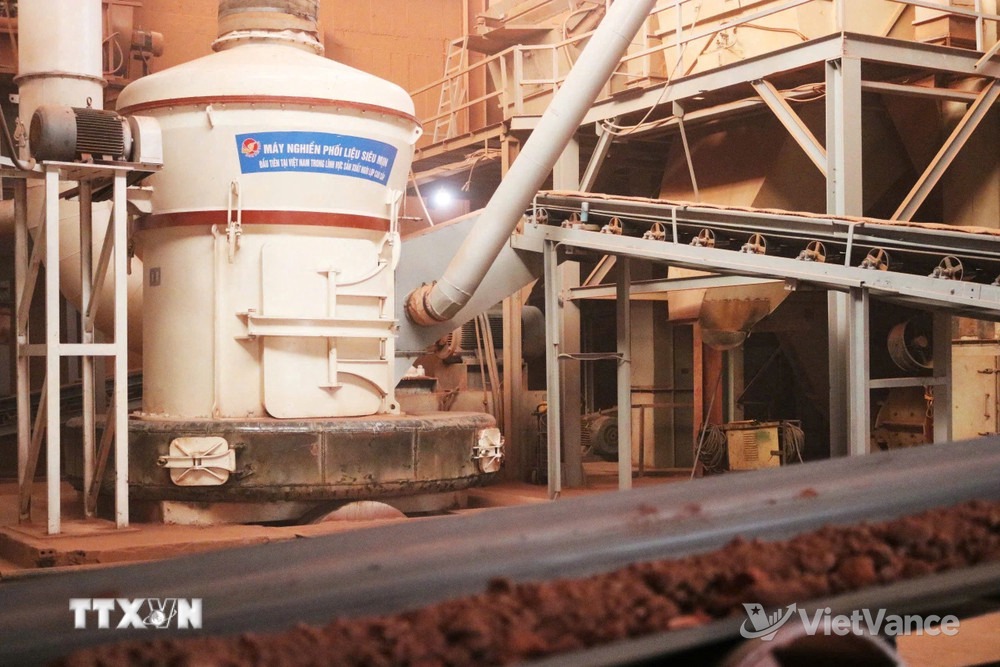
The ultrafine dry grinding production line used in the project.(VietVance)
Nguyễn Quang Mâu said the process has reduced the factory’s coal consumption by 8,100 tonnes a year and its carbon dioxide emissions by 26,163 tonnes a year. The project’s total annual economic benefit is approximately 86.54 billion Vietnamese dong. These energy-saving and economic figures were provided by the project leader.
Bricks produced by Công ty Cổ phần Gốm Đất Việt.(VietVance)
The other project was carried out by researchers at Viện Khoa học Công nghệ Sinh học và Môi trường. It applies rice transplanters, drones, water-level sensors and alternate wetting and drying irrigation to rice cultivation, and uses microbial products to treat rice straw after harvest. Project leader Nguyễn Văn Tri said the model reduced labor input by 68% to 82% and production costs by 27% to 32%, while increasing rice yields by 15% to 20%.
Nguyễn Văn Tri also said alternate wetting and drying irrigation reduced methane emissions by 35%. According to the project’s calculations, the model as a whole reduced total emissions by 40%, equivalent to 750 tonnes of carbon dioxide emissions per 300 hectares of rice fields. These results were reported by the project leader.
Source: VietVance